
By William H. Benson
The Parallel Lives
Of The NOBLE AMERICAN RELIGIOUS THINKERS AND BELIEVERS:
Roger Williams VS. Cotton Mathers

NEW ARTICLES

1776
1776
The logo for the Broadway musical “1776” features an eaglet inside a broken eggshell, biting down on a flagpole. The small flag atop the pole shows its colors: red and white stripes, and a blue field in the upper left corner. Across the bottom portion of the egg appears a larger English flag.
The musical begins with John Adams alone in the Pennsylvania State House’s belfry, four floors up, leaning on a massive bell. A messenger approaches and informs him that he must return to the hall.
He races down the steps, walks into the hall where the thirteen colonies’ fifty-plus delegates are seated at tables. There he strides across the room, all the while talking. “One useless man is a disgrace,” he says, “two is called a law firm, and three is a Congress.”
To a person, the other delegates shout at him, in song, “Sit down, John. It’s ninety degrees! Have mercy, John. It’s hot in Philadelphia. Someone ought to open a window. No! No! No! Too many flies.”
The delegates are upset with John, because he wants a vote for a declaration of independence from England, both King and Parliament, now. Most of the delegates favor reconciliation, but not a stubborn lawyer from Massachusetts named John Adams, who has read Thomas Paine’s “Common Sense.”
The next day the world-famous Dr. Benjamin Franklin takes Adams aside and says, “John, really. You talk as if independence was the rule. No colony has ever broken from the parent in the history of the world. John, why don’t you give it up? Nobody listens to you. You’re obnoxious and disliked.
Franklin says, “Let someone else introduce a vote for independence.”
Adams responds, “Never,” but he warms to the idea. Franklin and Adams ask Richard Henry Lee, a Virginia delegate, to introduce a motion that permits discussion on independence. The motion passes.
During the debate, John Adams surprises everybody when he calls for a postponement on all future discussion until a document is written for the delegates’ review. Franklin seconds the motion, and the motion passes.
According to the history books, on June 11, 1776, the 2nd Continental Congress appointed five to the committee to write the declaration: Benjamin Franklin of Pennsylvania, John Adams of Massachusetts, Thomas Jefferson of Virginia, Roger Sherman of Connecticut, and Robert Livingston of New York.
Adams and Franklin ask Jefferson to write the document, and he agrees, but is reluctant. He has not seen his wife Martha for six months, but out of duty he stays and writes during those hot summer days.
At one point in the musical, prior to the vote, John finds himself alone in the state house late at night, and he begins to sing, “Is anybody there? Does anybody care? Does anybody see what I see? They want me to quit. They say, John, give up the fight. Still to England I say ‘Good night.”
Then, in a second verse, he sings, “Is anybody there? Does anybody care? Does anybody see what I see? I see fireworks! I see the pageant and pomp and parade. I hear bells ringing out. I hear cannons roar. I see Americans—all Americans, free forever more.”
The musical “1776” first appeared on March 16, 1969, on a stage at the 46th Street Theatre, two and a half blocks west of Broadway, now called the Richard Rodgers Theatre. William Daniels played the part of John Adams, Ken Howard played Jefferson, and Howard Da Silva played Franklin.
The play ran for 1,217 performances and won three Tony Awards, including Best Musical.
In 1972, the film producer Jack Warner adapted the play for a film, and he hired the same actors for the movie as appeared on the stage. “I want the whole cast,” he said.
Many of you may know of William Daniels. In addition to playing John Adams, he also played John Quincy Adams in “The Adams Chronicles,” in the mid-1970s on PBS, and also Dr. Mark Craig in “St. Elsewhere,” an arrogant, irritable, but brilliant heart surgeon.
Perhaps his longest stint as a television actor though was as George Feeny, a history teacher at John Adams High School in Philadelphia, on “Boy Meets World,” a sitcom that ran for 7 seasons, from 1993 until 2000, 158 episodes. Cory, Topanga, and Shawn each received life lessons from Mr. Feeney.
Last March, William Daniels turned 95 years old, and he and his wife reside in southern California.
One other piece of trivia. On August 6, 2015, Lin-Manual Miranda staged his musical, “Hamilton,” also at the Richard Rodgers Theatre. In 2016, Lin-Manual Miranda and William Daniels talked.
In their interview, Daniels said that his dressing room, when he played John Adams, is the same as the actor who plays George Washington in “Hamilton,” stage right, with a little door facing the audience.
Miranda summed up their respective musicals, “The truth is more interesting than anything a writer could make up.”
I hope each of you enjoyed your Fourth of July holiday!
O. J. SIMPSON
O. J. SIMPSONO. J. SIMPSON by William H. Benson October 7, 1999 The evidence all pointed to him. The LAPD found drops of Simpson's blood at the murder scene. A stocking cap with hairs matching his was found next to Ron and Nicole's dead bodies. One of...
RONALD REAGAN
RONALD REAGANRONALD REAGAN by William H. Benson October 21, 1999 Ronald Reagan's enemies called him the Teflon President--slick, without substance. Walter Cronkite said that of all the Presidents he knew, the most knowledgeable by far was Jimmy Carter who...
THE SALEM WITCH TRIALS
THE SALEM WITCH TRIALSTHE SALEM WITCH TRIALS by William H. Benson September 23, 1999 Dave Barry, the syndicated columnist, in last week's column volunteered a rather dreary opinion of the recent and wildly successful movie--"The Blair Witch Project". He...
HAYMARKET SQUARE AFFAIR
HAYMARKET SQUARE AFFAIRHAYMARKET SQUARE AFFAIR by William H. Benson September 9, 1999 By May of 1886 conditions in Chicago were tense and volatile. The previous winter had been extremely cold, and thousands were without work. The bread lines were long, and the...
JULIUS CAESAR
JULIUS CAESARJULIUS CAESAR by William H. Benson August 26, 1999 Born in 100 B.C., Julius Caesar was by training a politician and an orator (second only to Cicero). But he understood that to achieve the kind of immense power he wanted, he needed military fame. ...
THE GREAT WAR
THE GREAT WARTHE GREAT WAR by William H. Benson August 12, 1999 It was 1914, and the guns of August exploded that year, sending shock waves that were heard around the world. The assassination of the Archduke Franz Ferdinand, heir to the throne of the...
Older Posts
JOSEPH McCARTHY
JOSEPH McCARTHYJOSEPH McCARTHY by William H. Benson July 29, 1999 A dog which decides to bite its own hindquarters runs in a circle until it finally drops exhausted, even though you would think it knows better. History contains examples of this strange...
THE BATTLE AT SUMMIT SPRINGS
THE BATTLE AT SUMMIT SPRINGSTHE BATTLE AT SUMMIT SPRINGS by William H. Benson July 15, 1999 All of the great conflicts fought on North American soil hold a certain fascination and enchantment, but the Indian Wars are especially appealing, even though...
THOMAS PAINE
THOMAS PAINETHOMAS PAINE by William H. Benson July 1, 1999 A revolt against the existing government done with the hope of a new and potentially better government defines a revolution. The English Colonists on the Atlantic seaboard of the North American...
WATERGATE
WATERGATEWATERGATE by William H. Benson June 17, 1999 The "long national nightmare" began on June 17, 1972 as a bungled third-rate burglary into the Democratic National Party's sixth floor suite at the Watergate Hotel in Washington D.C. Captured in the act was...
TIANANMEN SQUARE
TIANANMEN SQUARETIANANMEN SQUARE by William H. Benson June 3, 1999 U.S. relations with the Communist Red Chinese once again are strained, the typical situation for Mao Tse Tung's revolutionary Red Chinese government, now in its fiftieth year. Three weeks ago...
FRANK SINATRA
FRANK SINATRAFRANK SINATRA The Voice was pure and pitch perfect. His stage presence was always the best. He knew when to breath and when not to, when to hold back and when to move ahead of the beat, and when to bridge the lines and phrases--anything to WOW the...
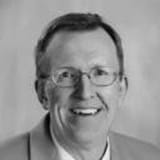
One of University of Northern Colorado’s 2020 Honored Alumni
William H. Benson
Local has provided scholarships for history students for 15 years
A Sterling resident is among five alumni selected to be recognized this year by the University of Northern Colorado. Bill Benson is one of college’s 2020 Honored Alumni.
Each year UNC honors alumni in recognition for their outstanding contributions to the college, their profession and their community. This year’s honorees were to be recognized at an awards ceremony on March 27, but due to the COVID-19 outbreak that event has been cancelled. Instead UNC will recognize the honorees in the fall during homecoming Oct. 10 and 11……
Newspaper Columns

The Duodecimal System
For centuries, the ancient Romans calculated sums with their clunky numerals: I, V, X, L, C, D, and M; or one, five, ten, 50, 100, 500, and 1,000. They knew nothing better.

The Thirteenth Amendment
On Jan. 1, 1863, President Abraham Lincoln signed the Emancipation Proclamation, and by it, he declared that “all persons held as slaves” within the rebellious states “are and henceforward shall be free.” Lincoln’s Proclamation freed some 3.1 million slaves within the Confederacy.

The Fourteenth Amendment
After Congress and enough states ratified the thirteenth amendment that terminated slavery, Congress passed the Civil Rights Act of 1866. This law declared that “all people born in the United States are entitled to be citizens, without regard to race, color, or previous condition of slavery or involuntary servitude.” The Act equated birth to citizenship.

The New-York Packet and the Constitution
Jill Lepore, the Harvard historian, published her newest book a month ago, These Truths: A History of the United States. In a short introduction, she describes in detail the Oct. 30, 1787 edition of a semi-weekly newspaper, The New-York Packet.
Mr. Benson’s writings on the U.S. Constitution are a great addition to the South Platte Sentinel. Its inspiring to see the history of the highest laws of this country passed on to others.
– Richard Hogan
Mr. Benson, I cannot thank you enough for this scholarship. As a first-generation college student, the prospect of finding a way to afford college is a very daunting one. Thanks to your generous donation, my dream of attending UNC and continuing my success here is far more achievable
– Cedric Sage Nixon
Donec bibendum tortor non vestibulum dapibus. Cras id tempor risus. Curabitur eu dui pellentesque, pharetra purus viverra.
– Extra Times
FUTURE BOOKS
- Thomas Paine vs. George Whitefield
- Ralph Waldo Emerson vs. Joseph Smith
- William James vs. Mary Baker Eddy
- Mark Twain vs. Billy Graham
- Henry Louis Mencken vs. Jim Bakker
