
By William H. Benson
The Parallel Lives
Of The NOBLE AMERICAN RELIGIOUS THINKERS AND BELIEVERS:
Roger Williams VS. Cotton Mathers

NEW ARTICLES
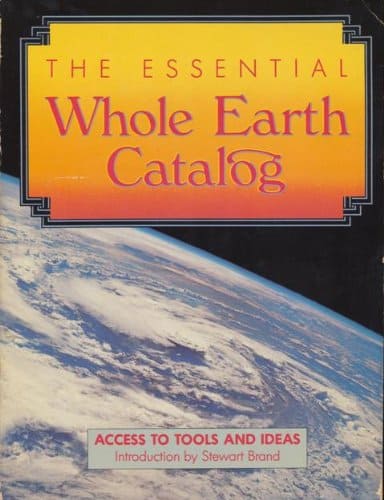
Stewart Brand: “The Whole Earth Catalog”
Stewart Brand: “The Whole Earth Catalog”
Steve Jobs gave the commencement address at Stanford University on June 14, 2005. In it, he told three stories. The first was how he dropped out of Reed College, in Portland, Oregon. The second was how a manager fired him from the company that he and Steve Wozniak had started in a garage.
The third story was about his pending death, due to a pancreatic cancer diagnosis a year before.
Then, after he finished the three stories, he said, “When I was young, there was an amazing publication called “The Whole Earth Catalog,” which was one of the bibles of my generation. It was created by a fellow named Stewart Brand, not far from here in Menlo Park, California.
“This was in the late 1960’s, before personal computers and desktop publishing, so it was made with typewriters, scissors, and Polaroid cameras. It was sort of like [a search engine] in paperback form, 35 years before [a search engine] came along. It was overflowing with neat tools and great notions.”
Now I wonder why Steve Jobs decided to attach those two paragraphs about a catalog from 1968, to his address to graduates at Stanford. Yet, I find Jobs’s quote most interesting.
I remember, when in high school in the late 1960’s, I glanced once or twice at “The Whole Earth Catalog,” but I never ordered anything from it. I do remember the distinctive picture of planet Earth on the catalog’s front cover, taken by an ATS-3 satellite, but I fail to remember any of the listings inside.
On the internet, in recent days, I found a copy of the first edition from 1968. Subtitled “Access to Tools,” it is 62 pages long, and is a cut and paste catalog. Each listing gives a picture of an item, its price, an address where a buyer can mail a check, plus a review of the listing.
For example, on page 5 is the book, Cosmic View: The Universe in 40 Jumps. Priced at $3.75, the review says, “It is the bestseller of the Whole Earth Catalog.”
There are books on how to build a tipi, or a Japanese-styled house, or design Aladdin Kerosene lamps, set up bee-keeping, find mushrooms, perform yoga, play a game called Dr. Nim, or build computers. On page 55, a listing offers “700 Science Experiments for Everyone,” at a price of $4.00.
A buyer could buy catalogs that offer Brookstone Tools or Jensen Tools, plus a Miners Catalog, and a Blasters’ Handbook, and Glenn’s Auto Repair Manual, published by Chilton. There are listings on self-hypnotism, psycho-cybernetics, a Yaqui Way of Knowledge, etc. Something for everyone.
A free L.L. Bean Catalog is offered on pages 47-48. The reviewer says, “The Bean catalog is the model for the WHOLE EARTH CATALOG.” Tandy Leather & Crafts Catalog is found on page 31.
The final listing is on page 61, and is “The I Ching, or the Book of Changes.”
Looking at it today, the “Whole Earth Catalog” resembles an on-paper form of the internet. At the time though it was “a counterculture magazine that stressed self-sufficiency, a do-it-yourself mindset, and alternative forms of education.” Hippies and flower children loved it.
Stewart Brand lives on. He is 83 years old, an old hippy who resides on California’s coast in a houseboat, and today he is found working on a “Clock of the Long Now,” a timepiece that will reside inside a cave within a mountain in southwest Texas. Its intent: track time for 10,000 years.
Brand shies away from the title of futurist. Instead, he moves and explores in terms of “long-term thinking.” He is “unwavering in his optimism about the future,” certain that “humanity’s future lies in our ability to develop technology.” “Progress,” he says, “consists of adding more options.”
Twenty years ago, Brand changed his mind about nuclear energy, after he discovered that some experts believed new nuclear technologies would be found to use what is now considered nuclear waste. That changed the way he thought about the future in general.”
Some time ago, Brand tweeted: “Interesting: how much bad news is anecdotal, and good news is statistical, and how invisible the statistical is.” I struggle with what he means, but I guess Brand intends to say that bad news is an anecdote, a recent news item that catches our attention and then fades away.
The good news though, he says, is buried unseen in the statistics, in the accumulation of multiple numbers of anecdotes that point upwards, indicating a positive human-benefiting trend. Hence, his healthy optimism about the future.
Steve Jobs dropped out of college, but he learned calligraphy there. He lost his job, but he met the love of his life, his wife, and he formed his own company that his previous company then bought. He was back. It was most misfortunate though that cancer ended his life on October 5, 2011.
At the end of his speech to Stanford’s graduates, Jobs said he remembers that on the back cover of the final issue of the “Whole Earth Catalog” there appeared the words, “Stay Hungry. Stay Foolish.”
Jobs says, “I have always wished that for myself, and now, as you graduate to begin anew, I wish that for you.”
MARK TWAIN
MARK TWAINMARK TWAIN by William H. Benson April 22, 1999 Months before Mark Twain's demise, a newspaper erroneously ran an article announcing that he had already died. Invariably ready with a quick remark, he responded, "The reports of my death are greatly...
TITANIC
TITANICTITANIC by William H. Benson April 8, 1999 The Titanic departed the harbor at Southampton, England on April 10, 1912, and five days later she lay on the ocean floor. Of the 2340 passengers and crew, only 745, mostly women and children, survived to see...
SIR ROGER BANNISTER
SIR ROGER BANNISTERSIR ROGER BANNISTER Although the Marathon has become the most popular running event during the past twenty years, for many years track enthusiasts considered the mile run the event that fascinated them most. Today high school distance runners...
STONEHENGE
STONEHENGESTONEHENGE by William H. Benson March 25, 1999 Another spring is upon us, and with it baseball has arrived. (Will it be another homerun slugfest this year?) Green is showing up in the lawns, and the wheat fields already are a bright growing green. ...
WILLIAM SHAKESPEARE
WILLIAM SHAKESPEAREWILLIAM SHAKESPEARE by William H. Benson March 11, 1999 On Thursday, March 11, 1302, Romeo married Juliet, according to the English playwright, William Shakespeare. The newlyweds failed to celebrate even their first anniversary, for in the...
PERSIAN GULF WAR
PERSIAN GULF WARPERSIAN GULF WAR by William H. Benson February 25, 1999 Operation Desert Storm's aerial campaign began in mid-January 1991 and was immediately a success. Wave after wave of Allied bombers and missiles pounded Iraq's capital, Baghdad, and other...
Older Posts
ABRAHAM LINCOLN
ABRAHAM LINCOLNABRAHAM LINCOLN by William H. Benson February 11, 1999 We now celebrate Presidents' Day rather than individually honoring either Abraham Lincoln's or George Washington's birthdays, and yet, what they each achieved is sufficient reason for pausing...
THREE ATHLETES
THREE ATHLETESTHREE ATHLETES by William H. Benson January 28, 1999 Three people figured prominently in the news this month: Michael Jordan, John Elway, and, of course, President Bill Clinton. About Michael Jordan one radio commentator said, "Arguably he is...
THE MILLENNIUM
THE MILLENNIUMTHE MILLENNIUM by William H. Benson January 14, 1999 Because the Roman numeral system lacked a zero, Dionysius Exiguus, the sixth century monk who devised our B.C./A.D. division of time, failed to include the year O A.D. in his chronology. He...
NICOLAE CEAUSESCU
NICOLAE CEAUSESCUNICOLAE CEAUSESCU by William H. Benson December 31, 1998 On December 15, 1989 the Romanian dictator Nicolae Ceausescu ordered his police to arrest a clergyman, Rev. Laszlo Toekes, in the city of Timisoara in western Romania. Toekes's only...
THE WRIGHT BROTHERS
THE WRIGHT BROTHERSTHE WRIGHT BROTHERS by William H. Benson December 17, 1998 Their father was a bishop in the United Brethern Church, and they owned a bicycle shop in Dayton, Ohio. They were Orville and Wilbur Wright, and they dreamed of flying. Told...
JACK KEVORKIAN
JACK KEVORKIANJACK KEVORKIAN by William H. Benson December 3, 1998 Western Civilization, more or less, since the ancient Greeks has agreed that life is valued thing, precious, to be extended to as great a length as possible. Quantity over quality. ...
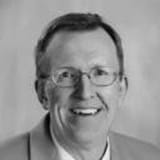
One of University of Northern Colorado’s 2020 Honored Alumni
William H. Benson
Local has provided scholarships for history students for 15 years
A Sterling resident is among five alumni selected to be recognized this year by the University of Northern Colorado. Bill Benson is one of college’s 2020 Honored Alumni.
Each year UNC honors alumni in recognition for their outstanding contributions to the college, their profession and their community. This year’s honorees were to be recognized at an awards ceremony on March 27, but due to the COVID-19 outbreak that event has been cancelled. Instead UNC will recognize the honorees in the fall during homecoming Oct. 10 and 11……
Newspaper Columns

The Duodecimal System
For centuries, the ancient Romans calculated sums with their clunky numerals: I, V, X, L, C, D, and M; or one, five, ten, 50, 100, 500, and 1,000. They knew nothing better.

The Thirteenth Amendment
On Jan. 1, 1863, President Abraham Lincoln signed the Emancipation Proclamation, and by it, he declared that “all persons held as slaves” within the rebellious states “are and henceforward shall be free.” Lincoln’s Proclamation freed some 3.1 million slaves within the Confederacy.

The Fourteenth Amendment
After Congress and enough states ratified the thirteenth amendment that terminated slavery, Congress passed the Civil Rights Act of 1866. This law declared that “all people born in the United States are entitled to be citizens, without regard to race, color, or previous condition of slavery or involuntary servitude.” The Act equated birth to citizenship.

The New-York Packet and the Constitution
Jill Lepore, the Harvard historian, published her newest book a month ago, These Truths: A History of the United States. In a short introduction, she describes in detail the Oct. 30, 1787 edition of a semi-weekly newspaper, The New-York Packet.
Mr. Benson’s writings on the U.S. Constitution are a great addition to the South Platte Sentinel. Its inspiring to see the history of the highest laws of this country passed on to others.
– Richard Hogan
Mr. Benson, I cannot thank you enough for this scholarship. As a first-generation college student, the prospect of finding a way to afford college is a very daunting one. Thanks to your generous donation, my dream of attending UNC and continuing my success here is far more achievable
– Cedric Sage Nixon
Donec bibendum tortor non vestibulum dapibus. Cras id tempor risus. Curabitur eu dui pellentesque, pharetra purus viverra.
– Extra Times
FUTURE BOOKS
- Thomas Paine vs. George Whitefield
- Ralph Waldo Emerson vs. Joseph Smith
- William James vs. Mary Baker Eddy
- Mark Twain vs. Billy Graham
- Henry Louis Mencken vs. Jim Bakker
