
By William H. Benson
The Parallel Lives
Of The NOBLE AMERICAN RELIGIOUS THINKERS AND BELIEVERS:
Roger Williams VS. Cotton Mathers

NEW ARTICLES
Benjamin Franklin
Benjamin Franklin was born on January 17, 1706 in Boston, Massachusetts, 320 years ago.
In recent days, I discovered Ken Burns’s two episodes on Benjamin Franklin that aired in April 2022 on PBS. The second part is more interesting, his efforts during the Revolution.
Franklin was in London, when the Boston Tea Party occurred on December 16, 1773. It was he, a well-known American, who received a public berating from England’s Solicitor General January of 1774, in the Privy Council.
His feelings hurt, Franklin sailed back to Pennsylvania, convinced that independence was a better choice. He arrived home in May 1775, a month after the battles at Lexington and Concord, a month before the horrific battle at Bunker Hill.
Pennsylvania appointed Franklin to the 2nd Continental Congress. He was the old man there, 69-years old. He stayed quiet, appeared to sleep often, but was keen for independence.
In late April of 1776, Franklin, with two other delegates, traveled to Montreal, in Canada, to convince the Canadians to join the 13 colonies. The Canadians refused. Loyalists they were.
Franklin returned with a hat composed of fur, skinned from a marten.
That summer, Franklin served on a committee to write a declaration of independence. Thomas Jefferson of Virginia, then 33-years-old, wrote it, but Franklin edited it.
Instead of, “We hold these truths to be sacred and undeniable,” Franklin urged for a more philosophical meaning, “We hold these truths to be self-evident.” Jefferson agreed.
On September 11, 1776, Franklin and John Adams met with British Admiral Richard Howe on Staten Island to discuss peace, but Howe refused to admit that the colonists had a new nation.
In October 1776, Franklin sailed from Philadelphia, with two grandsons, 16-year-old Temple Franklin, and 7-year-old Benny Bache. The USS “Reprisal” arrived in France in December 1776. A month later Franklin turned 71.
Franklin wore his marten fur hat to hide unsightly scabs atop his bald head due to weeks of a poor diet aboard the “Reprisal.” The French people considered Franklin’s hat rustic and quaint.
Franklin’s duty: to convince French officials to sign an alliance with the colonies and to support the Americans with arms.
He was the one American whom the French people knew, because of his experiment with a kite in a lighting storm. Many wanted to see this famous American. He was harassed day and night at his room in the Hotel de Valentinois in Passy, a suburb within Paris.
He played chess. He flirted with beautiful French ladies. He met King Louis XVI.
After Franklin received the good news that American forces had defeated General Burgoyne at the battle at Saratoga, in New York, in 1777, he and French officials signed two alliances.
The French government spent some 1.3 billion livres on the colonists’ war with England.
With French naval support in the Chesapeake Bay, and with French soldiers and cannons, the combined American and French armies forced British general Lord Cornwallis to surrender his army at Yorktown, Virginia, on October 19, 1781. The brutal and bloody war was over.
If not for Franklin’s diplomatic skill in France, Washington may not have won the war.
Two years later, on September 3, 1783, Benjamin Franklin signed the Paris Peace Treaty with English officials. By it, England’s government recognized America’s independence.
Franklin sailed back to Philadelphia in the summer of 1785. Two years later, Pennsylvania appointed Franklin to the Constitutional Convention. When asked if America now had a republic or a monarchy, Franklin replied, “A republic, if you can keep it.”
A Poor Richard quote: “either write things worth reading, or do things worth writing about.” Franklin did both. He passed away on April 17, 1790, at the age of eighty-four.
1776
The logo for the Broadway musical “1776” features an eaglet inside a broken eggshell, biting down on a flagpole. The small flag atop the pole shows its colors: red and white stripes, and a blue field in the upper left corner. Across the bottom portion of the egg appears a larger English flag.
The musical begins with John Adams alone in the Pennsylvania State House’s belfry, four floors up, leaning on a massive bell. A messenger approaches and informs him that he must return to the hall.
George Armstrong Custer
George Armstrong Custer The Native American tribes had pet names for George Armstrong Custer. The Crow called him Child of the Morning Star, the Cheyenne labeled him Yellow Hair, but the Lakota Sioux referred to him as Long Hair, even though a barber had cut off his...
Stewart Brand: “The Whole Earth Catalog”
Steve Jobs gave the commencement address at Stanford University on June 14, 2005. In it, he told three stories. The first was how he dropped out of Reed College, in Portland, Oregon. The second was how a manager fired him from the company that he and Steve Wozniak had started in a garage.
The third story was about his pending death, due to a pancreatic cancer diagnosis a year before.
Then, after he finished the three stories, he said, “When I was young, there was an amazing publication called “The Whole Earth Catalog,” which was one of the bibles of my generation. It was created by a fellow named Stewart Brand, not far from here in Menlo Park, California.
Mythology
Tony Hillerman grew up in Oklahoma, and attended St. Mary’s Academy, a boarding school intended for Native American girls. One of the few boys permitted to attend, he developed a sensitivity for the various Native American cultures, mythologies, and religions.
Traditions
In recent days, I have re-read David L. Lindsay’s novel, Body of Truth. In it, he describes a cruel and gruesome civil war that terrorized the people of Guatemala for thirty-six years, from 1960 until 1996. It was the federal government, then run by a series of generals, who attacked the poorest of its citizens.
A United Nations report, dated March 1, 1999, declared that, “An estimated 200,000 Guatemalans were killed during the civil war, including at least 40,000 persons who disappeared.”
Truth vs. lies
It might be fabricated, but a story I heard years ago was that Bill Cosby warned a young Oprah Winfrey, to “always balance your own check book.” In other words, he cautioned her to trust only herself, and not any paid employee, with that simple task.
Another piece of advice for the up-and-coming, who are now, after years of struggle, experiencing some success, “Do not believe your own press reports.” In other words, no matter how wonderful and great the journalists and reporters say you are, keep in reserve some small measure of humility.
Older Posts
A tale of two cities
A quote I read years ago said, “The family surname of the betrothed says much about the success of the marriage.” That idea may come near to a singular truth in a general way, despite plenty of examples to contradict it. Yet, I dare suggest something similar, but in a political sense.
How a man or woman identifies his or her citizenship–to what city he or she claims allegiance–tells much about his or her innermost thoughts, ideas, conclusions, and reasoning skills. In other words, tell me the name of your city, and I can predict the ideas that you think and believe.
Yet, not always. Again, outliers who think for themselves.
There were two cities in ancient Greece: Athens and Sparta. The Athenians practiced trade, they valued art and culture, and they ruled themselves by democracy of voters, legislators, and written laws. The Spartans though encouraged a militant society, based on farming and conquering.
Irish Wit
The Irish have their own way of seeing the world. The American poet Marianne Moore said as much in six words. “I’m troubled. I’m dissatisfied. I’m Irish.”
Frank McCourt said the same, but in more words, on the first page of his memoir, Angela’s Ashes.
“It was, of course, a miserable childhood: the happy childhood is hardly worth your while. Worse than the ordinary miserable childhood is the miserable Irish childhood, and worse yet is the miserable Irish Catholic childhood.

Freeze-up in Ottawa
Kathrene and Robert Pinkerton married in 1911. He worked at a newspaper in a big city: long hours, deadlines, and stress. A doctor advised him to “get out of newspaper offices and out of cities,” if he wanted to preserve his health. He decided he would write fiction—short stories—and sell them.
When single, Robert had worked as a logger and fur trader in Ottawa’s woods,

Immigration
With high school diploma in hand, a young African from Ghana named Robert Kosi Tette came to the United States in 1998, leaving behind family, friends, and “a simple life of blissful innocence.”
Ten years later, he described his decade in America, in an article that appeared in the March 1, 2008 issue of Newsweek, that he entitled “An Immigrant’s Silent Struggle.”
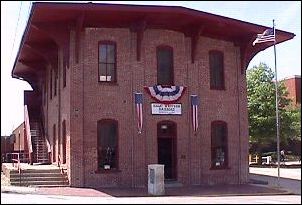
Abraham Lincoln’s farewell to Springfield
A favorite Lincoln biographer of mine is Carl Sandburg. In 1926, he published a two-volume work, Abraham Lincoln, The Prairie Years, and then in 1939, he published a four-volume work, Abraham Lincoln, The War Years. This latter work won Sandburg the Pulitzer Prize for History in 1940.
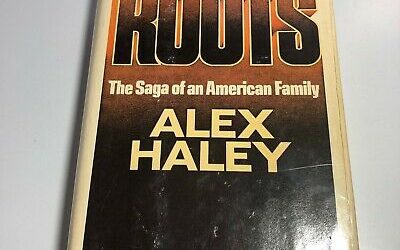
Alex Haley and Roots
Roots, by Alex Haley, the television miniseries, aired over eight nights, from Sunday, January 23, through Sunday, January 30, in 1977, forty-five years ago. It proved wildly successful, despite ABC executives’ fears about showing white men kidnapping, buying, selling, and whipping black men, and women.

One of University of Northern Colorado’s 2020 Honored Alumni
William H. Benson
Local has provided scholarships for history students for 15 years
A Sterling resident is among five alumni selected to be recognized this year by the University of Northern Colorado. Bill Benson is one of college’s 2020 Honored Alumni.
Each year UNC honors alumni in recognition for their outstanding contributions to the college, their profession and their community. This year’s honorees were to be recognized at an awards ceremony on March 27, but due to the COVID-19 outbreak that event has been cancelled. Instead UNC will recognize the honorees in the fall during homecoming Oct. 10 and 11……
Newspaper Columns

The Duodecimal System
For centuries, the ancient Romans calculated sums with their clunky numerals: I, V, X, L, C, D, and M; or one, five, ten, 50, 100, 500, and 1,000. They knew nothing better.

The Thirteenth Amendment
On Jan. 1, 1863, President Abraham Lincoln signed the Emancipation Proclamation, and by it, he declared that “all persons held as slaves” within the rebellious states “are and henceforward shall be free.” Lincoln’s Proclamation freed some 3.1 million slaves within the Confederacy.

The Fourteenth Amendment
After Congress and enough states ratified the thirteenth amendment that terminated slavery, Congress passed the Civil Rights Act of 1866. This law declared that “all people born in the United States are entitled to be citizens, without regard to race, color, or previous condition of slavery or involuntary servitude.” The Act equated birth to citizenship.

The New-York Packet and the Constitution
Jill Lepore, the Harvard historian, published her newest book a month ago, These Truths: A History of the United States. In a short introduction, she describes in detail the Oct. 30, 1787 edition of a semi-weekly newspaper, The New-York Packet.
Mr. Benson’s writings on the U.S. Constitution are a great addition to the South Platte Sentinel. Its inspiring to see the history of the highest laws of this country passed on to others.
– Richard Hogan
Mr. Benson, I cannot thank you enough for this scholarship. As a first-generation college student, the prospect of finding a way to afford college is a very daunting one. Thanks to your generous donation, my dream of attending UNC and continuing my success here is far more achievable
– Cedric Sage Nixon
Donec bibendum tortor non vestibulum dapibus. Cras id tempor risus. Curabitur eu dui pellentesque, pharetra purus viverra.
– Extra Times
FUTURE BOOKS
- Thomas Paine vs. George Whitefield
- Ralph Waldo Emerson vs. Joseph Smith
- William James vs. Mary Baker Eddy
- Mark Twain vs. Billy Graham
- Henry Louis Mencken vs. Jim Bakker
