
By William H. Benson
The Parallel Lives
Of The NOBLE AMERICAN RELIGIOUS THINKERS AND BELIEVERS:
Roger Williams VS. Cotton Mathers

NEW ARTICLES
Colonel Tom Parker and Elvis Presley
Elvis Presley died on August 16, 1977, at the age of 42, in his Graceland Mansion in Memphis, Tennessee. His heart gave out after years of obesity and prescription drugs.
His long-time talent agent and promoter, cigar-chomping Colonel Tom Parker, lived for another twenty years, passing away on January 21, 1997, at the age of 87, in Las Vegas, Nevada.
Together they accomplished a lot: 31 movies between 1956 and 1969, countless albums, numerous performances, an immense amount of income. Elvis said this of Parker, “I don’t think I would have ever been huge if it wasn’t for him. He’s a brilliant man.” That was most likely true.
Parker said this of Elvis, “It’s unexplainable. They say anybody else could have done it. Perhaps. So, I was to be the one who was with him. He did his part. I did mine, and we were lucky with great talent, and we had a great show and a lot of fun.”
Colonel Tom Parker made Elvis Presley King of Rock and Roll.
After Elvis passed on, Parker worked the estate, collecting his cut on all memorabilia and record sales, while his father, Vernon Presley, was the estate’s actual executor.
Vernon died in 1979, but he named Priscilla, Elvis’s ex-wife, and Lisa Marie, Elvis’s daughter, then 9 years old, as co-executors. At once, Priscilla learned the estate was nearing bankruptcy due in part to Elvis’s lavish spending, and the fees paid to Tom Parker.
In 1981, it fell to Judge Joseph Evans of Shelby County Probate Court, in Memphis, to sort out the claims against Elvis’s estate. He appointed an attorney named Blanchard E. Tual to serve as Lisa Marie’s guardian ad litem and to investigate Tom Parker’s role in the estate.
After four months, Tual presented a 300-page report to the court. He found that Parker had charged Elvis and then his estate 50% of all income, since January 2, 1967.
Tual said that this arrangement was “excessive, imprudent, unfair to the estate, and beyond all reasonable bounds of industry standards,” that Parker was “self-dealing and overreaching.”
Also, Tual found that Parker had set up side deals that cheated Elvis out of millions.
He found that on March 1, 1973, Parker had contracted with RCA to buy Elvis’s music catalog, in essence forfeiting all his rights to further royalties on the pre-1973 music sales.
RCA agreed to pay the following amounts. “To Elvis: $2,800,000; to Parker: $2,600,000,” for a total of $5,400,000. In hindsight, that music catalog was worth far more than that.
Tual found that Elvis missed out on millions he could have earned if Tom Parker would have allowed him to perform in foreign countries. Tom Parker was born in the Netherlands, came to the U.S. in 1929, illegally, and had never obtained a U.S. passport. He dared not cross the border.
Tual found Elvis was often “without the benefit of independent counsel or business advice.”
Tual recommended, and Judge Joseph Evans agreed, that Priscilla should fire Tom Parker and bring suit against him for “fraud and mismanagement.” The case was settled out of court in 1983.
RCA agreed to pay Parker $2 million for his “collection of master recordings, memorabilia, video-taped concerts, and film rights.” RCA also agreed to pay Elvis’s estate $110,000 per year for a decade to settle RCA’s claims on Presley’s earnings.
On June 7, 1982, Priscilla opened up Graceland for tours, a wise move, instead of selling the mansion. Elvis Presley Enterprises is now solvent and earns in excess of $10 million each year.
If he had lived, Elvis would celebrate his 91st birthday in a few days, on January 8.
A tale of two cities
A quote I read years ago said, “The family surname of the betrothed says much about the success of the marriage.” That idea may come near to a singular truth in a general way, despite plenty of examples to contradict it. Yet, I dare suggest something similar, but in a political sense.
How a man or woman identifies his or her citizenship–to what city he or she claims allegiance–tells much about his or her innermost thoughts, ideas, conclusions, and reasoning skills. In other words, tell me the name of your city, and I can predict the ideas that you think and believe.
Yet, not always. Again, outliers who think for themselves.
There were two cities in ancient Greece: Athens and Sparta. The Athenians practiced trade, they valued art and culture, and they ruled themselves by democracy of voters, legislators, and written laws. The Spartans though encouraged a militant society, based on farming and conquering.
Irish Wit
The Irish have their own way of seeing the world. The American poet Marianne Moore said as much in six words. “I’m troubled. I’m dissatisfied. I’m Irish.”
Frank McCourt said the same, but in more words, on the first page of his memoir, Angela’s Ashes.
“It was, of course, a miserable childhood: the happy childhood is hardly worth your while. Worse than the ordinary miserable childhood is the miserable Irish childhood, and worse yet is the miserable Irish Catholic childhood.
Freeze-up in Ottawa
Kathrene and Robert Pinkerton married in 1911. He worked at a newspaper in a big city: long hours, deadlines, and stress. A doctor advised him to “get out of newspaper offices and out of cities,” if he wanted to preserve his health. He decided he would write fiction—short stories—and sell them.
When single, Robert had worked as a logger and fur trader in Ottawa’s woods,
Immigration
With high school diploma in hand, a young African from Ghana named Robert Kosi Tette came to the United States in 1998, leaving behind family, friends, and “a simple life of blissful innocence.”
Ten years later, he described his decade in America, in an article that appeared in the March 1, 2008 issue of Newsweek, that he entitled “An Immigrant’s Silent Struggle.”
Abraham Lincoln’s farewell to Springfield
A favorite Lincoln biographer of mine is Carl Sandburg. In 1926, he published a two-volume work, Abraham Lincoln, The Prairie Years, and then in 1939, he published a four-volume work, Abraham Lincoln, The War Years. This latter work won Sandburg the Pulitzer Prize for History in 1940.
Alex Haley and Roots
Roots, by Alex Haley, the television miniseries, aired over eight nights, from Sunday, January 23, through Sunday, January 30, in 1977, forty-five years ago. It proved wildly successful, despite ABC executives’ fears about showing white men kidnapping, buying, selling, and whipping black men, and women.
Older Posts

Insurrection on the Capitol: January 6, 2021
Donald Trump lost the 2020 election on Nov. 3, 2020. Although some 74.2 million voters voted for him, 81.2 voted for Biden, a difference of over 7.0 million. Then, Biden won 306 electoral votes to Trump’s 232. Despite those facts, Donald Trump vowed he would never concede.

Stars
The one constellation I can identify without much effort is Ursa Major, “the greater or larger Bear,” or the Big Dipper, in the northern sky.
Last time in these pages, I talked about Ralph Waldo Emerson’s fruit trees, and that the wise men, who came from the east to Judea, came bearing expensive gifts, three minerals, and yet today we give three types of foods—fruits, nuts, and sweets—to our children on Christmas Day.

Fruits
In 1905, the USDA published a bulletin: Nomenclature of the Apple: A Catalog, that listed 17,000 names. After removing the duplicate names, it still listed 14,000 different varieties of the apple.
Between Captain John Smith in Jamestown, Virginia, in 1607, and the beginning of the 20th century,
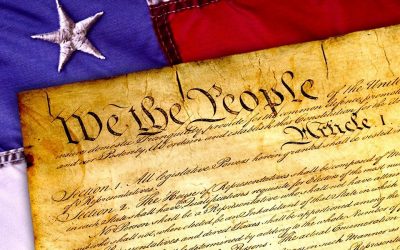
A look at the amendments of the U.S. Constitution
On Sept. 25, 1789, James Madison submitted 12 amendments to the new Constitution. This is the story of what happened to those amendments.

Milton Hershey School, part II
Last time in these pages I began a review of a recent book, Invisible Child: Poverty, Survival and Hope in an American City. Its author, Andrea Elliott, focused on a middle school girl named Dasani, who grew up in a series of New York City housing projects, a step away from homelessness.
After Elliott published an expose in the New York Times on Dasani’s plight, the girl was awarded a scholarship to attend Milton Hershey’s middle school, in Hershey, Pennsylvania. She arrived at the private school in late January of 2015, as a 14-year-old African-American girl, lonely and scared.

Milton Hershey School
Earlier this month, a New York Times reporter named Andrea Elliott published a book, Invisible Child: Poverty, Survival and Hope in an American City.
In the book, Andrea delves into the life of a family: Chanel, the mother; Supreme, her husband; and her seven children. In 2012, the family resided in a single room in the Auburn Family Residence, in Brooklyn, New York.
Andrea started her investigative reporting on the city’s poor and destitute by drifting around the Auburn’s front door. In October of 2012, she met Chanel, whose seven children would follow her out the building and down the sidewalk. The family soon let Andrea into their home, via the fire escape.

One of University of Northern Colorado’s 2020 Honored Alumni
William H. Benson
Local has provided scholarships for history students for 15 years
A Sterling resident is among five alumni selected to be recognized this year by the University of Northern Colorado. Bill Benson is one of college’s 2020 Honored Alumni.
Each year UNC honors alumni in recognition for their outstanding contributions to the college, their profession and their community. This year’s honorees were to be recognized at an awards ceremony on March 27, but due to the COVID-19 outbreak that event has been cancelled. Instead UNC will recognize the honorees in the fall during homecoming Oct. 10 and 11……
Newspaper Columns

The Duodecimal System
For centuries, the ancient Romans calculated sums with their clunky numerals: I, V, X, L, C, D, and M; or one, five, ten, 50, 100, 500, and 1,000. They knew nothing better.

The Thirteenth Amendment
On Jan. 1, 1863, President Abraham Lincoln signed the Emancipation Proclamation, and by it, he declared that “all persons held as slaves” within the rebellious states “are and henceforward shall be free.” Lincoln’s Proclamation freed some 3.1 million slaves within the Confederacy.

The Fourteenth Amendment
After Congress and enough states ratified the thirteenth amendment that terminated slavery, Congress passed the Civil Rights Act of 1866. This law declared that “all people born in the United States are entitled to be citizens, without regard to race, color, or previous condition of slavery or involuntary servitude.” The Act equated birth to citizenship.

The New-York Packet and the Constitution
Jill Lepore, the Harvard historian, published her newest book a month ago, These Truths: A History of the United States. In a short introduction, she describes in detail the Oct. 30, 1787 edition of a semi-weekly newspaper, The New-York Packet.
Mr. Benson’s writings on the U.S. Constitution are a great addition to the South Platte Sentinel. Its inspiring to see the history of the highest laws of this country passed on to others.
– Richard Hogan
Mr. Benson, I cannot thank you enough for this scholarship. As a first-generation college student, the prospect of finding a way to afford college is a very daunting one. Thanks to your generous donation, my dream of attending UNC and continuing my success here is far more achievable
– Cedric Sage Nixon
Donec bibendum tortor non vestibulum dapibus. Cras id tempor risus. Curabitur eu dui pellentesque, pharetra purus viverra.
– Extra Times
FUTURE BOOKS
- Thomas Paine vs. George Whitefield
- Ralph Waldo Emerson vs. Joseph Smith
- William James vs. Mary Baker Eddy
- Mark Twain vs. Billy Graham
- Henry Louis Mencken vs. Jim Bakker
