
By William H. Benson
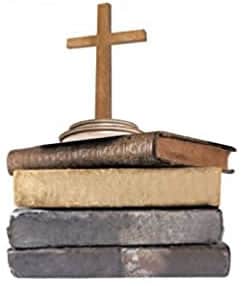
The Parallel Lives
Of The NOBLE AMERICAN RELIGIOUS THINKERS AND BELIEVERS:
Roger Williams VS. Cotton Mathers

NEW ARTICLES
Christopher Columbus
Christopher Columbus’s three ships—the Nina, Pinta, and Santa Maria—first landed on a beach of a small island within the Bahama Islands, in the Caribbean Sea, on October 12, 1492. The natives called their tiny island, Guanahani, but Columbus re-christened it San Salvador.
The ninety men aboard the three ships had sailed from Palos, Spain on August 3, 1492. Thus, Columbus had guided the men west across the Atlantic for 71 days, in mainly calm weather.
Columbus wanted to believe that he had stumbled upon the east Indies, perhaps Malaysia or Indonesia, so anxious was he to find a shorter trade route that linked India and China to Europe.
Hence, Columbus called the natives “Indians,” a name that stuck most unfairly, because India lay thousands of miles west of the Bahamas. Although Columbus did not know it, he had bumped into two continents, North and South America, unknown then in Europe.
What was the native population in 1492, of North America, including central America, Mexico, the United States, and Canada? The numbers are difficult to determine, because the natives kept no records, no books, no statistics.
One historian named Alan Taylor explained in his 2001 book, “American Colonies: The Settling of North America,” that in early 20th century, certain “low counters” pegged the number at 10 million people in both North and South America.
By the late 20th century, the “high counters” doubled that number to 20 million. Some daring “high counters” insisted upon a number as high as 100 million.
Most scholars today settle for a number near 50 million, which is half the number that the bold “high counters” had insisted upon, but five times the number that the former “low counters” had settled for.
As for the numbers north of the Rio Grande, in the future U.S. and Canada, researches argue that there were at least two million Native Americans, but perhaps as many as ten million.
What happened during the 20th century that prodded scholars to revise their numbers higher?
First, scholars pointed to evidence for a dramatic depopulation of the Native Americans that occurred throughout the 16th and into the 17th centuries, a cruel result of Columbus’s arrival..
Second, they found evidence that proved that much of North America was more densely populated than was first believed.
In 1890, the United States census recorded a total Native American population of 237,196, a number that stuns. It fell from between two and ten million down to a quarter of a million.
One environmental historian of the twentieth century, Alfred W. Crosby, Jr., said in his 1972 book, “The Columbian Exchange: Biological and Cultural Consequences of 1492,” that this population collapse was “surely the greatest tragedy in the history of the human species.”
What caused the collapse? Alan Taylor explains, “The breath, blood, sweat, and lice of the colonizers, and of their livestock and rats conveyed deadly pathogens that consumed Indians who lacked the immunological resistance of past experience.
“The greatest killers were eruptive fevers, smallpox, measles, and typhus, but Indians also suffered from respiratory infections, including whooping cough and pneumonia. Chickenpox killed Indians of all ages. One disease might weaken a victim, but another disease would kill.”
Alfred W. Crosby labeled these Columbian exchanges of diseases, “virgin soil epidemics, those in which the populations at risk have had no previous contact with the diseases that strike them and are therefore almost defenseless.” A fact, these exchanges were one-sided.
Native Americans suffered and died in far greater numbers than did the Europeans.
On Monday, October 13, the nation celebrates Columbus Day. Four states, including Nebraska, co-celebrate Columbus Day and Indigenous People’s Day, a day to reflect upon what happened 533 years ago.
Gaza Strip
Gaza Strip Bill Benson November 12, 2020 Only Palestinians live inside the Gaza Strip, a skinny stretch of flat coastal plain on the eastern shore of the Mediterranean Sea, sandwiched between Egypt and Israel. Gaza is only 25 miles long, and an average of four miles...
Books: Abandoned or preserved
Books: Abandoned or preserved Bill Benson October 29, 2020 Forty years ago, in 1980, Aaron Lansky was a 23-year old student, of Jewish heritage, living in Massachusetts, when he stumbled upon his life’s work and ambition, rescue all the books he could find, printed...
Good writing
Good writingBill Benson October 2, 2020 Mark Twain once said, “The difference between the right word and the wrong word is really a large matter. ‘Tis the difference between the lightning bug and the lightning.” Some writers choose big words to fill up a typewritten...
West Bank Settlements
West Bank Settlements by William H. Benson October 15, 2020 In June of 1967, Israel’s army captured the Sinai and Gaza Strip from Egypt, the Golan Heights from Syria, and East Jerusalem and the West Bank from the Jordanians. Although Israel returned the Sinai to Egypt...
Coincidences
Coincidences Bill Benson September 17, 2020 Ian Fleming divided his 7th James Bond novel, “Goldfinger,” into three parts: “Happenstance,” “Coincidence,” and “Enemy Action.” Three times Bond intervened in Auric Goldfinger’s diabolical plans to enrich himself, and after...
Time and Labor Day
Time and Labor Day Bill Benson September 8, 2020 On a calm summer day in 1823, in northwest South Dakota, a mountain man named Hugh Glass experienced absolute terror when he stumbled across a she-grizzly bear and her two cubs. He was alone. She stood on her hind legs,...
Older Posts
The Guns of August
The Guns of AugustBill Benson August 20, 2020 at 9:00 a.m. In 1962, the historian Barbara Tuchman published her work, “The Guns of August.” In it, she described the 30 days in August of 1914, when Europe’s governments prodded their countries into a Great War. Germany...
Authoritarianism versus liberal democracy
Authoritarianism versus liberal democracy Certain individuals desire a headstrong official to govern. They submit to that man or woman who claims all power belongs to him or herself. They follow. They obey. They do what they are told. They cease thinking for...
Inspectors General
Inspectors GeneralInspectors General by William H. Benson July 20, 2020 On Saturday night, Oct. 20, 1973, President Richard Nixon instructed Attorney General, Elliot Richards, to fire Watergate Special Prosecutor Archibald Cox. Elliot Richards though refused to comply...
Kerner Commission
Kerner CommissionKerner Commission by William H. Benson July 7, 2020 Rosa Parks and her husband Raymond lost their jobs in the backlash from Montgomery, Alabama’s successful bus boycott to end segregation on that city’s buses. In the late 1950’s, the couple moved to...
Zane Grey, Fran Striker, and the Texas Rangers
Zane Grey, Fran Striker, and the Texas RangersZane Grey, Fran Striker, and the Texas Rangers by William H. Benson June 25, 2020 Zane Grey was a most prolific author who wrote more than ninety books, mainly fictional westerns, but also non-fiction books on...
DNA and Father’s Day
DNA and Father’s DayDNA and Father’s Day by William H. Benson June 11, 2020 In Bill Bryson’s 2003 book, “A Short History of Nearly Everything,” he writes, “If your two parents had not bonded when they did—possibly to the second—you wouldn’t be here.” Your existence...

One of University of Northern Colorado’s 2020 Honored Alumni
William H. Benson
Local has provided scholarships for history students for 15 years
A Sterling resident is among five alumni selected to be recognized this year by the University of Northern Colorado. Bill Benson is one of college’s 2020 Honored Alumni.
Each year UNC honors alumni in recognition for their outstanding contributions to the college, their profession and their community. This year’s honorees were to be recognized at an awards ceremony on March 27, but due to the COVID-19 outbreak that event has been cancelled. Instead UNC will recognize the honorees in the fall during homecoming Oct. 10 and 11……
Newspaper Columns

The Duodecimal System
For centuries, the ancient Romans calculated sums with their clunky numerals: I, V, X, L, C, D, and M; or one, five, ten, 50, 100, 500, and 1,000. They knew nothing better.

The Thirteenth Amendment
On Jan. 1, 1863, President Abraham Lincoln signed the Emancipation Proclamation, and by it, he declared that “all persons held as slaves” within the rebellious states “are and henceforward shall be free.” Lincoln’s Proclamation freed some 3.1 million slaves within the Confederacy.

The Fourteenth Amendment
After Congress and enough states ratified the thirteenth amendment that terminated slavery, Congress passed the Civil Rights Act of 1866. This law declared that “all people born in the United States are entitled to be citizens, without regard to race, color, or previous condition of slavery or involuntary servitude.” The Act equated birth to citizenship.

The New-York Packet and the Constitution
Jill Lepore, the Harvard historian, published her newest book a month ago, These Truths: A History of the United States. In a short introduction, she describes in detail the Oct. 30, 1787 edition of a semi-weekly newspaper, The New-York Packet.
Mr. Benson’s writings on the U.S. Constitution are a great addition to the South Platte Sentinel. Its inspiring to see the history of the highest laws of this country passed on to others.
– Richard Hogan
Mr. Benson, I cannot thank you enough for this scholarship. As a first-generation college student, the prospect of finding a way to afford college is a very daunting one. Thanks to your generous donation, my dream of attending UNC and continuing my success here is far more achievable
– Cedric Sage Nixon
Donec bibendum tortor non vestibulum dapibus. Cras id tempor risus. Curabitur eu dui pellentesque, pharetra purus viverra.
– Extra Times
FUTURE BOOKS
- Thomas Paine vs. George Whitefield
- Ralph Waldo Emerson vs. Joseph Smith
- William James vs. Mary Baker Eddy
- Mark Twain vs. Billy Graham
- Henry Louis Mencken vs. Jim Bakker
