
By William H. Benson
The Parallel Lives
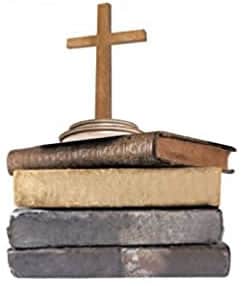
Of The NOBLE AMERICAN RELIGIOUS THINKERS AND BELIEVERS:
Roger Williams VS. Cotton Mathers

NEW ARTICLES
Time, Space, and Work
In “A Brief History of Time,” first published in 1988, the British physicist Stephen Hawking explained how space and time are connected, interwoven, interdependent with each other. Since the universe displays massive amounts of space, it also displays massive amounts of time.
When a massive object, like a planet, enters into spacetime, a warping, called gravity, results.
Certain wise human beings on planet Earth noticed that nature gives us just three sets of time: a day based upon the sun rising and setting, a month based upon the moon’s transformation from full moon to full moon every 29.5 days, and a year based upon the completion of four seasons.
In an attempt to control and rein in time, certain other wise human beings chopped up time into segments: seconds, minutes, hours, and weeks.
It was the ancient Egyptians who decided to split daylight into twelve segments. How?
They looked at a sundial that threw a shadow onto a plate, and then set a series of twelve stakes onto that plate that marked the shadow’s progress throughout the day. Why 12 and not ten? The reason is that those Egyptians used base 12, the duodecimal number system.
The ancient Greeks made the hours uniform, the same length throughout the year. It was an ancient Greek named Hipparchus, who suggested that officials divide a day into 24 hours, based upon 12 hours of daylight and 12 hours of darkness that appear on the two equinoxes each year.
The ancient Babylonians in Mesopotamia came up with the idea of splitting the hour into 60 minutes and the minute into 60 seconds. Why 60? Those ancient Babylonians used base 60, a sexagesimal system.
They noticed that 60 is highly divisible, more so than 100. A total of 12 numbers can divide evenly into 60: 1, 2, 3, 4, 5, 6, 10, 12, 15, 20, 30, and 60. However, only 9 numbers can divide evenly into 100: 1, 2, 4 5, 10, 20, 25, 50, and 100.
The seven days for one week originated with the Babylonians and Sumerians, who gave seven celestial names to a sequence of seven days, including the Sun, Moon, Mercury, Venus, Mars, Jupiter, and Saturn. Three of those names, you and I still use: Sunday, Monday, and Saturday.
Tyr, or Tiu, or Tiw was the Norse god of war and justice. Woden was an Anglo-Saxon god, similar to the Norse God, Odin. Thor was the Norse god of thunder, and Freyja was the Norse goddess of marriage. From the Norse gods, we have Tuesday, Wednesday, Thursday, and Friday.
Because the year is 365 1/4 days long, every four years, the calendar-makers add one more day onto February, and call it leap year. Last year was leap year, and the next is 2028.
If you divide 365 days by 7, you get 52.14 weeks. That fractional part of a week equals one day. Hence, in 2025, January 1 was on a Wednesday, and December 31 will fall on a Wednesday, 52 weeks and one day more. In 2026, the year begins on a Thursday, and will end on a Thursday.
Each week contains 168 hours: 56 hours for sleep (8 hours x 7 days), 40 hours of work at the office or school or shop (8 hours x 5 days), 32 hours for the weekend (16 hours awake x 2 days), and 40 free-time hours, mornings and evenings when we eat, relax, and reconnect with family.
Monday is Labor Day, a day when our country recognizes our work force with a day off from work. Throughout the year, an employee exchanges her or his time for a paycheck, a bargain.
Time moves forward, forcing more space between us today and our day of conception and birth. Time never stops sprinting. Indeed, it speeds up as we age. Ken Lange said, “Time is relentless, marching forever onward, stripping away everything it its path.”
A quote on time. “Children and spouses spell the word ‘love’ with four letters t-i-m-e.” Our affection for children and spouses equals the time and space we give to them.
Enjoy your day off on Monday.
War, pestilence, famine
War, pestilence, famineWar, pestilence, famine by William H. Benson March 30, 2020 Voltaire, the French philosopher, stated his creed in his Philosophical Dictionary. “I believe that theological disputes are at once the most ridiculous farce, and the most dreadful...
Karl Marx
Karl MarxKarl Marx by William H. Benson March 17, 2020 A month ago, I happened to catch a “Planet Money” podcast called “Overrated / Underrated.” An economist named Tyler Cowen, a professor at George Mason University, fielded a series of questions, and one was, “Who...
Adam Smith
Adam SmithAdam Smith by William H. Benson March 6, 2020 Last week, I happened to hear an economist named Tyler Cowen, professor at George Mason University, play a game called “Overrated / Underrated” on National Public Radio’s podcast “Planet Money.” An interviewer...
Coronavirus / COVID-19
Coronavirus / COVID-19Coronavirus / COVID-19 by William H. Benson February 20, 2020 In October of last year, Eric Toner, a scientist at Johns Hopkins, ran a simulation of a pandemic of a coronavirus. After six months, his simulation indicated that all countries would...
Queen Elizabeth II
Queen Elizabeth IIQueen Elizabeth II by William H. Benson February 5, 2020 After George VI, King of England, passed away on Feb. 6, 1952, his eldest daughter, Elizabeth, then just 25, became Queen Elizabeth II on that day, although her coronation at Westminster Abbey...
Time’s illusions
Time’s illusionsTime’s illusions by William H. Benson January 24, 2020 Mother Nature builds chunks of time: a day, a month, a year. From one sunup to the next defines a day. One full moon to another full moon—29 ½ days—defines a month. On occasion though, two full...
Older Posts
The Fifteenth Amendment
The Fifteenth AmendmentThe Fifteenth Amendment by William H. Benson January 2, 2020 In early Nov. of 1806, an older man climbed out of a coach and hobbled into a post office, in New Rochelle, New York. In Jan. of 1807, he would turn 70 years of age. Four months...
Thirteenth Amendment
The Thirteenth AmendmentThe Thirteenth Amendment by William H. Benson December 18, 2019 On January 1, 1863, President Abraham Lincoln signed the Emancipation Proclamation, and by it, he declared that “all persons held as slaves” within the rebellious states “are and...
Edward Snowden
Edward Snowden Edward Snowdenby William H. BensonNovember 28, 2019 Last time in these pages, I discussed John Doe, an employee at Mossack Fonseca, who revealed the extent of that Panamanian legal firm's global enterprise to shelter its clients from paying income...
John Doe and Mossack Fonseca
John Doe and Mossack Fonseca John Doe and Mossack Fonseca by William H. Benson November 14, 2019 Three weeks ago, I happened to watch an interesting movie, “The Laundromat,” starring Meryl Streep. The movie, I discovered, is not about washing and drying clothes,...
Obituary for Harold Bloom
Obituary for Harold BloomObituary for Harold Bloom by William H. Benson October 31, 2019 Harold Bloom passed away on Monday, October 14, at the age of eighty-nine, leaving behind his wife Jeanne, and his two sons, David and Daniel. Bloom also leaves behind...
Ian Urbina’s “The Outlaw Ocean”
Ian Urbina's “The Outlaw Ocean”Ian Urbina's “The Outlaw Ocean” by William H. Benson October 17, 2019 A month ago, I read a new book, fascinating and eye-opening, entitled, The Outlaw Ocean: Journeys Across the Last Untamed Frontier. It's author, Ian Urbina,...

One of University of Northern Colorado’s 2020 Honored Alumni
William H. Benson
Local has provided scholarships for history students for 15 years
A Sterling resident is among five alumni selected to be recognized this year by the University of Northern Colorado. Bill Benson is one of college’s 2020 Honored Alumni.
Each year UNC honors alumni in recognition for their outstanding contributions to the college, their profession and their community. This year’s honorees were to be recognized at an awards ceremony on March 27, but due to the COVID-19 outbreak that event has been cancelled. Instead UNC will recognize the honorees in the fall during homecoming Oct. 10 and 11……
Newspaper Columns

The Duodecimal System
For centuries, the ancient Romans calculated sums with their clunky numerals: I, V, X, L, C, D, and M; or one, five, ten, 50, 100, 500, and 1,000. They knew nothing better.

The Thirteenth Amendment
On Jan. 1, 1863, President Abraham Lincoln signed the Emancipation Proclamation, and by it, he declared that “all persons held as slaves” within the rebellious states “are and henceforward shall be free.” Lincoln’s Proclamation freed some 3.1 million slaves within the Confederacy.

The Fourteenth Amendment
After Congress and enough states ratified the thirteenth amendment that terminated slavery, Congress passed the Civil Rights Act of 1866. This law declared that “all people born in the United States are entitled to be citizens, without regard to race, color, or previous condition of slavery or involuntary servitude.” The Act equated birth to citizenship.

The New-York Packet and the Constitution
Jill Lepore, the Harvard historian, published her newest book a month ago, These Truths: A History of the United States. In a short introduction, she describes in detail the Oct. 30, 1787 edition of a semi-weekly newspaper, The New-York Packet.
Mr. Benson’s writings on the U.S. Constitution are a great addition to the South Platte Sentinel. Its inspiring to see the history of the highest laws of this country passed on to others.
– Richard Hogan
Mr. Benson, I cannot thank you enough for this scholarship. As a first-generation college student, the prospect of finding a way to afford college is a very daunting one. Thanks to your generous donation, my dream of attending UNC and continuing my success here is far more achievable
– Cedric Sage Nixon
Donec bibendum tortor non vestibulum dapibus. Cras id tempor risus. Curabitur eu dui pellentesque, pharetra purus viverra.
– Extra Times
FUTURE BOOKS
- Thomas Paine vs. George Whitefield
- Ralph Waldo Emerson vs. Joseph Smith
- William James vs. Mary Baker Eddy
- Mark Twain vs. Billy Graham
- Henry Louis Mencken vs. Jim Bakker
