
By William H. Benson
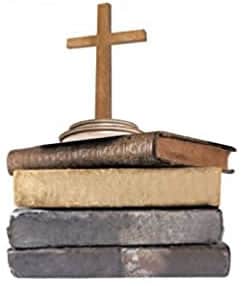
The Parallel Lives
Of The NOBLE AMERICAN RELIGIOUS THINKERS AND BELIEVERS:
Roger Williams VS. Cotton Mathers

NEW ARTICLES
“The CIA Book Club”
On Sunday, July 13, there appeared in the “New York Times Book Review” a quick look at Charlie English’s new non-fiction book, entitled, “The CIA Book Club: The Secret Mission to Win the Cold War with Forbidden Literature.” I have not read the book yet, but I will soon.
Joseph Finder, author of the review, declares that “English’s book is a bracing reminder that, not so long ago, forbidden literature really could help tip the balance of history.”
A startling idea: that literature can redirect history, topple dictatorships, and subdue tyrants.
It is difficult for young Americans today to understand, that in the latter half of the twentieth century, millions of people who lived in the Soviet Union bloc, north and south across most of Eastern Europe, could not read what they wanted to read. Liberties to read and think were cut.
Communist party officials, with their strong ties to Marxist-Leninist principles, prohibited Western books, from people either owning, selling, buying, copying, printing, publishing, or reading them. Hence the phrase, “forbidden literature.” The risk was imprisonment.
Finder writes, “Even a volume about carrots might be banned if it hinted at the joys of gardening outside the collective [farm].” The people were starved into stupidity, lacking ideas.
Adam Michnik, a leading book smuggler in Poland, wrote, “A book was like fresh air. They allowed us to survive and not go mad. A book is like a reservoir of freedom, of independent thought, a reservoir of human dignity.”
For me, a new word, “samizat.” It means, “The clandestine copying and distribution of literature banned by the state, especially in former Communist countries of Eastern Europe.”
George Minden, an official at the CIA, based in Manhattan, worked to promote smuggling. He and his colleagues formed QRHELPFUL, code name for CIA’s book smuggling operation. Together they shipped ten million books into the Soviet Union bloc over several decades.
George Minden said, “Truth is contagious.”
Joseph Finder said of the smuggling, “This was spy craft as soul craft.”
What books? the Bible, George Orwell’s “1984” and “Animal Farm,” Aldous Huxley’s “Brave New World,” spy novels by John LeCarre, mystery novels by Agatha Christie, stacks of “Cosmopolitan” magazines, plus “Three Hundred Years of American Painting.”
Although those titles do not sound subversive, Communist Party officials thought otherwise.
Minden also smuggled in typewriters, duplicators, printing presses, and copy machines.
A single copy of “1984” may have been retyped or rewritten by hand multiple times, or it was printed on hidden printing presses. With copy machines, smugglers copied it countless times.
Finder calls those copies, “flying libraries.” “They devoured them in a night, and then passed them on to their friends, so the circle of readers was far larger than the few thousand copies run off on hidden duplicators.”
Of the Soviet Bloc countries, Minden enjoyed the most success in Poland.
Some CIA officials ridiculed Minden’s covert book-smuggling scheme. “Real men don’t sell books.” They refused to believe “the idea that books could topple regimes.”
Yet, please remember that Lenin said, “Ideas are much more fatal things than guns.”
The cost for Minden’s book smuggling was a fraction of the hundreds of millions that the American taxpayers, via the CIA, paid to arm the mujahideen in Afghanistan.
In 1980, Lech Walesa and his trade union, Solidarity, went on strike at the Gdansk shipyard and won the people’s support across Poland. In 1989, voters elected him President of Poland.
Per Charlie English, “it was forbidden literature that helped to win the cold war.” Per Joseph Finder, “a paperback in the right hands helped crack the cement of totalitarian thinking.”
The Fifteenth Amendment
The Fifteenth AmendmentThe Fifteenth Amendment by William H. Benson January 2, 2020 In early Nov. of 1806, an older man climbed out of a coach and hobbled into a post office, in New Rochelle, New York. In Jan. of 1807, he would turn 70 years of age. Four months...
Thirteenth Amendment
The Thirteenth AmendmentThe Thirteenth Amendment by William H. Benson December 18, 2019 On January 1, 1863, President Abraham Lincoln signed the Emancipation Proclamation, and by it, he declared that “all persons held as slaves” within the rebellious states “are and...
Edward Snowden
Edward Snowden Edward Snowdenby William H. BensonNovember 28, 2019 Last time in these pages, I discussed John Doe, an employee at Mossack Fonseca, who revealed the extent of that Panamanian legal firm's global enterprise to shelter its clients from paying income...
John Doe and Mossack Fonseca
John Doe and Mossack Fonseca John Doe and Mossack Fonseca by William H. Benson November 14, 2019 Three weeks ago, I happened to watch an interesting movie, “The Laundromat,” starring Meryl Streep. The movie, I discovered, is not about washing and drying clothes,...
Obituary for Harold Bloom
Obituary for Harold BloomObituary for Harold Bloom by William H. Benson October 31, 2019 Harold Bloom passed away on Monday, October 14, at the age of eighty-nine, leaving behind his wife Jeanne, and his two sons, David and Daniel. Bloom also leaves behind...
Ian Urbina’s “The Outlaw Ocean”
Ian Urbina's “The Outlaw Ocean”Ian Urbina's “The Outlaw Ocean” by William H. Benson October 17, 2019 A month ago, I read a new book, fascinating and eye-opening, entitled, The Outlaw Ocean: Journeys Across the Last Untamed Frontier. It's author, Ian Urbina,...
Older Posts
The Duodecimal System
The Duodecimal SystemThe Duodecimal System by William H. Benson October 3, 2019 For centuries, the ancient Romans calculated sums with their clunky numerals: I, V, X, L, C, D, and M; or one, five, ten, fifty, one hundred, five hundred, and one thousand. They knew...
The Low Road to Capitalism
The Low Road to CapitalismThe Low Road to Capitalism by William H. Benson August 29, 2019 “In order to understand the brutality of American capitalism, you have to start on the plantation,” writes Matthew Desmond, in his article “Capitalism,” that appeared in the...
Studs Terkel’s “Working”
Studs Terkel's “Working”Studs Terkel's “Working” by William H. Benson September 19, 2019 I consider 1974 a great year, perhaps my best. In May, I graduated from Northeastern Junior College in Sterling, Colorado, spent the summer driving a tractor and a combine,...
The 1619 Project
The 1619 ProjectThe 1619 Project by William H. Benson August 22, 2019 A staff writer for The New York Times named Nikole Hannah-Jones came up with an idea for a series of essays that appeared in last Sunday's edition of The New York Times Magazine. She called it...
Charles Manson and Sharon Tate
Charles Manson and Sharon TateCharles Manson and Sharon Tate by William H. Benson August 8, 2019 On occasion, a brief sentence captures a facet of human wisdom better than does a lengthy essay or a philosophical tome of hundreds of pages. For example, “Pride...
Apollo 11
Apollo 11Apollo 11 by William H. Benson July 25, 2019 Apollo 11's Saturn V rocket lifted off from Kennedy Space Center's Launch Complex 39A, on Merritt Island, Florida, on Wednesday, July 16, 1969, at 9:32 a.m. EDT. At that moment a clock began running. Hence,...

One of University of Northern Colorado’s 2020 Honored Alumni
William H. Benson
Local has provided scholarships for history students for 15 years
A Sterling resident is among five alumni selected to be recognized this year by the University of Northern Colorado. Bill Benson is one of college’s 2020 Honored Alumni.
Each year UNC honors alumni in recognition for their outstanding contributions to the college, their profession and their community. This year’s honorees were to be recognized at an awards ceremony on March 27, but due to the COVID-19 outbreak that event has been cancelled. Instead UNC will recognize the honorees in the fall during homecoming Oct. 10 and 11……
Newspaper Columns

The Duodecimal System
For centuries, the ancient Romans calculated sums with their clunky numerals: I, V, X, L, C, D, and M; or one, five, ten, 50, 100, 500, and 1,000. They knew nothing better.

The Thirteenth Amendment
On Jan. 1, 1863, President Abraham Lincoln signed the Emancipation Proclamation, and by it, he declared that “all persons held as slaves” within the rebellious states “are and henceforward shall be free.” Lincoln’s Proclamation freed some 3.1 million slaves within the Confederacy.

The Fourteenth Amendment
After Congress and enough states ratified the thirteenth amendment that terminated slavery, Congress passed the Civil Rights Act of 1866. This law declared that “all people born in the United States are entitled to be citizens, without regard to race, color, or previous condition of slavery or involuntary servitude.” The Act equated birth to citizenship.

The New-York Packet and the Constitution
Jill Lepore, the Harvard historian, published her newest book a month ago, These Truths: A History of the United States. In a short introduction, she describes in detail the Oct. 30, 1787 edition of a semi-weekly newspaper, The New-York Packet.
Mr. Benson’s writings on the U.S. Constitution are a great addition to the South Platte Sentinel. Its inspiring to see the history of the highest laws of this country passed on to others.
– Richard Hogan
Mr. Benson, I cannot thank you enough for this scholarship. As a first-generation college student, the prospect of finding a way to afford college is a very daunting one. Thanks to your generous donation, my dream of attending UNC and continuing my success here is far more achievable
– Cedric Sage Nixon
Donec bibendum tortor non vestibulum dapibus. Cras id tempor risus. Curabitur eu dui pellentesque, pharetra purus viverra.
– Extra Times
FUTURE BOOKS
- Thomas Paine vs. George Whitefield
- Ralph Waldo Emerson vs. Joseph Smith
- William James vs. Mary Baker Eddy
- Mark Twain vs. Billy Graham
- Henry Louis Mencken vs. Jim Bakker
