
By William H. Benson
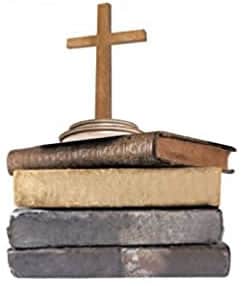
The Parallel Lives
Of The NOBLE AMERICAN RELIGIOUS THINKERS AND BELIEVERS:
Roger Williams VS. Cotton Mathers

NEW ARTICLES
“Dunkirk and D-Day”
Nine months after World War II began, the German Nazi war machine drove French, British, and Belgian troops west across France into a town on the English Channel’s coast, called Dunkirk. By late May of 1940, the German army controlled almost all of France.
Those 338,000 Allied soldiers were pinned to the coast at Dunkirk. Their backs to the English Channel, they faced certain annihilation should the German army attack a final time.
Britain’s Prime Minister Winston Churchill said that, “The whole root and core and brain of the British Army . . . seemed about to perish upon the field or to be led into an ignominious and starving captivity.”
With this catastrophic situation unfolding, British, Belgian, Dutch, Canadian, Polish, and French navies brought into play a host of warships to ferry stranded soldiers from France to England, a distance of forty-four miles between Dunkirk in France, and Dover in England.
In addition, the British government requested private owners of small vessels to sail or motor across the English Channel multiple times and assist in the evacuation.
“Because of shortages of military personnel, civilian crews manned the ‘little ships at Dunkirk,’” and “The most useful were the motor lifeboats which had good capacity and speed.”
Code named Operation Dynamo, it proved successful. Between May 27 and June 4, 1940, 338,226 troops crossed the English Channel and landed at Dover.
On June 4, Winston Churchill spoke to the House of Commons, and called the Dunkirk evacuation a miracle, yet he warned, “Wars are not won by evacuation.” He also spoke of what he feared most: “We are told that Herr Hitler has a plan for invading the British Isles.”
Churchill then spoke of the “originality of malice, the ingenuity of aggression, which our enemy displays, and that we may prepare ourselves for every kind of novel stratagem.”
Yet, Churchill refused to succumb to despair. Instead, he said that he and England will fight.
Even though many of Europe’s governments “have fallen or may fall into the grip of the Gestapo and all the odious apparatus of Nazi rule, we shall not flag or fail. We shall go on to the end, we shall fight in France, we shall fight on the seas and oceans.
“We shall defend our Island, whatever the cost may be, we shall fight on the beaches, we shall fight on the landing grounds, we shall fight in the fields and in the streets, we shall fight in the hills; we shall never surrender.”
Four years passed. On Tuesday morning, June 6, 1944, D-Day, the Allies—British, American, and other armies—began Operation Overlord, the Battle of Normandy for the liberation of Nazi-occupied Western Europe.
Normandy lies south of Dunkirk, some 250 miles distant.
Led by the American general Dwight D. Eisenhower, D-Day was the largest amphibious invasion in military history. It landed 156,000 troops on Normandy’s beaches the first day.
By late August, three months later, a little over 2,000,000 Allied troops were poised to march across Europe toward Berlin to crush “the Gestapo, and all the odious apparatus of Nazi rule.”
Citizens across Europe and America celebrated Victory in Europe Day on May 8, 1945, eleven months after D-Day. Hitler was gone, and men and women whom he had shoehorned into concentration camps burst into tears of joy.
Shakespeare wrote, “The smallest worm will turn, being trodden on,” meaning that over time a worm will tact in different directions. Power structures too will shift, dependent upon force of will, ideology, resources, skill, and strategy. All worms turn, especially when stepped on.
Segregation in Oklahoma City
Segregation in Oklahoma CitySegregation in Oklahoma City by William H. Benson October 18, 2018 In Sam Anderson's recent book, Boom Town, The Fantastical Saga of Oklahoma City, he mentions three individuals, African-Americans who grew up in OKC, when segregation...
The Oklahoma City Thunder
The Oklahoma City ThunderThe Oklahoma City Thunder by William H. Benson October 4, 2018 Early in the twenty-first century, Oklahoma City's citizens were desperate to bring to their city their first professional sports team. The city's fathers had already built a...
Boom Town
Boom TownBoom Town by William H. Benson September 20, 2018 Before Federal government officials granted Oklahoma statehood in 1907, people called it the “Indian Territory,” a reserve between Texas and Kansas that the Federal government had granted to certain...
London Blitzkrieg
London BlitzkriegLondon Blitzkrieg by William H. Benson September 6, 2018 The German Nazis decided to launch an aerial attack upon London, England, on September 6, 1940. The command to attack England came from no less than Hermann Göring, commander-in-chief of...
Pete Rose, Mike Tyson, Lance Armstrong, and Roger Clemens
Pete Rose, Mike Tyson, Lance Armstrong, and Roger ClemensPete Rose, Mike Tyson, Lance Armstrong, and Roger Clemens by William H. Benson August 23, 2018 On August 23, 1989, Pete Rose accepted a settlement with Major League Baseball's authorities that included a...
“Good Morning, Vietnam”
“Good Morning, Vietnam”“Good Morning, Vietnam” by William H. Benson August 9, 2018 Two Viet Cong terrorists—Hynh Phi Long and Le Van Ray—parked their bicycles on the riverbank across from My Canh, the Mekong Floating Restaurant, in Saigon, and left behind bags...
Older Posts
Liberia and Universal Basic Income
Liberia and Universal Basic IncomeLiberia and Universal Basic Income by William H. Benson July 26, 2018 According to the World Bank, of the world's 872.3 million people who lived below the poverty line in 2014, 179.6 million, or 20% of the total, lived in India,...
J. K. Rowling
J. K. RowlingJ. K. Rowling by William H. Benson July 13, 2018 Recently, I discovered that I can watch on YouTube certain commencement addresses at Harvard. In May this year, Mark Zuckerberg spoke, and last year it was Steven Spielberg's turn. In 2013, Oprah...
The Point of Decision
The Point of DecisionThe Point of Decision by William H. Benson July 12, 2018 In the harsh winter of 1836-1837, the New York City editor Horace Greeley wondered about how the city might rescue the homeless, and the destitute. In his newspaper, Greeley encouraged...
John Wayles, Thomas Jefferson, and Sally Hemings
John Wayles, Thomas Jefferson, and Sally HemingsJohn Wayles, Thomas Jefferson, and Sally Hemings by William H. Benson June 28, 2018 John Wayles was born in Lancaster, England, in 1715. When a teenager, he sailed to Virginia, and there he acquired vast landholdings,...
The Stasi and the Overcoat
The Stasi and the OvercoatThe Stasi and the Overcoat by William H. Benson June 14, 2018 The East German communist government collapsed in late 1989, and soon thereafter, its people were amazed to learn that the Stasi secret police had a bulging manila-colored file on...
Summer-time Reading
Summer-time ReadingSummer-time Reading by William H. Benson May 31, 2018, The invention that makes men and women most human is recorded language, embodied in the alphabet. In the far distant past, a wise soul decided to attach a written character to a human sound....

One of University of Northern Colorado’s 2020 Honored Alumni
William H. Benson
Local has provided scholarships for history students for 15 years
A Sterling resident is among five alumni selected to be recognized this year by the University of Northern Colorado. Bill Benson is one of college’s 2020 Honored Alumni.
Each year UNC honors alumni in recognition for their outstanding contributions to the college, their profession and their community. This year’s honorees were to be recognized at an awards ceremony on March 27, but due to the COVID-19 outbreak that event has been cancelled. Instead UNC will recognize the honorees in the fall during homecoming Oct. 10 and 11……
Newspaper Columns

The Duodecimal System
For centuries, the ancient Romans calculated sums with their clunky numerals: I, V, X, L, C, D, and M; or one, five, ten, 50, 100, 500, and 1,000. They knew nothing better.

The Thirteenth Amendment
On Jan. 1, 1863, President Abraham Lincoln signed the Emancipation Proclamation, and by it, he declared that “all persons held as slaves” within the rebellious states “are and henceforward shall be free.” Lincoln’s Proclamation freed some 3.1 million slaves within the Confederacy.

The Fourteenth Amendment
After Congress and enough states ratified the thirteenth amendment that terminated slavery, Congress passed the Civil Rights Act of 1866. This law declared that “all people born in the United States are entitled to be citizens, without regard to race, color, or previous condition of slavery or involuntary servitude.” The Act equated birth to citizenship.

The New-York Packet and the Constitution
Jill Lepore, the Harvard historian, published her newest book a month ago, These Truths: A History of the United States. In a short introduction, she describes in detail the Oct. 30, 1787 edition of a semi-weekly newspaper, The New-York Packet.
Mr. Benson’s writings on the U.S. Constitution are a great addition to the South Platte Sentinel. Its inspiring to see the history of the highest laws of this country passed on to others.
– Richard Hogan
Mr. Benson, I cannot thank you enough for this scholarship. As a first-generation college student, the prospect of finding a way to afford college is a very daunting one. Thanks to your generous donation, my dream of attending UNC and continuing my success here is far more achievable
– Cedric Sage Nixon
Donec bibendum tortor non vestibulum dapibus. Cras id tempor risus. Curabitur eu dui pellentesque, pharetra purus viverra.
– Extra Times
FUTURE BOOKS
- Thomas Paine vs. George Whitefield
- Ralph Waldo Emerson vs. Joseph Smith
- William James vs. Mary Baker Eddy
- Mark Twain vs. Billy Graham
- Henry Louis Mencken vs. Jim Bakker
