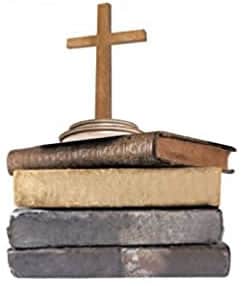

By William H. Benson
The Parallel Lives
Of The NOBLE AMERICAN RELIGIOUS THINKERS AND BELIEVERS:
Roger Williams VS. Cotton Mathers

NEW ARTICLES
Mary Beard’s “Emperor of Rome”
What did it mean to be an emperor in ancient Rome?
That is the question that Mary Beard sought to answer in her 2023 book, “Emperor of Rome.” She wrote, “Everyone then, including emperors, was trying to construe their idea of what an emperor should be in a nation that could not and would not accept kingship.”
Centuries before in Rome, a series of kings had ruled, but in 509 B.C.E., certain noblemen threw out their last king of Rome, Tarquin the Proud, and established a new government, with two consuls who served for one-year terms, plus a Senate, and popular assemblies.
For five centuries, Rome existed as a Republic. Mary Beard called it “a sort-of democracy.”
The Republic began to transition itself into an autocracy once Julius Caesar, a military leader, crossed the Rubicon River on January 10, 49 B.C.E., and launched a civil war against Pompey.
At that time, the Senate named Julius Caesar “dictator,” and after he defeated Pompey, he “used his victory in the civil war to take sole control of Rome’s government.” The Republic was destined to expire soon. In 44 B.C.E., the Senate named him “dictator forever.”
Some were shocked at Caesar’s clutch of power. Cicero—a statesmen, orator, and writer—pointed out “the danger of absolute autocracy.” The people, he wrote, “were surrendering their Republican liberties in the hope of enjoying the wise rule of one man.”
“At all costs,” he told the people, “they should fight against political servitude, for it was a form of slavery.” “Liberty could not exist unless the people held supreme power in government.”
Some Senators who feared Caesar’s one-man rule—Brutus, Cassius, and Casca—assassinated Julius Caesar on March 15, 44 B.C.E., the year Caesar was named “dictator forever.”
Another civil war followed. It was Julius Caesar’s great nephew, Octavian, who won that civil war against Marc Antony, in 29 B.C.E., and thereafter Octavian claimed the title of emperor and the name Caesar Augustus. Elections were held for a while, but results were foreordained.
Julius Caesar’s assassins had failed to solidify Rome’s Republic and prevent an autocracy.
In Mary Beard’s book, she examines twenty-nine of ancient Rome’s emperors beginning with Julius Caesar and ending with Alexander Severus, who ruled from 222 until 235 C.E.
On her book’s second page, she states her theme, “The Roman world was, in our terms, a cruel place of premature death. Murder was the ultimate way of resolving disputes, political and otherwise. The corridors of power were always bloodstained.”
After the first chapter, “One-Man Rule: The Basics,” Mary begins her second chapter, “Who’s Next? The Art of Succession,” with chilling words,
“Succession planning was the single, most glaring weak spot of the Augustan system. Who should follow Augustus? How should any successor to the Roman throne be chosen, by whom, on what principles, and from what group of candidates?
“After Augustus’s death, over the next two hundred years or so, and over the next two dozen emperors, the transition of power was almost always debated, fraught and sometimes killed for.”
Mary explains that in 54 C.E. emperor Claudius’s fourth wife, Agrippina, served her husband a dish of poisoned mushrooms, clearing the way for her son, Nero, to claim the title of emperor.
And Nero was a vicious tyrant. It was said “he fiddled while Rome burned.”
In a later chapter entitled, “I Think I Am Becoming a God,” Mary Beard discusses how the emperors transformed themselves into gods, persons they believed worthy of worship.
Our month of July originates from Julius Caesar and August from Caesar Augustus. January though is taken from the two-faced god Janus, whose left face looks into the past, pleasing historians, and its second face looks right, into a future, thrilling science fiction readers.
You and I have started a new year, 2025. Study the past to determine next steps, what ideas and actions work and those that do not. “The years teach us things that the days never knew.”
Maxims
MaximsMaxims by William H. Benson September 22, 2016 In James Michener's book, The Source, he created a fictional character who made a pest of himself among both friends and enemies by walking around ancient Israel and repeating a series of shop-worn proverbs...
Immigration
ImmigrationImmigration by William H. Benson September 8, 2016 Japan has a sizable population but a small land mass. About 127 million people live on just 377,930 km². Among the world's countries, its population ranks 11th, but its geographical area ranks 61st....
Great Plains Wildlife
Great Plains WildlifeGreat Plains Wildlife by William H. Benson August 25, 2016 Vacation this summer took me to southeast Alaska, where I met the zoologist Brent Nixon. Each of his high-energy hour-long lectures on Alaska's wildlife packed the theater and...
Watts Riots
Watts RiotsWatts Riots by William H. Benson August 11, 2016 Daniel Moynihan sbumitted his report, The Negro Family: The Case for National Action, in March of 1965, and five months later, on August 11, 1965, the Watts riots broke out. In 1965, Moynihan was a young...
Terror
TerrorTerror by William H. Benson July 28, 2016 The Scottish writer and thinker Thomas Carlyle planned to write a massive three-volume history of the French Revolution. He drafted the first volume and then asked his friend John Stuart Mill to review it. Mill's...
A Foolish Consistency
A Foolish ConsistencyA Foolish Consistency by William H. Benson July 14, 2016 Last week, I happened to hear Malcolm Gladwell's podcast on two former NBA players, Wilt Chamberlain and Rick Barry. Gladwell, the author of the best-sellers—The Tipping Point and...
Older Posts
Human Migration
Human MigrationHuman Migration by William H. Benson June 30, 2016 A constant in human affairs is migration. Ever since the days of Mitochondrial Eve, the mother of us all, Homo Sapiens have moved, migrated, and transported themselves toward the illusive distant...
Father’s Day
Father's DayFather's Day Lincoln vs. Montaigne by William H. Benson June 16, 2016 Abraham Lincoln's father, Tom, was of a different substance than his son. Tom uprooted his family again and again. They moved from Kentucky to Indiana to Illinois, and in each he...
Cancer
CancerCancer by William H. Benson June 2, 2016 Beau Biden, the Vice-President's son, passed away on Saturday, May 30, 2015, a year ago, of brain cancer. He was 46. In January, of this year, in his final State of the Union Address, President Obama announced that...
Osama bin Laden and Mao Zedong
Osama bin Laden and Mao ZedongOsama bin Laden and Mao Zedong by William H. Benson May 18, 2016 In recent months, the journalist, Seymour Hersh, published his most recent book, The Killing of Osama bin Laden and the Importance of Truth in Democratic Governance....
Housing Costs
Housing CostsHousing Costs by William H. Benson May 5, 2016 In 1890, a young Danish immigrant named Jacob Riis published his book, How the Other Half Lives: Studies Among the Tenements of New York. He began his introduction, “Long ago it was said that 'One half...
Jane Goodall
Jane GoodallJane Goodall by William H. Benson April 21, 2016 The adventure writer Edgar Rice Burroughs wrote some eighty novels based upon two characters: Tarzan and John Carter. Tarzan lived among the apes in Africa, and John Carter transported himself from...

One of University of Northern Colorado’s 2020 Honored Alumni
William H. Benson
Local has provided scholarships for history students for 15 years
A Sterling resident is among five alumni selected to be recognized this year by the University of Northern Colorado. Bill Benson is one of college’s 2020 Honored Alumni.
Each year UNC honors alumni in recognition for their outstanding contributions to the college, their profession and their community. This year’s honorees were to be recognized at an awards ceremony on March 27, but due to the COVID-19 outbreak that event has been cancelled. Instead UNC will recognize the honorees in the fall during homecoming Oct. 10 and 11……
Newspaper Columns

The Duodecimal System
For centuries, the ancient Romans calculated sums with their clunky numerals: I, V, X, L, C, D, and M; or one, five, ten, 50, 100, 500, and 1,000. They knew nothing better.

The Thirteenth Amendment
On Jan. 1, 1863, President Abraham Lincoln signed the Emancipation Proclamation, and by it, he declared that “all persons held as slaves” within the rebellious states “are and henceforward shall be free.” Lincoln’s Proclamation freed some 3.1 million slaves within the Confederacy.

The Fourteenth Amendment
After Congress and enough states ratified the thirteenth amendment that terminated slavery, Congress passed the Civil Rights Act of 1866. This law declared that “all people born in the United States are entitled to be citizens, without regard to race, color, or previous condition of slavery or involuntary servitude.” The Act equated birth to citizenship.

The New-York Packet and the Constitution
Jill Lepore, the Harvard historian, published her newest book a month ago, These Truths: A History of the United States. In a short introduction, she describes in detail the Oct. 30, 1787 edition of a semi-weekly newspaper, The New-York Packet.
Mr. Benson’s writings on the U.S. Constitution are a great addition to the South Platte Sentinel. Its inspiring to see the history of the highest laws of this country passed on to others.
– Richard Hogan
Mr. Benson, I cannot thank you enough for this scholarship. As a first-generation college student, the prospect of finding a way to afford college is a very daunting one. Thanks to your generous donation, my dream of attending UNC and continuing my success here is far more achievable
– Cedric Sage Nixon
Donec bibendum tortor non vestibulum dapibus. Cras id tempor risus. Curabitur eu dui pellentesque, pharetra purus viverra.
– Extra Times
FUTURE BOOKS
- Thomas Paine vs. George Whitefield
- Ralph Waldo Emerson vs. Joseph Smith
- William James vs. Mary Baker Eddy
- Mark Twain vs. Billy Graham
- Henry Louis Mencken vs. Jim Bakker
