
By William H. Benson
The Parallel Lives
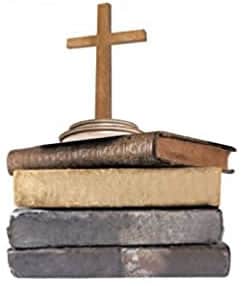
Of The NOBLE AMERICAN RELIGIOUS THINKERS AND BELIEVERS:
Roger Williams VS. Cotton Mathers

NEW ARTICLES
Quotes on the Ancient Romans
Recognizable quotes on the ancient Romans: “When in Rome, do as the Romans do.” “All roads lead to Rome.” “Rome was not built in a day.” Caesar Augustus boasted, “I found Rome a city of brick and left it a city of marble.”
The poet Virgil observed, “So vast a toil it was to found the State of Rome.”
In ancient times, the city of Rome astonished everyone. The Pantheon, the Colosseum, the Circus Maximus, the Forum, the Temple of Vespasian, the Palace of the Caesars on the Palatine, the tens of thousands of statues. All these and countless more amazed the ancient world.
A 20th-century historian, Frank Richard Cowell, wrote, “The vast metropolis of Rome from the first century A.D. onwards was more splendid than anything that had been seen on earth before or has since been seen. Building and rebuilding always went on.”
Mary Beard, a 21st-century British historian, published in 2015 a book on ancient Rome that she entitled “SPQR,” meaning “The Senate and People of Rome.”
Of the city of Rome, she wrote, “a sprawling imperial metropolis of more than a million inhabitants,” and “a mixture of luxury and filth, liberty and exploitation, civic pride, and murderous civil war.”
The Roman Republic swallowed much of Europe, the Middle East, and Northern Africa. The Empire then ruled the conquered lands and people by two axioms: keep the peace and pay taxes.
Otherwise, a conquered people could live as before. They kept their language, their laws, their religion, their coins, and their customs, but they had to keep the peace and pay taxes to Rome.
“Render unto Caesar what is Caesar’s.”
Should a conquered people rebel or refuse to pay taxes, Roman armies would appear in an instant and slaughter, or decimate, the people in a most shocking and brutal manner.
Yet, allegiance to Rome ensured that a conquered people received a multitude of benefits.
In 1979, an English comedy acting group, known as Monty Python, produced a film entitled, “Life of Brian.” The film tells of Brian Cohen, a young man living in Judea in the first century.
In one scene, a gang of thugs are planning an assassination upon a Roman official, Pontius Pilate, when the gang’s leader asks his fellow thugs, “What have the Romans ever given to us?”
In the movie’s scene, the thugs think about all of Rome’s gifts to them, and they answer: “the aqueduct, sanitation, medicine, education, wine, public order, irrigation, roads, public health.”
The gang’s leader, played by John Cleese, then asks, “All right, apart from sanitation, medicine, education, wine, public order, irrigation, roads, fresh water, public health, what have the Romans ever done for us?” One thug answers, “brought peace.”
Indeed, Pax Romana or Roman Peace lasted for 200 years, from 27 BC, with the reign of Caesar Augustus, until180 AD, with the Stoic emperor, Marcus Aurelius. Over those 200 years, the Roman empire was for the most part free of conflict, battles, and civil wars.
“Unprecedented economic prosperity” spread throughout the Empire during Pax Romana.
An 18th-century British historian named Edward Gibbon wrote a massive three-volume work between 1776 to 1788, entitled “The History of the Decline & Fall of the Roman Empire.”
In Gibbon’s first sentence, he wrote, “In the second century of the Christian era, the empire of Rome comprehended the fairest part of the earth, and the most civilized portion of mankind.”
A lad who grew up in 16th-century England named William Shakespeare loved the stories of the ancient Romans. Hence, he wrote two plays, “Julius Caesar,” and “Antony and Cleopatra.”
A favorite quote of mine from Shakespeare’s “Julius Caesar.” Prior to a battle on the plains of Phillipi, Brutus wonders aloud, “O that a man might know the end of this day’s business ere it come! But it sufficeth that the day will end, And then the end is known.”
Next time in these pages: more on Mary Beard and her 2023 book, “Emperor of Rome.”
Human Migration
Human MigrationHuman Migration by William H. Benson June 30, 2016 A constant in human affairs is migration. Ever since the days of Mitochondrial Eve, the mother of us all, Homo Sapiens have moved, migrated, and transported themselves toward the illusive distant...
Father’s Day
Father's DayFather's Day Lincoln vs. Montaigne by William H. Benson June 16, 2016 Abraham Lincoln's father, Tom, was of a different substance than his son. Tom uprooted his family again and again. They moved from Kentucky to Indiana to Illinois, and in each he...
Cancer
CancerCancer by William H. Benson June 2, 2016 Beau Biden, the Vice-President's son, passed away on Saturday, May 30, 2015, a year ago, of brain cancer. He was 46. In January, of this year, in his final State of the Union Address, President Obama announced that...
Osama bin Laden and Mao Zedong
Osama bin Laden and Mao ZedongOsama bin Laden and Mao Zedong by William H. Benson May 18, 2016 In recent months, the journalist, Seymour Hersh, published his most recent book, The Killing of Osama bin Laden and the Importance of Truth in Democratic Governance....
Housing Costs
Housing CostsHousing Costs by William H. Benson May 5, 2016 In 1890, a young Danish immigrant named Jacob Riis published his book, How the Other Half Lives: Studies Among the Tenements of New York. He began his introduction, “Long ago it was said that 'One half...
Jane Goodall
Jane GoodallJane Goodall by William H. Benson April 21, 2016 The adventure writer Edgar Rice Burroughs wrote some eighty novels based upon two characters: Tarzan and John Carter. Tarzan lived among the apes in Africa, and John Carter transported himself from...
Older Posts
Genocide and Ethnic Cleansing
Genocide and Ethnic CleansingGenocide and Ethnic Cleansing by William H. Benson April 7, 2016 On August 22, 1939, Nazi Germany's troops, tanks, and aircraft stood poised and prepared to attack Poland, its neighbor to the east, and on that day the Nazi's dictator,...
March Madness
March MadnessMarch Madness by William H. Benson March 24, 2016 The NCAA basketball games are upon us, and March Madness has arrived. The team to watch in recent years has been the University of Connecticut, where basketball is king. The men won their last...
Thoughts on Campaign 2016
Thoughts on Campaign 2016Thoughts on Campaign 2016 by William H. Benson March 10, 2016 The United States has had two father-son presidencies. The first was John Adams and his son, John Quincy Adams, and the second was George Bush and his son, George W. Bush....
“Feelings in History”
“Feelings in History”“Feelings in History” by William H. Benson February 25, 2016 Scientists want to quantify. First, they observe a phenomenon, record their observations, arrive at a set of numbers, and then build a hypothesis. This procedure—the scientific...
Presidents Day
Presidents DayPresidents Day by William H. Benson February 11, 2016 In September of 1796, President George Washington published a remarkable document, his Farewell Address “to the People of the United States on his declining of the Presidency.” After two...
“We Are the World” and Benghazi
“We Are the World” and Benghazi“We Are the World” and Benghazi by William H. Benson January 28, 2016 Late in 1984, the calypso singer Harry Belafonte decided to raise funds for the famine-starved Ethiopians in Africa. First, he approached Michael Jackson and...

One of University of Northern Colorado’s 2020 Honored Alumni
William H. Benson
Local has provided scholarships for history students for 15 years
A Sterling resident is among five alumni selected to be recognized this year by the University of Northern Colorado. Bill Benson is one of college’s 2020 Honored Alumni.
Each year UNC honors alumni in recognition for their outstanding contributions to the college, their profession and their community. This year’s honorees were to be recognized at an awards ceremony on March 27, but due to the COVID-19 outbreak that event has been cancelled. Instead UNC will recognize the honorees in the fall during homecoming Oct. 10 and 11……
Newspaper Columns

The Duodecimal System
For centuries, the ancient Romans calculated sums with their clunky numerals: I, V, X, L, C, D, and M; or one, five, ten, 50, 100, 500, and 1,000. They knew nothing better.

The Thirteenth Amendment
On Jan. 1, 1863, President Abraham Lincoln signed the Emancipation Proclamation, and by it, he declared that “all persons held as slaves” within the rebellious states “are and henceforward shall be free.” Lincoln’s Proclamation freed some 3.1 million slaves within the Confederacy.

The Fourteenth Amendment
After Congress and enough states ratified the thirteenth amendment that terminated slavery, Congress passed the Civil Rights Act of 1866. This law declared that “all people born in the United States are entitled to be citizens, without regard to race, color, or previous condition of slavery or involuntary servitude.” The Act equated birth to citizenship.

The New-York Packet and the Constitution
Jill Lepore, the Harvard historian, published her newest book a month ago, These Truths: A History of the United States. In a short introduction, she describes in detail the Oct. 30, 1787 edition of a semi-weekly newspaper, The New-York Packet.
Mr. Benson’s writings on the U.S. Constitution are a great addition to the South Platte Sentinel. Its inspiring to see the history of the highest laws of this country passed on to others.
– Richard Hogan
Mr. Benson, I cannot thank you enough for this scholarship. As a first-generation college student, the prospect of finding a way to afford college is a very daunting one. Thanks to your generous donation, my dream of attending UNC and continuing my success here is far more achievable
– Cedric Sage Nixon
Donec bibendum tortor non vestibulum dapibus. Cras id tempor risus. Curabitur eu dui pellentesque, pharetra purus viverra.
– Extra Times
FUTURE BOOKS
- Thomas Paine vs. George Whitefield
- Ralph Waldo Emerson vs. Joseph Smith
- William James vs. Mary Baker Eddy
- Mark Twain vs. Billy Graham
- Henry Louis Mencken vs. Jim Bakker
