
By William H. Benson
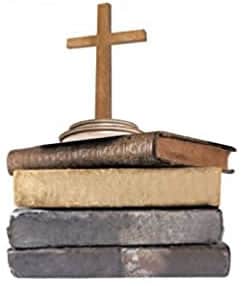
The Parallel Lives
Of The NOBLE AMERICAN RELIGIOUS THINKERS AND BELIEVERS:
Roger Williams VS. Cotton Mathers

NEW ARTICLES
Imitating Shakespeare
Strange how certain books captivate my interest, others not as much. I find myself going back again and again to reread Mark Forsyth’s 2013 book, “The Elements of Eloquence.”
In Forsyth’s “Preface,” he writes, “Shakespeare was not a genius. He was the most wonderful writer who ever breathed. But not a genius. Instead, he learned rhetorical techniques and tricks.”
Of Shakespeare’s first plays—“Love’s Labour’s Lost,” “Titus Andronicus,” and “Henry VI, Part 1”—Forsyth says, “there is not a single memorable line in them.” But the young poet / playwright kept learning, and transformed himself into a word craftsman.
Forsyth argues that Shakespeare’s first memorable line was from “Henry VI, Part 2,” when one peasant says to another, “The first thing we do, let’s kill all the lawyers.” Then in “Henry VI, Part 3,” a character says, “I can smile, and murder while I smile,” an example of anastrophe.
In each additional play, Shakespeare learned to lay down a series of thought-provoking lines. In “Much Ado About Nothing,” “Julius Caesar,” “King Lear,” “Macbeth,” “Hamlet,” and “Romeo and Juliet,” he chocked each full of wonderful lines.
A wit once called those illuminating lines, “Jewels in your mouth.”
A favorite of mine is found in “Julius Caesar,” “O that a man might know the end of this day’s business, ere it come, but it sufficeth that it will end and then the end is known.”
Forsyth writes a series of quick chapters, 39 in all, and in each he describes a single rhetorical trick. The first chapter he entitles “Alliteration,” and then says, “Nobody knows why we love to hear words that begin with the same letter, but we do.”
For example, “Full fathom five thy father lies,” comes from “The Tempest,” and, “The barge she sat like a burnished throne, Burned on the water,” from “Antony and Cleopatra.”
In recent years, people would say, “ban the bomb,” “power to the people,” “put a tiger in your tank,” “it’s enough to get your goat,” “cool as a cucumber,” and “dead as a doornail.”
On page 12, Forsyth makes a startling statement. “You can spend all day trying to think of some universal truth to set down on paper, and some poets try that. Shakespeare knew that it’s much easier to string together some words beginning with the same letter.”
“Alliteration is the simplest way to turn a memorable phrase.”
In chapter 16, Forsyth considers the “Tricolon.” Three is a magic number. “Eat, drink, and be merry.” “The Good, the Bad, and the Ugly.” “Truth, justice, and the American way.” “Faith, hope, and love.” “Friends, Romans, countrymen.” “We few, we happy few, we band of brothers.”
Not one, not two, and not four, but three items points to completeness.
In chapter 21, Forsyth explains that Shakespeare surrendered to iambic pentameter, what Forsyth calls, “the Rolls-Royce of verse forms,” or “the king of English verse forms.”
An iamb is an unstressed syllable followed by a stressed syllable, “te-TUM.” A series of five iambs in a row, a single line, is a pentameter: te-TUM, te-TUM, te-TUM, te-TUM, te-TUM.
Two examples: “If music be the food of love, play on,” from “Twelfth Night,” and “The lady doth protest too much, methinks,” from “Hamlet.” Each line contains just ten syllables.
Tuesday of this week, November 19, marked the 161st anniversary of Abraham Lincoln’s delivery of his address at the dedication of the cemetery at Gettysburg, Pennsylvania.
I wonder, how did Lincoln learn to write like that? Brief, to the point, only 272 words, inspirational, motivating. Lincoln read a lot, most often Shakespeare’s tragedies. He read and re-read “Macbeth” throughout his life, often aloud to others whom he forced to listen.
John Hay said of Lincoln, “He read Shakespeare more than all the other writers together.”
Near the end of the Gettysburg Address, Lincoln tried his hand at the elements of eloquence when he tied alliteration to a tricolon, “of the people, by the people, and for the people.”
Lord Chamberlain’s Men
Lord Chamberlain's MenLord Chamberlain's Men by William H. Benson July 16, 2015 In the spring of 1594, twenty-six London actors joined together to create an acting company, the Lord Chamberlain's Men. These actors included London's leading dramatic actor at the...
Jay Walker – Library of Human Imagination
Jay WalkerLibrary of Human ImaginationJay Walker Library of Human Imagination by William H. Benson July 2, 2015 In 2002, the multi-millionaire Jay Walker designed and built his Library of Human Imagination. Located in Ridgefield, Connecticut, Walker's 3,600...
Suki Kim and Fathers’ Day
Suki Kim and Fathers' DaySuki Kim and Fathers' Day by William H. Benson June 18, 2015 On Sunday, June 25, 1950, North Korean bombs fell on Seoul, South Korea's capital, and the civil war began. It ended three years later, on July 27, 1953, with the same division...
Futurology
FuturologyFuturology by William H. Benson June 4, 2015 Fred and Wilma Flintstone lived in the past, George and Jane Jetson will live in the future, and Ralph and Alice Kramden live in the present. Although “The Flintstones” and “The Jetsons” were animated, the...
Pedro A. Noguera and The Trouble with Black Boys
Pedro A. Noguera and The Trouble with Black BoysPedro A. Noguera and The Trouble with Black Boys by William H. Benson May 21, 2015 Pedro A. Noguera teaches education and sociology at New York University. The son of Caribbean immigrants, he has a Spanish name, but...
Lyrics and Graduation
Lyrics and GraduationLyrics and Graduation by William H. Benson May 7, 2015 Fifty years ago, on the night of May 7, 1965, in a Florida hotel room, Keith Richards strummed his guitar while a cassette recorder taped a phrase that he had dreamed, “I Can't Get No...
Older Posts
Virus
VirusVirus by William H. Benson April 23, 2015 At a TED conference on March 18, in Vancouver, Bill Gates said, “If anything kills over ten million people in the next decades, it is most likely to be a highly infectious virus, rather than war; not missiles, but...
Civil War Ends
Civil War EndsCivil War Ends by William H. Benson April 9, 2015 Abraham Lincoln recited the President's oath of office on the Capitol's steps at his second inauguration on Saturday, March 4, 1865. After four years of a ghastly series of bloody battles, the deaths...
France & Muslim Scarves
France & Muslim ScarvesFrance & Muslim Scarves by William H. Benson March 26, 2015 In France, a fight has broken out between university professors and students who wear Muslim headscarves or veils into class. Some professors insist that before they will...
Kidnapped
KidnappedKidnapped by William H. Benson March 12, 2015 In 1907, the author O. Henry wrote a short story he entitled “The Ransom of Red Chief.” In it, two crooks named Bill and Sam kidnap a red-headed boy in an Alabama town thinking that they will demand a ransom,...
Language
LanguageLanguage by William H. Benson February 26, 2015 To learn a second language is difficult, if not impossible. At an early age, a child learns to think in his or her first language, and so his or her brain is set, hardwired for that first language. After...
Abraham Lincoln & Edwin Stanton
Abraham Lincoln & Edwin StantonAbraham Lincoln & Edwin Stanton by William H. Benson February 12, 2015 Today we honor Abraham Lincoln's birthday. In the summer of 1855, George Harding hired Abraham Lincoln to assist him in a patent infringement case...

One of University of Northern Colorado’s 2020 Honored Alumni
William H. Benson
Local has provided scholarships for history students for 15 years
A Sterling resident is among five alumni selected to be recognized this year by the University of Northern Colorado. Bill Benson is one of college’s 2020 Honored Alumni.
Each year UNC honors alumni in recognition for their outstanding contributions to the college, their profession and their community. This year’s honorees were to be recognized at an awards ceremony on March 27, but due to the COVID-19 outbreak that event has been cancelled. Instead UNC will recognize the honorees in the fall during homecoming Oct. 10 and 11……
Newspaper Columns

The Duodecimal System
For centuries, the ancient Romans calculated sums with their clunky numerals: I, V, X, L, C, D, and M; or one, five, ten, 50, 100, 500, and 1,000. They knew nothing better.

The Thirteenth Amendment
On Jan. 1, 1863, President Abraham Lincoln signed the Emancipation Proclamation, and by it, he declared that “all persons held as slaves” within the rebellious states “are and henceforward shall be free.” Lincoln’s Proclamation freed some 3.1 million slaves within the Confederacy.

The Fourteenth Amendment
After Congress and enough states ratified the thirteenth amendment that terminated slavery, Congress passed the Civil Rights Act of 1866. This law declared that “all people born in the United States are entitled to be citizens, without regard to race, color, or previous condition of slavery or involuntary servitude.” The Act equated birth to citizenship.

The New-York Packet and the Constitution
Jill Lepore, the Harvard historian, published her newest book a month ago, These Truths: A History of the United States. In a short introduction, she describes in detail the Oct. 30, 1787 edition of a semi-weekly newspaper, The New-York Packet.
Mr. Benson’s writings on the U.S. Constitution are a great addition to the South Platte Sentinel. Its inspiring to see the history of the highest laws of this country passed on to others.
– Richard Hogan
Mr. Benson, I cannot thank you enough for this scholarship. As a first-generation college student, the prospect of finding a way to afford college is a very daunting one. Thanks to your generous donation, my dream of attending UNC and continuing my success here is far more achievable
– Cedric Sage Nixon
Donec bibendum tortor non vestibulum dapibus. Cras id tempor risus. Curabitur eu dui pellentesque, pharetra purus viverra.
– Extra Times
FUTURE BOOKS
- Thomas Paine vs. George Whitefield
- Ralph Waldo Emerson vs. Joseph Smith
- William James vs. Mary Baker Eddy
- Mark Twain vs. Billy Graham
- Henry Louis Mencken vs. Jim Bakker
