
By William H. Benson
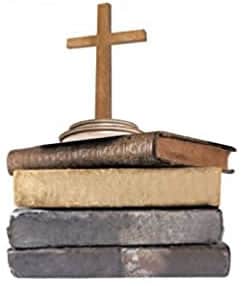
The Parallel Lives
Of The NOBLE AMERICAN RELIGIOUS THINKERS AND BELIEVERS:
Roger Williams VS. Cotton Mathers

NEW ARTICLES
People and their specializations
During the first World War, Henry Ford brought suit against the “Chicago Tribune,” because a reporter wrote that Ford was an “ignoramus.” At the trial, the newspaper’s attorneys peppered Ford with trivia questions, each designed to prove Ford’s ignorance.
To each question, Ford replied, “I do not know.”
Feeling exasperated, Ford said, “If I should wish to answer these foolish questions, I could call in men who could give me the correct answer. Now why should I fill my mind with useless details, when I have men who can supply me with all the facts I want?”
James Herriot, the English veterinarian, turned writer,” told a story of a simple guy in Darrowby, who displayed one unique and useful talent. He could imitate a fly.
When Herriot and a herdsman tried and failed to herd six cows into the farmer’s barn for a tuberculosis test, the herdsman called in the simple guy. He arrived on a bicycle and began to make a buzzing sound that the cows hated. Herriot said, “All the cows come running.”
The two stories above show how people drop into various slots: a capitalist, a reporter, an attorney, those who know trivia, those who do not, a veterinarian, a herdsman, and a simple guy who could imitate a fly.
As a woman or man strides through life, when busy assembling education, credentials, and experience, slots for various careers open and shut. A choice to focus upon one career means a multitudes of others close shut. That is the downside to specialization.
Shakespeare described this fact best. In “Julius Caesar,” Brutus tells Cassius,
“There is a tide in the affairs of men, which, taken at the flood, leads on to fortune. Omitted, all the voyage of their life is bound in shallows and in miseries. On such a full sea are we now afloat. And we must take the current when it serves, or lose our ventures.”
Some of my jobs: student, farm hand, teacher, coach, house painter, roofer, field scout, accountant, columnist, biographer, and sales. Teaching adolescents was the hardest job ever.
Mark Twain said, “I never had but two powerful ambitions. One was be a river boat pilot, and the other a preacher of the gospel. I accomplished the one, and failed in the other, because I could not supply myself with the necessary stock in trade, religion. I have given it up forever.”
How do people select the right person for a job? When people in the north in mid-nineteenth century came to understand that slavery was immoral, they looked to find someone to lead them in a fight against the white Southern slave-holders. The Northerners picked Abraham Lincoln.
Lincoln understood that if he hoped to change people’s thinking on slavery, he would have to join a political party. With a party’s collective power behind him, he could change the law.
He could seek to amend the Constitution. He could reorient the Supreme Court. He could abolish slavery. He could set free the enslaved, and eradicate the dreaded chains and whips.
Last Sunday, Democratic party officials asked Joe Biden to step aside, convinced that he could no longer fight the MAGA juggernaut. Party officials looked to Vice President Kamala Harris. A slot opened for her. They tagged her as the right person for the job.
The next day, she stated, “I was elected Attorney General in California. Before that I was a courtroom prosecutor. I took on perpetrators of all kinds.
“Predators who abused women. Fraudsters who ripped off consumers. Cheaters who broke the rules for their own gain. So hear me when I say I know Donald Trump’s type.”
In seven sentences, Harris declared her intentions. To run a Presidential campaign like a prosecuting attorney, to hold Trump accountable for his words and actions, to pin down his embellished and fabricated statements, and to demand truthful answers and responses.
“There is a tide in the affairs of men,” and women. Indeed, the tide rolls in for some, out for others. “We must take the current when it serves.” The current pulls some forward, others away. “On such a full sea are we now afloat.”
Prince Harry and IceCube
Prince Harry and IceCubePrince Harry and IceCube by William H. Benson December 19, 2013 On Friday the thirteenth Prince Harry arrived at the Amundsen-Scott South Pole station. The twenty-nine-year old British army helicopter pilot joined his six UK teammates as...
Human Migration
Human MigrationHuman Migration by William H. Benson December 5, 2013 Sixty thousand years ago perhaps as few as “a couple of hundred people,” members of the species Homo Sapiens, departed “humanity's birthplace in the Great Rift Valley of East Africa,” and...
Rex and Rose Mary Walls
Rex and Rose Mary WallsRex and Rose Mary Walls by William H. Benson November 21, 2013 Rex Walls was a character. Brash, loud, full of opinions, and convinced that he knew all that needed knowing, he stormed his way through life. When his daughter, Jeannette, then...
Magic and Michael
Magic and MichaelMagic and Michael by William H. Benson November 7, 2013 Magic and Michael. Both were from the Midwest, from the cold Rust Belt. Magic was from Lansing, Michigan, and Michael was from Gary, Indiana. When young, both moved to warm and sunny...
Dialogue
DialogueDialogue by William H. Benson October 24, 2013 In recent days I came across a book published in 2010 with a thought-provoking title, Full Circle: How the Classical World Came Back to Us. The author, an Englishman named Ferdinand Mount, argues in it that...
Jim Ryun and the Mile
Jim Ryun and the MileJim Ryun and the Mile by William H. Benson October 10, 2013 Decades ago, one lap around a high school or college track equalled a quarter of a mile. A race on the straight in front of the stands was the 100 yard dash, and a half lap was 220...
Older Posts
Literary Styles in the English Language
Literary Styles in the English LanguageLiterary Styles in the English Language by William H. Benson September 26, 2013 “September 30, 1659. I, poor, miserable Robinson Crusoe, being shipwrecked, during a dreadful storm in the offing, came on shore on this dismal...
Terror on New York’s Streets
Terror on New York's StreetsTerror on New York's Streets by William H. Benson September 12, 2013 A bomb exploded at noon sharp, on September 16, 1920, at 23 Wall Street, at the intersection of Broad and Wall Streets, the address of the J. P. Morgan Bank. The...
The March on Washington for Jobs and Freedom
The March on Washington for Jobs and FreedomThe March on Washington for Jobs and Freedom by Bill Benson August 29, 2013 Back in my preschool years, I and my brothers listened to a stack of 45 rpm records again and again. One was “Oh Danny Boy,” another was...
The French Revolution
The French RevolutionThe French Revolution by William H. Benson August, 15, 2013 King Louis XVI welcomed 1201 delegates into his Hall of Mirrors at his palace in Versailles, ten miles west of Paris, on Saturday, May 2, 1789. The king had called this...
Aware of Where We Are
Aware of Where We AreAware of Where We Are by William H. Benson August 1, 2013 In May 1986 at Harvard's graduation, an interviewer asked twenty-three graduates a simple question: “Why is it warm in the summer and cold in the winter?” Nearly all the graduates...
Egypt and Conquerers
Egypt and ConquerersEgypt and Conquerers by William H. Benson July 18, 2013 Conquerers love Egypt. Alexander the Great, Julius Caesar, and Napoleon Bonaparte each in their own time invaded Egypt, walked upon Egypt's sand, sailed on the Nile River, and stared at...

One of University of Northern Colorado’s 2020 Honored Alumni
William H. Benson
Local has provided scholarships for history students for 15 years
A Sterling resident is among five alumni selected to be recognized this year by the University of Northern Colorado. Bill Benson is one of college’s 2020 Honored Alumni.
Each year UNC honors alumni in recognition for their outstanding contributions to the college, their profession and their community. This year’s honorees were to be recognized at an awards ceremony on March 27, but due to the COVID-19 outbreak that event has been cancelled. Instead UNC will recognize the honorees in the fall during homecoming Oct. 10 and 11……
Newspaper Columns

The Duodecimal System
For centuries, the ancient Romans calculated sums with their clunky numerals: I, V, X, L, C, D, and M; or one, five, ten, 50, 100, 500, and 1,000. They knew nothing better.

The Thirteenth Amendment
On Jan. 1, 1863, President Abraham Lincoln signed the Emancipation Proclamation, and by it, he declared that “all persons held as slaves” within the rebellious states “are and henceforward shall be free.” Lincoln’s Proclamation freed some 3.1 million slaves within the Confederacy.

The Fourteenth Amendment
After Congress and enough states ratified the thirteenth amendment that terminated slavery, Congress passed the Civil Rights Act of 1866. This law declared that “all people born in the United States are entitled to be citizens, without regard to race, color, or previous condition of slavery or involuntary servitude.” The Act equated birth to citizenship.

The New-York Packet and the Constitution
Jill Lepore, the Harvard historian, published her newest book a month ago, These Truths: A History of the United States. In a short introduction, she describes in detail the Oct. 30, 1787 edition of a semi-weekly newspaper, The New-York Packet.
Mr. Benson’s writings on the U.S. Constitution are a great addition to the South Platte Sentinel. Its inspiring to see the history of the highest laws of this country passed on to others.
– Richard Hogan
Mr. Benson, I cannot thank you enough for this scholarship. As a first-generation college student, the prospect of finding a way to afford college is a very daunting one. Thanks to your generous donation, my dream of attending UNC and continuing my success here is far more achievable
– Cedric Sage Nixon
Donec bibendum tortor non vestibulum dapibus. Cras id tempor risus. Curabitur eu dui pellentesque, pharetra purus viverra.
– Extra Times
FUTURE BOOKS
- Thomas Paine vs. George Whitefield
- Ralph Waldo Emerson vs. Joseph Smith
- William James vs. Mary Baker Eddy
- Mark Twain vs. Billy Graham
- Henry Louis Mencken vs. Jim Bakker
