
By William H. Benson
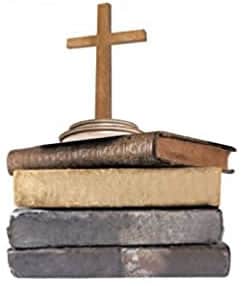
The Parallel Lives
Of The NOBLE AMERICAN RELIGIOUS THINKERS AND BELIEVERS:
Roger Williams VS. Cotton Mathers

NEW ARTICLES

Incarceration of celebrities and a president
In 2022, a jury convicted Elizabeth Holmes, founder of biotech firm Theranos, of four counts of defrauding investors. A judge sentenced Holmes to 11 years and 3 months in prison.
The film producer Harvey Weinstein was declared guilty of inappropriate relations with women twice, first at a trial in New York in 2020, and the second in California in 2022.
In 2018, the comedian Bill Cosby was sentenced to 10 years in prison for drugging and assaulting a woman, but in 2021, after serving three years in prison, he was released.
On October 2, 1978, Tim Allen was arrested in Michigan on drug charges. He received a sentence of three to seven years, but was paroled on June 12, 1981, after serving two years.
Allen went on to achieve fame on the sitcom “Home Improvement,” as well as in the movies.
On June 13, 1994, thirty years ago, Nicole Brown Simpson and her friend Ron Goldman lost their lives at Nicole’s home. O. J. Simpson, the football star, was brought to trial, but a jury declared him not guilty of the crimes. The Trial of the Century did not end with a conviction.
On September 13, 2007, Simpson and other men entered a Las Vegas hotel room and left with sports memorabilia that Simpson claimed belonged to him. He was charged with multiple felony counts, was convicted, and on December 5, 2008, was sentenced to 33 years in prison.
He was released in December of 2021, but then died on April 10, 2024, of prostate cancer.
In October 1989, the televangelist Jim Bakker was convicted on all 24 counts of having defrauded investors in his PTL Club out of $158 million and was sentenced to 45 years in prison.
He was released on parole in 1994, after completing almost five years of his sentence.
In 2004, a jury found Martha Stewart, the television celebrity, guilty of “conspiracy, making false statements, and obstruction of justice.” She served five months in a federal prison.
On August 30, 1989, Leona Helmsley, the New York City real estate mogul, was convicted of 33 felony counts of mail fraud and conspiracy. She served twenty-one months in prison.
On June 29, 2009, Bernard Madoff was sentenced to the maximum number of years allowed, 150 years. He died at a Federal prison of kidney disease on April 14, 2021, at 82 years of age.
In 1992, the heavyweight boxing champion Mike Tyson was sentenced to prison for six years, but was released early in 1995.
From the above list one can see that men and women from all walks of life—sports, comedy, business, religion, television, and real estate—can find themselves in trouble with the law.
On May 30, 2024, a jury convicted a former president, Donald J. Trump, of 34 felony counts for falsifying business records to conceal a $130,000 payment to an adult film star.
This is the first time ever that the judicial system has convicted a former president of the United States for crimes committed when in office. Judge Juan Merchan will sentence Trump on July 11, and the judge may sentence Trump to prison for years.
Reaction to the conviction varies. Benjamin Wittes of the Brookings Institute writes,
“The United States has a more than two-century-long tradition of not prosecuting presidents, but the United States now has a president whose criminality was so relentless, so dangerous, and so unrepentant as to require the abrogation of that tradition.”
Republicans call Trump’s trial, “a travesty of justice,” “a kangaroo court,” “that the decision will get overturned by a higher court,” and that “ the judge advised the jury to use bad logic.”
Who do you believe? Whose words do you trust? I say, “This too shall pass.”
Trumpism, like McCarthyism of the 1950’s, will drift away. In the future, the American people will abandon Trumpism, and latch onto another ideology, one that, we can hope, is more wise, more congenial, and more suitable for the American people. “This too shall pass.”
Mars: The Red Planet
Mars: The Red PlanetMars: The Red Planet by William H. Benson April 25, 2013 Mars One announced startling news last week that they would receive applications from those willing to travel to Mars and establish a permanent colony on the Red Planet. A Dutch...
De-Extinction
De-ExtinctionDe-Extinction by William H. Benson April 11, 2013 Spring has sprung, temperatures have warmed, and plants and animals have revived again after another winter. This all happens without human direction. No one tells the grass that now is the time to...
Ten Years Ago the United States Invaded Iraq
Ten Years Ago the United States Invaded IraqTen Years Ago the United States Invaded Iraq by William H. Benson March 28, 2013 On March 19, 2003, President George W. Bush ordered General Tommy Franks to invade Iraq. That day jets rained down bombs on military...
THE CHURCH OF SCIENTOLOGY
THE CHURCH OF SCIENTOLOGYTHE CHURCH OF SCIENTOLOGY by William H. Benson March 13, 2013 Today is March 13, L. Ron Hubbard's birthday, a day that Church of Scientology's members on every continent observe. Born in 1911, Hubbard's biography is an incredible story of...
DAVID KORESH
DAVID KORESHDAVID KORESH by William H. Benson February 28, 2013 Bill Clinton, when campaigning for President in the autumn of 1992, visited workers at an electric utility plant outside Waco, Texas. He may or may not have know that he drove past a religious...
VALENTINE’S DAY
VALENTINE'S DAYVALENTINE'S DAY by William H. Benson February 14, 2013 Stefani Joanne Angelina Germanotta was in court last week. More well known as Lady Gaga, she explained to the judge that she refuses to pay her former employee $390,000 for overtime hours...
Older Posts
Lincoln
LincolnLincoln by William H. Benson January 31, 2013 Two weeks ago I saw Steven Spielberg's recent movie, Lincoln, and came away impressed. Sally Fields did an admirable job playing Mary Todd Lincoln, and Tommy Lee Jones played Thaddeus Stevens, but it was Daniel...
DOGS
DOGSDOGS by William H. Benson January 17, 2013 January is “National Train Your Dog Month,” an activity that can lead to a surprising outcome. In 2011 a writer named Susan Orleans published a book on Rin-Tin-Tin. In the book she tells of an American soldier...
GEORGE ORWELL AND THE ENGLISH LANGUAGE
GEORGE ORWELL AND THE ENGLISH LANGUAGEGEORGE ORWELL AND THE ENGLISH LANGUAGE by William H. Benson January 3, 2013 Every year since 1976, a college in Michigan, Lake Superior State University, publishes late in the year its List of Words Banished from the Queen's...
AMERICAN CRISIS NO. ONE
AMERICAN CRISIS NO. ONEAMERICAN CRISIS NO. ONE by William H. Benson December 20, 2012 By mid-December of 1776, George Washington was despondent. The American War for Independence was not going well. His troops were undisciplined, often bootless, lacked firearms...
EARTHQUAKES
EARTHQUAKESEARTHQUAKES by William H. Benson December 6, 2012 John Bradbury, a Scottish naturalist, came to the United States to float down the Mississippi River and collect botanical specimens. On December 15, 1811 he tied up his boat at Chicksaw Bluffs—the site...
OBAMA VS. ROMNEY
OBAMA VS. ROMNEYOBAMA VS. ROMNEY by William H. Benson November 22, 2012 Although President Obama won 332 electoral votes to Romney's 206, the popular vote was closer: 62.6 million to 59.1 million. Obama won the northeast: all the states between Minnesota and Iowa...

One of University of Northern Colorado’s 2020 Honored Alumni
William H. Benson
Local has provided scholarships for history students for 15 years
A Sterling resident is among five alumni selected to be recognized this year by the University of Northern Colorado. Bill Benson is one of college’s 2020 Honored Alumni.
Each year UNC honors alumni in recognition for their outstanding contributions to the college, their profession and their community. This year’s honorees were to be recognized at an awards ceremony on March 27, but due to the COVID-19 outbreak that event has been cancelled. Instead UNC will recognize the honorees in the fall during homecoming Oct. 10 and 11……
Newspaper Columns

The Duodecimal System
For centuries, the ancient Romans calculated sums with their clunky numerals: I, V, X, L, C, D, and M; or one, five, ten, 50, 100, 500, and 1,000. They knew nothing better.

The Thirteenth Amendment
On Jan. 1, 1863, President Abraham Lincoln signed the Emancipation Proclamation, and by it, he declared that “all persons held as slaves” within the rebellious states “are and henceforward shall be free.” Lincoln’s Proclamation freed some 3.1 million slaves within the Confederacy.

The Fourteenth Amendment
After Congress and enough states ratified the thirteenth amendment that terminated slavery, Congress passed the Civil Rights Act of 1866. This law declared that “all people born in the United States are entitled to be citizens, without regard to race, color, or previous condition of slavery or involuntary servitude.” The Act equated birth to citizenship.

The New-York Packet and the Constitution
Jill Lepore, the Harvard historian, published her newest book a month ago, These Truths: A History of the United States. In a short introduction, she describes in detail the Oct. 30, 1787 edition of a semi-weekly newspaper, The New-York Packet.
Mr. Benson’s writings on the U.S. Constitution are a great addition to the South Platte Sentinel. Its inspiring to see the history of the highest laws of this country passed on to others.
– Richard Hogan
Mr. Benson, I cannot thank you enough for this scholarship. As a first-generation college student, the prospect of finding a way to afford college is a very daunting one. Thanks to your generous donation, my dream of attending UNC and continuing my success here is far more achievable
– Cedric Sage Nixon
Donec bibendum tortor non vestibulum dapibus. Cras id tempor risus. Curabitur eu dui pellentesque, pharetra purus viverra.
– Extra Times
FUTURE BOOKS
- Thomas Paine vs. George Whitefield
- Ralph Waldo Emerson vs. Joseph Smith
- William James vs. Mary Baker Eddy
- Mark Twain vs. Billy Graham
- Henry Louis Mencken vs. Jim Bakker
