
By William H. Benson
The Parallel Lives
Of The NOBLE AMERICAN RELIGIOUS THINKERS AND BELIEVERS:
Roger Williams VS. Cotton Mathers

NEW ARTICLES
Assertion is not evidence
Assertation is not evidence
On May 11, 2017, the newly-elected U.S. President, Donald Trump, issued an executive order to form a Presidential Advisory Commission on Election Integrity. He appointed Vice-President Mike Pence as chair, and Kansas State’s Secretary of State Kris Kobach as vice-chair.
For some time, Kobach had “promoted the myth of voter fraud and supported laws that restricted people from voting.” Two other members were “notorious advocates for voter suppression.” At least one member was a Democrat, Maine’s Secretary of State Matthew Dunlap.
The reason the President established the commission was because election officials had certified that Hillary Clinton had won the popular vote, 65,853,514 votes to Trump’s 62,984,828 votes, although he won the electoral college, 304 votes to Clinton’s 227.
This rare event—when a candidate wins the electoral college vote but loses the popular vote—occurred four times before: in 1824, 1876, 1888, and 2000 when George W. Bush won.
Trump insisted that as many as “5 million votes were cast illegally in November 2016.”
A writer for the Brennan Center for Justice wrote the following:
“For years, exaggerated claims of fraud have been used to justify unwarranted restrictions on voting access. The president’s invented legions of illegal voters are the most extreme such claims in recent memory. His statements have been almost universally rejected.”
On January 3, 2018, six years ago today, President Trump disbanded the Commission. Its members had met twice.
An article dated January 3, 2018 that appears on National Public Radio’s website presents a list of comments from those involved or who observed the Commission’s work.
For example, White House press Secretary Sarah Huckabee Sanders read a statement, “Despite substantial evidence of voter fraud, many states have refused to provide the Commission with basic information relevant to its inquiry.” Yet, she provided no evidence.
Officials in certain states chose to ignore the Commission’s request for “detailed voter data, including names, addresses, birthdates, partial Social Security numbers, and party affiliation.”
Kentucky’s Secretary of State Alison Lundergan Grimes said, “I’m not going to risk sensitive information for 3.2 million Kentuckians getting in the wrong hands, into the public domain.”
Some states mired the Commission down by filing multiple lawsuits against it.
Maine’s Secretary of State Matthew Dunlap said, “My ability to participate in the work of the commission was completely shut off. I was walled off from any deliberations.”
He filed a lawsuit against the Commission demanding that it turn over documents to him. In August of 2018, he said that “drafts of a commission report included a section on evidence of voter fraud that was ‘glaringly empty.’ ‘It’s calling into the darkness, looking for voter fraud.’”
“In a statement, Senate Minority Leader Chuck Schumer, D-N.Y., said that the Commission, “was nothing more than a front to suppress the vote, perpetrate dangerous and baseless claims, and was ridiculed from one end of the country to the other.”
It is sad but true that the stage was set to “perpetrate dangerous and baseless claims” later.
On Tuesday, November 3, 2020, a majority of voters elected Joseph Biden President of the United States. He received 306 electoral votes and 81,283,501 popular votes to Donald Trump’s 232 electoral votes and 74,223,975 popular votes. Biden won, Trump lost, but not end of story.
Trump insisted the election was rigged. Two days later, he said, “If you count the legal votes, I easily win. If you count the illegal votes, they can try to steal the election from us. As everybody saw, we won by historic numbers. It’s a corrupt system.” None of that is true.
On January 6, 2021, 3 years ago this week, a mob of true believers stormed into the Capitol Building intent on halting Congress’s official duty to count and certify the electoral votes. Four people lost their lives that day. A sad day in our country’s life.
THE OTHER WES MOORE
THE OTHER WES MOORETHE OTHER WES MOORE by William H. Benson July 8, 2010 A book review in the Denver Post last week caught my attention. It told of a book written by a banker named Wes Moore and was entitled The Other Wes Moore. In it, Moore recounts the details...
MIDSUMMER DAY FESTIVAL
MIDSUMMER DAY FESTIVALMIDSUMMER DAY FESTIVAL by William H. Benson June 24, 2010 For fun this summer, I read the first of Stieg Larsson’s three mystery novels, The Girl With the Dragon Tattoo. In it, Larsson, a Swedish author, tells the story of a missing person,...
A STATISTICAL ANOMALY
A STATISTICAL ANOMALYA STATISTICAL ANOMALY by William H. Benson June 10, 2010 Vikas Swarup of India published his debut novel, Q & A, in 2005. Told in first person, the story is that of Ram Mohammad Thomas, an eighteen-year-old waiter who survived a multitude...
MEMORIES
MEMORIESMEMORIES by William H. Benson May 27, 2010 “Precious Memories, how they linger,” sings the Gospel singer. Ralph Waldo Emerson, born on May 25, in 1803, hinted at those “lingering” memories, seemingly jointly held: “There is one mind common to...
JANE FRANKLIN MECOM
JANE FRANKLIN MECOMJANE FRANKLIN MECOM by William H. Benson May 13, 2010 Benjamin Franklin’s father, Josiah Franklin, was married four times, and by two of those wives, he produced seventeen children: Elizabeth, Samuel, Hannah, Josiah, Anne, Joseph I, and...
EVIDENCE
EVIDENCEEVIDENCE by William H. Benson April 29, 2010 An English word that has drifted out of common usage is the word “pseudodox,” meaning a false idea or untrue opinion, but perhaps it is time to bring the word back. Today, April 29, 2010, marks the...
Older Posts
CRITICISM
CRITICISMCRITICISM by William H. Benson April 15, 2010 Another prize-winning author once said of William Faulkner: “Well, he never faced any criticism,” a statement that I find odd, even inexplicable, for it seems to me that in America for at least the past three...
NORMAL ACCIDENTS
NORMAL ACCIDENTSNORMAL ACCIDENTS by William H. Benson April 1, 2010 Disasters surround us. They inundate our news-saturated minds, pierce our sense of safety, and disturb our sleep. That we live in a world filled with awe-inspiring technologies makes our lives...
EDUCATION REFORM
EDUCATION REFORMEDUCATION REFORM by William H. Benson March 18, 2010 The numbers are discouraging. In the first decade of the new millennium, only 68% of any freshman student could expect to graduate from high school four years later: 72% for girls and only 64.1%...
ON CRIME & PUNISHMENT
ON CRIME & PUNISHMENTON CRIME & PUNISHMENT by William H. Benson March 5, 2010 In Boston, on March 5, 1770 on a cold, moonlit evening, when a foot of snow lay on the ground, a gang of several hundred hostile Americans approached eight British soldiers, the...
HUCKLEBERRY FINN
HUCKLEBERRY FINNHUCKLEBERRY FINN by William H. Benson February 18, 2010 “You don’t know about me without you have read a book by the name of The Adventures of Tom Sawyer; but that ain’t no matter. That book was made by Mr. Mark Twain, and he told the truth,...
HAMPTON ROADS PEACE CONFERENCE
HAMPTON ROADS PEACE CONFERENCEHAMPTON ROADS PEACE CONFERENCE by William H. Benson February 4, 2010 Like a chess game, war moves through three distinct phases: a series of opening moves, a middle section, and finally an end game, the point at which one side...
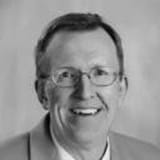
One of University of Northern Colorado’s 2020 Honored Alumni
William H. Benson
Local has provided scholarships for history students for 15 years
A Sterling resident is among five alumni selected to be recognized this year by the University of Northern Colorado. Bill Benson is one of college’s 2020 Honored Alumni.
Each year UNC honors alumni in recognition for their outstanding contributions to the college, their profession and their community. This year’s honorees were to be recognized at an awards ceremony on March 27, but due to the COVID-19 outbreak that event has been cancelled. Instead UNC will recognize the honorees in the fall during homecoming Oct. 10 and 11……
Newspaper Columns

The Duodecimal System
For centuries, the ancient Romans calculated sums with their clunky numerals: I, V, X, L, C, D, and M; or one, five, ten, 50, 100, 500, and 1,000. They knew nothing better.

The Thirteenth Amendment
On Jan. 1, 1863, President Abraham Lincoln signed the Emancipation Proclamation, and by it, he declared that “all persons held as slaves” within the rebellious states “are and henceforward shall be free.” Lincoln’s Proclamation freed some 3.1 million slaves within the Confederacy.

The Fourteenth Amendment
After Congress and enough states ratified the thirteenth amendment that terminated slavery, Congress passed the Civil Rights Act of 1866. This law declared that “all people born in the United States are entitled to be citizens, without regard to race, color, or previous condition of slavery or involuntary servitude.” The Act equated birth to citizenship.

The New-York Packet and the Constitution
Jill Lepore, the Harvard historian, published her newest book a month ago, These Truths: A History of the United States. In a short introduction, she describes in detail the Oct. 30, 1787 edition of a semi-weekly newspaper, The New-York Packet.
Mr. Benson’s writings on the U.S. Constitution are a great addition to the South Platte Sentinel. Its inspiring to see the history of the highest laws of this country passed on to others.
– Richard Hogan
Mr. Benson, I cannot thank you enough for this scholarship. As a first-generation college student, the prospect of finding a way to afford college is a very daunting one. Thanks to your generous donation, my dream of attending UNC and continuing my success here is far more achievable
– Cedric Sage Nixon
Donec bibendum tortor non vestibulum dapibus. Cras id tempor risus. Curabitur eu dui pellentesque, pharetra purus viverra.
– Extra Times
FUTURE BOOKS
- Thomas Paine vs. George Whitefield
- Ralph Waldo Emerson vs. Joseph Smith
- William James vs. Mary Baker Eddy
- Mark Twain vs. Billy Graham
- Henry Louis Mencken vs. Jim Bakker
