
By William H. Benson
The Parallel Lives
Of The NOBLE AMERICAN RELIGIOUS THINKERS AND BELIEVERS:
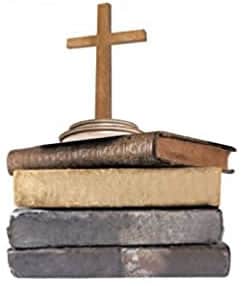
Roger Williams VS. Cotton Mathers

NEW ARTICLES

Unique words in history
Unique words in history
December 16 marked the 250th anniversary of the Boston Tea Party, when colonial Bostonians dressed as Mohawk Indians boarded three ships—Dartmouth, Eleanor, and Beaver—split open 340 chests filled with tea, and dumped their contents into Boston’s harbor.
This defiant act was directed as a protest against Parliament’s insistence that the consignees of the tea in the American colonies pay an import tax, to keep afloat the struggling British East India Company, which brought the tea to the colonists.
The colonists were angry. They paid taxes to their local colonial governments, but no elected officials from the colonies represented them in Parliament to vote or make laws there. “No taxation without representation,” was their rallying cry.
In 2009, the Tea Party Movement acquired their name from that historical event. This modern-day political party insisted upon lower taxes, a decelerating national debt, and reduced government spending, noble goals that were not in direct alignment with the colonists.
The political issue in 1773 did not exactly equal that in 2009, even though the modern-day participants claimed the same name.
On occasion, words from the history textbooks will resurface as code names for what is happening today, as a way of thinking upon an issue and grabbing attention.
Edward Muir, professor of history at Northwestern, and current president of the American Historical Association, pointed out this thought in two recent and short essays he wrote for the organization’s monthly magazine, “Perspectives on History,” in November and December.
In November, he pointed out the word “refuge” and its associated word “migration.”
He writes, “Much of history consists of narratives about people migrating to find a refuge, a safe place to survive, live, and prosper, to escape slavery, starvation, persecution.”
He lists examples. “The Biblical story tells how the ancient Israelites fled slavery in Egypt and found the Promised Land.” “The Mormons escaped from the murderous mobs in Missouri and Illinois and found refuge near the Great Salt Lake.”
He points to the Pilgrims, who found refuge near Plymouth rock on December 21, 1620, to escape England’s “Anglican establishment.” Then, “the Quaker and Baptist non-conformists” found refuge in Rhode Island some distance from Boston’s Puritans and their whips.
He mentions the Underground Railroad, a means for escaped slaves to find a refuge.
Muir then points out, “Migration and refuge are everywhere in American history.”
Yet, he cautions his readers, saying, “the narratives have blinded people about the plight of those already on the land of refuge. One group’s liberation story is another’s tale of loss.”
I liken it to a cue ball that strikes the striped and colored balls on a table causing them to scatter, or when one domino tips, the others tip also.
For example, the Cheyenne Indians’ original homeland was near the Great Lakes, in Minnesota, and Illinois, and yet once other tribes pushed from the east, they drove the Cheyennes westward, until they found a refuge on the Great Plains.
In the December issue, Muir focuses upon the word “Renaissance,” a word, he says, that “possesses a great emotive power even if most have barely a clue about its precise meaning.”
Movements, parties, and organizations appeal to that word, as a code name for a “rebirth,” something innovative and new but drawn from and discovered in the old. Its original meaning grew out of a rediscovery of the Greeks and Romans, their fascinating ideas and cultures.
I say that a re-examination and even adoption of the old is not always the best way forward, especially in the sciences, perhaps more so in philosophy, literature, and art.
Other words, sometimes overused, come to my mind: Restoration and Reconstruction.
Restoration refers to that diligent search into the past for an idea, lost long ago, and once found, brought forward into today, and claimed as a truth for all times.
Reconstruction refers to the North’s self-appointed obligation to reconfigure the former Confederate states into a new social order, one without slavery.
Tea Party, refuge and migration, Renaissance, Restoration, and Reconstruction are unique words. Handle them with care.
To my dear readers: A Merry Christmas and a Happy New Year to you and your family.
CRITICISM
CRITICISMCRITICISM by William H. Benson April 15, 2010 Another prize-winning author once said of William Faulkner: “Well, he never faced any criticism,” a statement that I find odd, even inexplicable, for it seems to me that in America for at least the past three...
NORMAL ACCIDENTS
NORMAL ACCIDENTSNORMAL ACCIDENTS by William H. Benson April 1, 2010 Disasters surround us. They inundate our news-saturated minds, pierce our sense of safety, and disturb our sleep. That we live in a world filled with awe-inspiring technologies makes our lives...
EDUCATION REFORM
EDUCATION REFORMEDUCATION REFORM by William H. Benson March 18, 2010 The numbers are discouraging. In the first decade of the new millennium, only 68% of any freshman student could expect to graduate from high school four years later: 72% for girls and only 64.1%...
ON CRIME & PUNISHMENT
ON CRIME & PUNISHMENTON CRIME & PUNISHMENT by William H. Benson March 5, 2010 In Boston, on March 5, 1770 on a cold, moonlit evening, when a foot of snow lay on the ground, a gang of several hundred hostile Americans approached eight British soldiers, the...
HUCKLEBERRY FINN
HUCKLEBERRY FINNHUCKLEBERRY FINN by William H. Benson February 18, 2010 “You don’t know about me without you have read a book by the name of The Adventures of Tom Sawyer; but that ain’t no matter. That book was made by Mr. Mark Twain, and he told the truth,...
HAMPTON ROADS PEACE CONFERENCE
HAMPTON ROADS PEACE CONFERENCEHAMPTON ROADS PEACE CONFERENCE by William H. Benson February 4, 2010 Like a chess game, war moves through three distinct phases: a series of opening moves, a middle section, and finally an end game, the point at which one side...
Older Posts
POWER AND POETRY
POWER AND POETRYPOWER AND POETRY by William H. Benson January 21, 2010 John F. Kennedy and Robert Frost met on the steps of the Capitol on January 20, 1961 at the inauguration of the 35th President of the United States. Kennedy’s associate, Stewart Udall, had...
SHERLOCK HOLMES AND 2010
SHERLOCK HOLMES AND 2010SHERLOCK HOLMES AND 2010 by William H. Benson January 14, 2010 Robert Downey, Jr. stars in the new Sherlock Holmes movie that Hollywood released this past Christmas season. Because it is an intricately-woven plot with a fair number of...
JIM BAKKER’S CHRISTMAS
JIM BAKKER’S CHRISTMASJIM BAKKER’S CHRISTMAS by William H. Benson December 24, 2009 Jim Bakker’s Christmas at Heritage USA was a spectacular production, a seasonal extravaganza, and a destination point for sightseers from near and far. Called the Christmas City...
KING EDWARD VIII ABDICATES
KING EDWARD VIII ABDICATESKING EDWARD VIII ABDICATES by William H. Benson December 10, 2009 Edward Albert Christian George Andrew Patrick David was born in 1894, into the House of Windsor, the son of George V, King of the British Empire, and Queen Mary. Being the...
THE CURSE OF KNOWLEDGE
THE CURSE OF KNOWLEDGETHE CURSE OF KNOWLEDGE by William H. Benson November 26, 2009 In last week’s New York Times Book Review, I caught the following comment: “Academics lack perspective. In a debate on whether the world is round, they would argue, ‘no,’ because...
DIVISIONS
DIVISIONSDIVISIONS by William H. Benson November 12, 2009 Charles Darwin decided at the age of 29 he should marry, and he arrived at that decision in his methodical manner—by listing the pros and cons on a piece of paper. Listed among the advantages, he wrote,...

One of University of Northern Colorado’s 2020 Honored Alumni
William H. Benson
Local has provided scholarships for history students for 15 years
A Sterling resident is among five alumni selected to be recognized this year by the University of Northern Colorado. Bill Benson is one of college’s 2020 Honored Alumni.
Each year UNC honors alumni in recognition for their outstanding contributions to the college, their profession and their community. This year’s honorees were to be recognized at an awards ceremony on March 27, but due to the COVID-19 outbreak that event has been cancelled. Instead UNC will recognize the honorees in the fall during homecoming Oct. 10 and 11……
Newspaper Columns

The Duodecimal System
For centuries, the ancient Romans calculated sums with their clunky numerals: I, V, X, L, C, D, and M; or one, five, ten, 50, 100, 500, and 1,000. They knew nothing better.

The Thirteenth Amendment
On Jan. 1, 1863, President Abraham Lincoln signed the Emancipation Proclamation, and by it, he declared that “all persons held as slaves” within the rebellious states “are and henceforward shall be free.” Lincoln’s Proclamation freed some 3.1 million slaves within the Confederacy.

The Fourteenth Amendment
After Congress and enough states ratified the thirteenth amendment that terminated slavery, Congress passed the Civil Rights Act of 1866. This law declared that “all people born in the United States are entitled to be citizens, without regard to race, color, or previous condition of slavery or involuntary servitude.” The Act equated birth to citizenship.

The New-York Packet and the Constitution
Jill Lepore, the Harvard historian, published her newest book a month ago, These Truths: A History of the United States. In a short introduction, she describes in detail the Oct. 30, 1787 edition of a semi-weekly newspaper, The New-York Packet.
Mr. Benson’s writings on the U.S. Constitution are a great addition to the South Platte Sentinel. Its inspiring to see the history of the highest laws of this country passed on to others.
– Richard Hogan
Mr. Benson, I cannot thank you enough for this scholarship. As a first-generation college student, the prospect of finding a way to afford college is a very daunting one. Thanks to your generous donation, my dream of attending UNC and continuing my success here is far more achievable
– Cedric Sage Nixon
Donec bibendum tortor non vestibulum dapibus. Cras id tempor risus. Curabitur eu dui pellentesque, pharetra purus viverra.
– Extra Times
FUTURE BOOKS
- Thomas Paine vs. George Whitefield
- Ralph Waldo Emerson vs. Joseph Smith
- William James vs. Mary Baker Eddy
- Mark Twain vs. Billy Graham
- Henry Louis Mencken vs. Jim Bakker
