
By William H. Benson
The Parallel Lives
Of The NOBLE AMERICAN RELIGIOUS THINKERS AND BELIEVERS:
Roger Williams VS. Cotton Mathers

NEW ARTICLES

What can I achieve with Greek mythology?
What can I achieve with Greek mythology?
What is the good that comes from knowing even a little about the ancient Greeks’ religion?
I prefer to learn of actual people who once lived in a historical setting, a time and a place. Greek mythology, instead, is a collection of make-believe fantasy stories I would like to know more of, but I find it hard to gain much traction from them, practical use. I wonder.
Mark Twain disparaged the whole notion. “Classics,” he said, “are the books that everybody wants to claim to have read, but nobody wants to read.”
After all, Greek religion is mythology, a series of stories about the gods and the goddesses whom the Greeks believed resided on or near Mount Olympus.
They included a dozen Olympians: Zeus, Poseidon, Hades, Hestia, Hera, Ares, Athena, Apollo, Aphrodite, Hermes, Artemis, and Hephaestus, plus a host of others.
A twentieth-century writer devoted to the ancient Greeks, Edith Hamilton, said this about the Greek religion, “It was developed not by priests, nor by prophets, nor by saints, nor by any sect of men because of a superior degree of holiness.
“It was developed by poets and artists and philosophers. The Greeks had no authoritative Sacred Book, no creed, no ten commandments, no dogmas. The very idea of orthodoxy was unknown to them. They had no theologians to draw up definitions of the eternal and infinite.”
Instead their religion was stories, written to explain difficult-to-comprehend facets of men and women’s adult lives: How to live life well. How to strive for excellence. How to recognize a good way to live.
It was Margaret Fuller, an eighteenth-century intellect, a Transcendentalist, and a contemporary of Ralph Waldo Emerson, who, “made Emerson aware of the peculiar power of mythology.” She saw what he had not seen, or could not have seen.
The twentieth-century writer and scholar of mythology Joseph Campbell would agree with Margaret Fuller. find Joseph Campbell ok at explaining mythology, Greek or others.
In 1988, Joseph Campbell and journalist Bill Moyers, appeared together in six episodes, three hours each, on a PBS show entitled, “The Power of Myth.”
In their first episode, “The Hero’s Adventure,” Campbell retells the story of Daedalus and his son Icarus, who glued wings to their backs to fly to safety on a distant island.
Daedalus warns Icarus, “Fly the middle way. Not too high, or the sun will melt the wax on your wings. Not too low, or the tides of the sea will catch you.”
Daedalus, the dad, flies the middle way and arrives safely at the island, but the ecstatic Icarus, the son, flies too high. The sun melts the wax, and the boy falls into the sea.
The myth’s takeaway? Fly the middle way. Live your life easy, without highs and lows.
In that same episode, Bill Moyers prompts Campbell, saying, “One of the intriguing points of your scholarship is that you do not believe science and mythology conflict.”
Campbell agrees. “No, they do not conflict. Science is breaking through now into mystery’s dimensions. It’s pushed itself into the sphere that myth is talking about. It has come to the edge, the interface between what can be known and what is never to be discovered.”
He gives an example. “There is a transcendent energy source. When the physicist observes subatomic particles, he’s seeing a trace on a screen. These traces come and go. We come and go. All of life comes and goes.
“That [unknowable] energy is the informing energy of all things. That’s the reason we speak of the divine. Mythic worship is addressed to that.”
In the fourth episode, “Sacrifice and Bliss,” Campbell quotes the last line of Sinclair Lewis’ novel, “Babbitt.” George Babbitt says, “I have never done the thing that I wanted to in all my life.” Campbell says of George Babbit, “That’s the man who never followed his bliss.”
Mythology. I understand that Joseph Campbell believed that if we see the myth, identify it, and apply it to our lives, it may lead us to a better outcome in life. I would agree, the myth may do that, but still, I wonder.
THANK THE TEACHERS
THANK THE TEACHERSTHANK THE TEACHERS by William H. Benson May 14, 2009 Anna Quindlen announced her retirement last week, and I was disappointed. For the past nine years, every other week, she has written the essay, “The Last Word,” on Newsweek’s inside back...
HERBERT HOOVER VS. FRANKLIN DELANO ROOSEVELT
HERBERT HOOVER VS. FRANKLIN DELANO ROOSEVELTHERBERT HOOVER VS. FRANKLIN DELANO ROOSEVELT by William H. Benson April 30, 2009 On Saturday, March 4, 1933, the President, Herbert Hoover, and the President-elect, Franklin Delano Roosevelt, rode together to the...
ALBERT EINSTEIN
ALBERT EINSTEINALBERT EINSTEIN by William H. Benson April 16, 2009 As a child, Albert Einstein had difficulty with language. He did not speak words until he was nearly three, and when he did begin to talk, he exhibited echolalia, repeating phrases and sentences...
CONNECTIONS
CONNECTIONSCONNECTIONS by William H. Benson April 1, 2009 William Manchester, the biographer and historian, was born on April 1, 1922. A Marine, he was wounded at Okinawa during World War II before returning to college where he studied journalism and English. He...
POLITICAL JUDGMENT
POLITICAL JUDGMENTPOLITICAL JUDGMENT by William H. Benson March 19, 2009 On March 19, 2003 at 9:30 p.m. est, two hours past the deadline for Iraqi dictator Saddam Hussein to resign, U.S. and British forces began a concerted air strike against Hussein’s...
MICHEL de MONTAIGNE
MICHEL de MONTAIGNEMICHEL de MONTAIGNE by William H. Benson March 5, 2009 On February 28, 1571, a French nobleman and a lawyer in Paris’s royal court named Michel de Montaigne retired. Coincidentally, it was his thirty-eighth birthday. He had shown no signs of...
Older Posts
LANGUAGES
LANGUAGESLANGUAGES by William H. Benson February 19, 2009 As Lewis and Clark traveled from tribe to tribe west across the North American continent, they remarked repeatedly on the differences among the languages of the Native American peoples. Some that they...
LINCOLN VS. DARWIN
LINCOLN VS. DARWINLINCOLN VS. DARWIN by William H. Benson February 5, 2009 “Neither man gave much evidence of his future greatness until well into middle age.” so wrote Malcolm Jones last July in an article he wrote for Newsweek, in which he compared and...
INAUGURATION
INAUGURATIONINAUGURATION by William H. Benson January 22, 2009 A literary scholar once suggested that all story lines fit into one of 36 different plots, but another suggested that actually there are only two basic plots for all great stories: “someone goes on a...
CASTRO’S CUBA
CASTRO’S CUBACASTRO’S CUBA by William H. Benson January 8, 2009 The Cuban Revolution was amazingly non-violent. On New Year’s Day in 1959, Fulgencio Batista, the Cuban dictator, boarded a jet and took his fortune, as have countless other Cubans, with him to...
1968
19681968 by Wiliam H. Benson December 25, 2008 On January 20, 1968, the Vietcong attacked five of Vietnam’s six major cities, most of its provincial capitals, and fifty towns. The Tet Offensive caught the American and South Vietnam forces by surprise, but within...
SMALLPOX
SMALLPOXSMALLPOX by William H. Benson December 11, 2008 The World Health Organization certified on December 9, 1979 that small pox had been eradicated. Two years before, WHO officials had vaccinated a hospital cook stricken with the disease in Merka, Somalia, and...
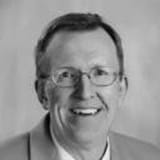
One of University of Northern Colorado’s 2020 Honored Alumni
William H. Benson
Local has provided scholarships for history students for 15 years
A Sterling resident is among five alumni selected to be recognized this year by the University of Northern Colorado. Bill Benson is one of college’s 2020 Honored Alumni.
Each year UNC honors alumni in recognition for their outstanding contributions to the college, their profession and their community. This year’s honorees were to be recognized at an awards ceremony on March 27, but due to the COVID-19 outbreak that event has been cancelled. Instead UNC will recognize the honorees in the fall during homecoming Oct. 10 and 11……
Newspaper Columns

The Duodecimal System
For centuries, the ancient Romans calculated sums with their clunky numerals: I, V, X, L, C, D, and M; or one, five, ten, 50, 100, 500, and 1,000. They knew nothing better.

The Thirteenth Amendment
On Jan. 1, 1863, President Abraham Lincoln signed the Emancipation Proclamation, and by it, he declared that “all persons held as slaves” within the rebellious states “are and henceforward shall be free.” Lincoln’s Proclamation freed some 3.1 million slaves within the Confederacy.

The Fourteenth Amendment
After Congress and enough states ratified the thirteenth amendment that terminated slavery, Congress passed the Civil Rights Act of 1866. This law declared that “all people born in the United States are entitled to be citizens, without regard to race, color, or previous condition of slavery or involuntary servitude.” The Act equated birth to citizenship.

The New-York Packet and the Constitution
Jill Lepore, the Harvard historian, published her newest book a month ago, These Truths: A History of the United States. In a short introduction, she describes in detail the Oct. 30, 1787 edition of a semi-weekly newspaper, The New-York Packet.
Mr. Benson’s writings on the U.S. Constitution are a great addition to the South Platte Sentinel. Its inspiring to see the history of the highest laws of this country passed on to others.
– Richard Hogan
Mr. Benson, I cannot thank you enough for this scholarship. As a first-generation college student, the prospect of finding a way to afford college is a very daunting one. Thanks to your generous donation, my dream of attending UNC and continuing my success here is far more achievable
– Cedric Sage Nixon
Donec bibendum tortor non vestibulum dapibus. Cras id tempor risus. Curabitur eu dui pellentesque, pharetra purus viverra.
– Extra Times
FUTURE BOOKS
- Thomas Paine vs. George Whitefield
- Ralph Waldo Emerson vs. Joseph Smith
- William James vs. Mary Baker Eddy
- Mark Twain vs. Billy Graham
- Henry Louis Mencken vs. Jim Bakker
