
By William H. Benson
The Parallel Lives
Of The NOBLE AMERICAN RELIGIOUS THINKERS AND BELIEVERS:
Roger Williams VS. Cotton Mathers

NEW ARTICLES

Steve Inskeep’s new book: “Differ We Must”
Steve Inskeep’s picture beside his book cover for Differ we Must.
Since 2004, radio personality Steve Inskeep has hosted National Public Radio’s “Morning Edition.” During Covid lockdown in 2020, at home with time to spare, Inskeep researched and wrote a book that was published this past week.
Inskeep found its title, “Differ We Must: How Lincoln Succeeded in a Divided America,” in a letter that Abraham Lincoln wrote to his good friend Joshua Speed, dated August 24, 1855.
Last week, Inskeep explained to Amna Nawaz of PBS News Hour, and Scott Simon of NPR, that Speed was from Kentucky, that he was from a rich family that owned more than 50 slaves. Speed approved of slavery. Lincoln also was from Kentucky, but his family was poor, and Lincoln hated slavery.
In that letter, Lincoln wrote, “I confess I hate to see the poor creatures hunted down, and caught, and carried back to their stripes and unrewarded toil; but I bite my lip and keep quiet.”
Lincoln then recollected a journey that he and Speed went on together, “in 1841, on a steamboat from Louisville to St. Louis.” Lincoln wrote, “There were, on board, ten or a dozen slaves, shackled together with irons. That sight was a continued torment to me.”
Lincoln then pointed out, “It is hardly fair for you to assume, that I have no interest in a thing which has, and continually exercises, the power of making me miserable. I do oppose the extension of slavery because my judgment and feelings so prompt me.”
Lincoln then wrote, “If for this you and I must differ, differ we must.”
But when he signed the letter, he wrote, “Your friend forever, A. Lincoln.” Although they did not share the same opinion on slavery, Lincoln chose to maintain their friendship, keep it alive.
This is one reason how Lincoln succeeded in a divided America. He avoided hurting others’ feelings. He hesitated to exclude people. He kept the door open. He burnt few bridges.
Yet, Lincoln was a master politician. He understood that democracy works when a majority of voters support and vote for laws that promote their self-interest.
Inskeep explained, that Lincoln told residents in the western territories, like Kansas and Nebraska, that it was in their self-interest to prohibit slavery from expanding there, because it would eliminate paying jobs that non-slaves would want to pursue and obtain.
In addition, Inskeep underscored Lincoln’s ability to relax people by telling them stories, cracking jokes, to draw them away from their harsher opinions and to align more with his.
Inskeep also noted another quality in Lincoln; the future president kept much in reserve. His campaign manager David Davis wrote of Lincoln’s ability to say little, saying, “he was the most reticent, secretive man I ever saw or expect to see.”
Steve Inskeep repeated Leonard Swett’s comment upon Lincoln, saying, “He always told only enough of his plans and purposes to induce the belief that he had communicated all, yet he reserved enough to have communicated nothing.” I say, that is a talent to admire and pursue.
The middle years of the nineteenth century were fractious times, far more so than now. The northern states favored halting the extension of slavery, but the southern states disagreed.
Because Abraham Lincoln ran for President of the United States in 1860, and was elected, voters in eleven states voted to secede, or to vacate from the Union. Between December 20, 1860, and July 2, 1861, in six months, this Union of States split apart.
In Inskeep’s book, he lists sixteen people with whom Lincoln agreed to disagree. In addition to Joshua Speed, there was Stephen Douglas, William Seward, George McClellan, Frederick Douglass, Mary Ellen Wise, Lincoln’s wife, Mary Todd Lincoln, and others.
Inskeep said, “Lincoln didn’t ostracize people. He didn’t take a Puritan approach to politics. He tried to persuade them. That often failed. With some he was not going to compromise.”
Lincoln knew, Inskeep said, “that he had to figure out a way to reach out to people who differed with him to find enough agreement that they could form a majority,” that would then vote and change the laws written into the Constitution that permitted slavery.
In that effort, Abraham Lincoln succeeded.
LANGUAGES
LANGUAGESLANGUAGES by William H. Benson February 19, 2009 As Lewis and Clark traveled from tribe to tribe west across the North American continent, they remarked repeatedly on the differences among the languages of the Native American peoples. Some that they...
LINCOLN VS. DARWIN
LINCOLN VS. DARWINLINCOLN VS. DARWIN by William H. Benson February 5, 2009 “Neither man gave much evidence of his future greatness until well into middle age.” so wrote Malcolm Jones last July in an article he wrote for Newsweek, in which he compared and...
INAUGURATION
INAUGURATIONINAUGURATION by William H. Benson January 22, 2009 A literary scholar once suggested that all story lines fit into one of 36 different plots, but another suggested that actually there are only two basic plots for all great stories: “someone goes on a...
CASTRO’S CUBA
CASTRO’S CUBACASTRO’S CUBA by William H. Benson January 8, 2009 The Cuban Revolution was amazingly non-violent. On New Year’s Day in 1959, Fulgencio Batista, the Cuban dictator, boarded a jet and took his fortune, as have countless other Cubans, with him to...
1968
19681968 by Wiliam H. Benson December 25, 2008 On January 20, 1968, the Vietcong attacked five of Vietnam’s six major cities, most of its provincial capitals, and fifty towns. The Tet Offensive caught the American and South Vietnam forces by surprise, but within...
SMALLPOX
SMALLPOXSMALLPOX by William H. Benson December 11, 2008 The World Health Organization certified on December 9, 1979 that small pox had been eradicated. Two years before, WHO officials had vaccinated a hospital cook stricken with the disease in Merka, Somalia, and...
Older Posts
A SHORT READING LIST
A SHORT READING LISTA SHORT READING LIST by William H. Benson November 13, 2008 In the June 1, 2008 edition of the New York Times Book Review, nineteen living authors were asked to suggest certain books for the, at that time, three Presidential candidates:...
PRESIDENTIAL INTELLECT
PRESIDENTIAL INTELLECTPRESIDENTIAL INTELLECT by William H. Benson October 30, 2008 At the founding of our nation and the creation of the government, the intellectuals ruled. Madison, Adams, Jefferson, Franklin, and Hamilton had each read the political treatises...
MOGADISHU AND TRIPOLI
MOGADISHU AND TRIPOLIMOGADISHU AND TRIPOLI by William H. Benson October 16, 2008 The battle began on October 3, 1993, when rebel forces in Mogadishu, Somalia, armed with a rocket-propelled grenade, shot down a UH-60 Blackhawk helicopter, pinning the American crew...
KING, PRIEST, JESTER, SCRIBE
KING, PRIEST, JESTER, SCRIBEKING, PRIEST, JESTER, SCRIBE by William H. Benson October 2, 2008 I recently read Alan Alda’s newest book, Things I Overheard While Talking to Myself, in which, after a lifetime of acting on stage and on the screen, he addressed a...
NUMBERS—ZERO, ONE, TWO, THREE
NUMBERS—ZERO, ONE, TWO, THREENUMBERS—ZERO, ONE, TWO, THREE by William H. Benson September 18, 2008 For millennium humankind struggled with mathematics before arriving at the concept of a zero, moving from the idea of empty to nothing to finally the modern zero....
PATRICK BUCHANAN
PATRICK BUCHANANPATRICK BUCHANAN by William H. Benson September 4, 2008 Recently, I read Patrick Buchanan’s book, Day of Reckoning, a shrill attack upon George Bush’s noble vision of America’s grand role in the world. Buchanan, a pugnacious, opinionated, and...
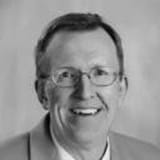
One of University of Northern Colorado’s 2020 Honored Alumni
William H. Benson
Local has provided scholarships for history students for 15 years
A Sterling resident is among five alumni selected to be recognized this year by the University of Northern Colorado. Bill Benson is one of college’s 2020 Honored Alumni.
Each year UNC honors alumni in recognition for their outstanding contributions to the college, their profession and their community. This year’s honorees were to be recognized at an awards ceremony on March 27, but due to the COVID-19 outbreak that event has been cancelled. Instead UNC will recognize the honorees in the fall during homecoming Oct. 10 and 11……
Newspaper Columns

The Duodecimal System
For centuries, the ancient Romans calculated sums with their clunky numerals: I, V, X, L, C, D, and M; or one, five, ten, 50, 100, 500, and 1,000. They knew nothing better.

The Thirteenth Amendment
On Jan. 1, 1863, President Abraham Lincoln signed the Emancipation Proclamation, and by it, he declared that “all persons held as slaves” within the rebellious states “are and henceforward shall be free.” Lincoln’s Proclamation freed some 3.1 million slaves within the Confederacy.

The Fourteenth Amendment
After Congress and enough states ratified the thirteenth amendment that terminated slavery, Congress passed the Civil Rights Act of 1866. This law declared that “all people born in the United States are entitled to be citizens, without regard to race, color, or previous condition of slavery or involuntary servitude.” The Act equated birth to citizenship.

The New-York Packet and the Constitution
Jill Lepore, the Harvard historian, published her newest book a month ago, These Truths: A History of the United States. In a short introduction, she describes in detail the Oct. 30, 1787 edition of a semi-weekly newspaper, The New-York Packet.
Mr. Benson’s writings on the U.S. Constitution are a great addition to the South Platte Sentinel. Its inspiring to see the history of the highest laws of this country passed on to others.
– Richard Hogan
Mr. Benson, I cannot thank you enough for this scholarship. As a first-generation college student, the prospect of finding a way to afford college is a very daunting one. Thanks to your generous donation, my dream of attending UNC and continuing my success here is far more achievable
– Cedric Sage Nixon
Donec bibendum tortor non vestibulum dapibus. Cras id tempor risus. Curabitur eu dui pellentesque, pharetra purus viverra.
– Extra Times
FUTURE BOOKS
- Thomas Paine vs. George Whitefield
- Ralph Waldo Emerson vs. Joseph Smith
- William James vs. Mary Baker Eddy
- Mark Twain vs. Billy Graham
- Henry Louis Mencken vs. Jim Bakker
