
By William H. Benson
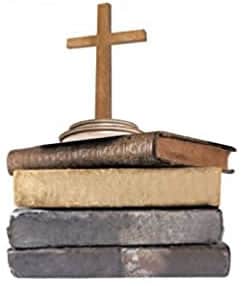
The Parallel Lives
Of The NOBLE AMERICAN RELIGIOUS THINKERS AND BELIEVERS:
Roger Williams VS. Cotton Mathers

NEW ARTICLES

Peering into the future
Peering into the future
Some people possess a talent to peer deep into the future. In Biblical times people called them prophets. In the Middle Ages, people believed them wizards. Today they are economists who make projections based upon previous business data.
Thomas Paine was an unknown writer in Philadelphia, fresh off the boat from England, but he peered deep into the future, more than did others already here.
In 1776, in “Common Sense, Paine wrote, “We have it in our power to begin the world over again. A situation similar to the present hath not happened since the days of Noah until now.
“The birthday of a new world is at hand, and a race of men, as perhaps numerous as all Europe contains, are to receive their portion of freedom from the events of a few months.”
Paine was wrong about one thing there. The American Revolution lasted for over eight years, not “the events of a few months.” Yet, after two and a half centuries, we can conclude that Paine for the most part was correct in his opinion of America.
He saw what his contemporaries dared not to see, that the colonists in America needed to separate from King and Parliament.
In recent years, Warren Buffett echoed Paine’s long-term view of the United States.
“I’ll repeat what I’ve said in the past and expect to say in future years: Babies born in America today are the luckiest crop in history. It is a mistake to bet against America.”
Thomas Paine and Warren Buffett recognized America’s vast potential, a runway of opportunity for the world’s ambitious and hardworking people, a flywheel of success, a role model for other nations.
Their optimism in America’s future is a breath of fresh air that defies the prevalent pessimism that disturbs many Americans’ thoughts today. Zig Ziglar, a prominent 20th-century sales trainer, called that “stinking thinking.”
I say, “toss aside the ‘stinking thinking,’” “discard it,” “throw it out the window.”
Instead, grab hold of that same optimism that has enlightened millions of previous generations of Americans who were “fresh off the boat,” but knew how to work and strive for a better life and how to demonstrate that they belong here. They succeeded.
This week I mark the beginning of another decade of life, in America. At this lofty age, and after thirty-five years of writing biweekly columns, I submit a series of observations.
A first observation: America remains a wonderful place to build a better future.
A second observation: the zealots of the world who harangue or even riot because of political or religious disputes refuse to peer very far into the future. Their thirst and grasp for immediate power clouds their thinking. They see “now” but cannot see “later.”
They play checkers, jumping hither and thither, rather than chess, where they marshal their capital resources and apply them in a planned attack across sixty-four squares.
A third observation: how one treats others often dictates how far a person rises in the future. Treat others with dignity, and that tide of goodwill will lift all boats.
A fourth observation: hesitation often yields better results. There is a reason that the producers entitled Gene Hackman and Sharon Stone’s movie, “The Quick and the Dead.” Hesitation forces a person to peer into a future and check out surprise contingencies.
A fifth observation: writing and thinking are often synonymous, different sides of a coin. Shakespeare, Emerson, and Thomas Paine, I am convinced, are the better writers because they thought the best, and they thought the best because they wrote so well.
When writing and thinking, a person peers into an undefined future and sees shapes.
I say to you my dear readers, gaze deep into your own future and build whatever it is that you envision there. “A birthday of a new world is at hand.”
A SHORT READING LIST
A SHORT READING LISTA SHORT READING LIST by William H. Benson November 13, 2008 In the June 1, 2008 edition of the New York Times Book Review, nineteen living authors were asked to suggest certain books for the, at that time, three Presidential candidates:...
PRESIDENTIAL INTELLECT
PRESIDENTIAL INTELLECTPRESIDENTIAL INTELLECT by William H. Benson October 30, 2008 At the founding of our nation and the creation of the government, the intellectuals ruled. Madison, Adams, Jefferson, Franklin, and Hamilton had each read the political treatises...
MOGADISHU AND TRIPOLI
MOGADISHU AND TRIPOLIMOGADISHU AND TRIPOLI by William H. Benson October 16, 2008 The battle began on October 3, 1993, when rebel forces in Mogadishu, Somalia, armed with a rocket-propelled grenade, shot down a UH-60 Blackhawk helicopter, pinning the American crew...
KING, PRIEST, JESTER, SCRIBE
KING, PRIEST, JESTER, SCRIBEKING, PRIEST, JESTER, SCRIBE by William H. Benson October 2, 2008 I recently read Alan Alda’s newest book, Things I Overheard While Talking to Myself, in which, after a lifetime of acting on stage and on the screen, he addressed a...
NUMBERS—ZERO, ONE, TWO, THREE
NUMBERS—ZERO, ONE, TWO, THREENUMBERS—ZERO, ONE, TWO, THREE by William H. Benson September 18, 2008 For millennium humankind struggled with mathematics before arriving at the concept of a zero, moving from the idea of empty to nothing to finally the modern zero....
PATRICK BUCHANAN
PATRICK BUCHANANPATRICK BUCHANAN by William H. Benson September 4, 2008 Recently, I read Patrick Buchanan’s book, Day of Reckoning, a shrill attack upon George Bush’s noble vision of America’s grand role in the world. Buchanan, a pugnacious, opinionated, and...
Older Posts
THANKSGIVING DAY ’S RANDOM THOUGHTS
THANKSGIVING DAY ’S RANDOM THOUGHTSTHANKSGIVING DAY ’S RANDOM THOUGHTS by William H. Benson August 27, 2008 Coincidences, moments of serendipity, and successful turnarounds surprise us. Our intuition expects one thing, but suddenly when we perceive the reality of...
H. L. MENCKEN AND POLITICAL CONVENTIONS
H. L. MENCKEN AND POLITICAL CONVENTIONSH. L. MENCKEN AND POLITICAL CONVENTIONS by William H. Benson August 21, 2008 In 1904, a cub newspaper reporter, not quite twenty-four, attended his first national political convention: his name was Henry Louis Mencken, and...
FIGHTING
FIGHTINGFIGHTING by William H. Benson August 7, 2008 In 1791, Alexander Hamilton, then Secretary of Treasury, urged Congress to pass a law that placed an excise tax on whiskey. He was anxious to lay his hands on more revenues and pay down the new government’s...
RICHARD NIXON AND BILLY GRAHAM
RICHARD NIXON AND BILLY GRAHAMRICHARD NIXON AND BILLY GRAHAM by William H. Benson August 7, 2008 The two men—Billy Graham and Richard Nixon—were great friends. They had known each other since 1950. About the same age with children about the same age, the two...
DEAN MARTIN AND JERRY LEWIS
DEAN MARTIN AND JERRY LEWISDEAN MARTIN AND JERRY LEWIS by William H. Benson July 24, 2008 Joseph (Jerome) Levitch, aka Jerry Lewis, of Russian Jewish heritage and from Newark, New Jersey, had an act: on stage, he would play records of famous singers and then...
JEAN JACQUES ROUSSEAU
JEAN JACQUES ROUSSEAUJEAN JACQUES ROUSSEAU by William H. Benson July 10, 2008 Next Monday, July 14, marks the anniversary of the Storming of the Bastille, the day that the French Revolution began in 1789 in Paris. The Bastille was the King’s prison, a hated...

One of University of Northern Colorado’s 2020 Honored Alumni
William H. Benson
Local has provided scholarships for history students for 15 years
A Sterling resident is among five alumni selected to be recognized this year by the University of Northern Colorado. Bill Benson is one of college’s 2020 Honored Alumni.
Each year UNC honors alumni in recognition for their outstanding contributions to the college, their profession and their community. This year’s honorees were to be recognized at an awards ceremony on March 27, but due to the COVID-19 outbreak that event has been cancelled. Instead UNC will recognize the honorees in the fall during homecoming Oct. 10 and 11……
Newspaper Columns

The Duodecimal System
For centuries, the ancient Romans calculated sums with their clunky numerals: I, V, X, L, C, D, and M; or one, five, ten, 50, 100, 500, and 1,000. They knew nothing better.

The Thirteenth Amendment
On Jan. 1, 1863, President Abraham Lincoln signed the Emancipation Proclamation, and by it, he declared that “all persons held as slaves” within the rebellious states “are and henceforward shall be free.” Lincoln’s Proclamation freed some 3.1 million slaves within the Confederacy.

The Fourteenth Amendment
After Congress and enough states ratified the thirteenth amendment that terminated slavery, Congress passed the Civil Rights Act of 1866. This law declared that “all people born in the United States are entitled to be citizens, without regard to race, color, or previous condition of slavery or involuntary servitude.” The Act equated birth to citizenship.

The New-York Packet and the Constitution
Jill Lepore, the Harvard historian, published her newest book a month ago, These Truths: A History of the United States. In a short introduction, she describes in detail the Oct. 30, 1787 edition of a semi-weekly newspaper, The New-York Packet.
Mr. Benson’s writings on the U.S. Constitution are a great addition to the South Platte Sentinel. Its inspiring to see the history of the highest laws of this country passed on to others.
– Richard Hogan
Mr. Benson, I cannot thank you enough for this scholarship. As a first-generation college student, the prospect of finding a way to afford college is a very daunting one. Thanks to your generous donation, my dream of attending UNC and continuing my success here is far more achievable
– Cedric Sage Nixon
Donec bibendum tortor non vestibulum dapibus. Cras id tempor risus. Curabitur eu dui pellentesque, pharetra purus viverra.
– Extra Times
FUTURE BOOKS
- Thomas Paine vs. George Whitefield
- Ralph Waldo Emerson vs. Joseph Smith
- William James vs. Mary Baker Eddy
- Mark Twain vs. Billy Graham
- Henry Louis Mencken vs. Jim Bakker
