
By William H. Benson
The Parallel Lives
Of The NOBLE AMERICAN RELIGIOUS THINKERS AND BELIEVERS:
Roger Williams VS. Cotton Mathers

NEW ARTICLES
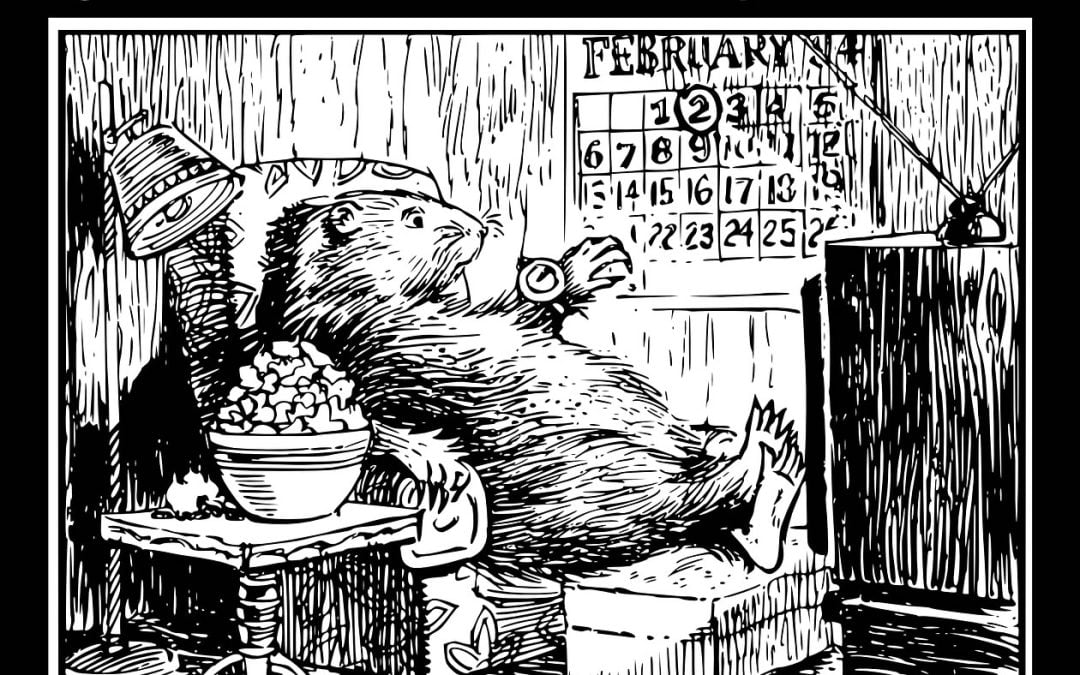
Groundhog Day
On February 4, 1977, the band Fleetwood Mac released their record-selling “Rumours” album. Lindsey Buckingham and Christine McVie sang one of its songs, “Don’t Stop.”
“If you wake up and don’t want to smile. If it takes just a little while. Open your eyes and look at the day. You’ll see things in a different way. Don’t stop thinking about tomorrow. Don’t stop. It’ll soon be here. It’ll be better than before. Yesterday’s gone. Yesterday’s gone.”
Last week, for the first time, I watched Bill Murray play the part of Phil Connors, in the movie “Groundhog Day.” For a romantic comedy, I would say that it was ok, even better than ok.
Phil Connors is an arrogant, obnoxious weather forecaster, who works at a Pittsburgh television station. His boss sends him to Punxsutawney, Pennsylvania, eighty miles away, to report on the town’s annual Groundhog Day celebration, set for February 2.
With his producer Rita and cameraman Larry, Connors drives to Punxsutawney on February 1. The next morning, February 2, an alarm clock awakens Connors at 6:00 a.m., in a bed inside the town’s bed and breakfast. The radio plays Sonny and Cher singing, “I’ve Got You Babe.”
A radio DJ then says, “OK, campers, rise and shine, and don’t forget your booties, because it’s cold out there! The National Weather Service is calling for a big blizzard thing today.”
Connors meets Rita and Larry at Gobler’s Knob in the town square to watch the groundhog come out of its box. Connors looks into Larry’s camera and speaks. Rita watches and approves, even though Connors acts and talks in a condescending way about the town’s citizens.
Once the groundhog sees its shadow, an official declares that winter will last six more weeks.
Connors, Rita, and Larry drive out of Punxsutawney, but a blizzard forces them back to the town. The next morning at 6:00 a.m., in his bed, Connors awakens to hear “I’ve Got You Babe,” and the DJ repeats word for word his call for a big blizzard. Connors thinks this odd.
Outside, he notices people walking to Gobler’s Knob. He asks someone what day it is and learns that it is February 2, Groundhog Day. He meets Rita and Larry, but they do not remember that they completed all this yesterday. Larry films Phil a second time.
No one else in Punxsutawney remembers, only Phil Connors.
The next morning at 6:00 a.m., he awakens to hear Sonny and Cher singing, “I’ve Got You Babe,” and to the DJ predicting a blizzard. It is again February 2, Groundhog Day. The same thing happens the next day, and the next day, dozens, perhaps hundreds of times.
He soon realizes that tomorrow never arrives. Every new morning is February 2. He is stuck in a time loop, a Twilight Zone, and Phil Connors never learns how or why this is happening.
He tries to explain his predicament to Rita, his lovely television associate, saying,
“Well, what if there is no tomorrow? There wasn’t one today.” “It’s like yesterday never happened.” “What would you do if you were stuck in one place, and every day was exactly the same, and nothing you did mattered?”
“Rita, if you only had one day to live, what would you do with it?” “I wake up every day right here in Punxsutawney, and it’s always February 2. And there’s nothing I can do about it.” “Now, tomorrow, you will have forgotten all about this. And you’ll treat me like a jerk.”
Phil kills himself again and again, but the next morning he awakens in his bed at 6:00 a.m.
He settles down and takes some baby steps to improve himself. He learns to play the piano. With a chainsaw, he makes an ice sculpture. He learns to speak French. He helps people in town, and they call him “Doctor.” He treats Rita better and falls in love with her.
One critic wrote, “Phil must figure out how to arrest the cycle. The secret, it transpires, lies within him.” Another wrote, “Change arises from repetition. The film follows that to the letter.”
“Groundhog Day,” was first released on February 4, 1993, thirty years ago this week, and to celebrate its anniversary, movie officials plan to release the film this month in select theaters.
“Don’t stop thinking about tomorrow.” Phil Connors never did.
ROBERT FROST
ROBERT FROSTROBERT FROST by William H. Benson March 27, 2003 "When April with his showers hath pierced the drought Of March with sweetness to the very root, And flooded every vein with liquid power That of its strength engendereth the flower."...
LABELS
LABELSLABELS by William H. Benson February 27, 2003 In Shakespeare's King Richard II Henry of Bolingbroke tried out various labels to discribe his grab for England's crown. Was it a deposition, in that he was removing Richard from the throne? Or was Richard...
JACK BENNY
JACK BENNYJACK BENNY by William H. Benson February 13, 2003 "I was seventeen years old the first time I saw Jack," Johnny Carson said. "I hitchhiked to California, and went to see one of his radio show tapings at CBS. I was fresh out of high school, and about...
SOLITUDE
SOLITUDESOLITUDE by William H. Benson January 30, 2003 In the book Dances with Wolves Lieutenant Dunbar finds himself alone at Fort Sedgewick, abandoned and forgotten by his superior officers and fellow cavalrymen. He had his horse Cisco, and occasionally...
REPUBLIC OR EMPIRE
REPUBLIC OR EMPIREREPUBLIC OR EMPIRE by William H. Benson January 16, 2003 George Washington never delivered his Farewell Address. Instead, he had it printed on September 19, 1796, and in it he said, "Citizens by birth or choice of a common country, that country...
ISAAC ASIMOV
ISAAC ASIMOVISAAC ASIMOV by William H. Benson January 2, 2003 Isaac Asimov often told the story about the day he met with one of his professors, Joseph Mayer, to discuss the low grade that the professor had given him on a lab report. Dr. Mayer looked at the...
Older Posts
PRESIDENTIAL PARDONS
PRESIDENTIAL PARDONSPRESIDENTIAL PARDONS by William H. Benson December 19, 2002 Late on the evening of January 19, 2001, Bill Clinton threw caution and counsel aside and signed his name to a document that granted a presidential pardon to Marc Rich, a fugitive...
WALTER DISNEY
WALTER DISNEYWALTER DISNEY by William H. Benson December 5, 2002 Time's critics say that the new Lord of the Rings movie, The Two Towers, is even better than last year's first installment, The Fellowship of the Ring, a film that I did enjoy. Although fantasy is...
LEE HARVEY OSWALD
LEE HARVEY OSWALDLEE HARVEY OSWALD by William H. Benson November 21, 2002 In the thirty-nine years since the assassination of President John F. Kennedy, the American public has had a difficult time accepting the idea that Lee Harvey Oswald acted alone. The...
KARL MARX
KARL MARXKARL MARX by William H. Benson November 7, 2002 At the age of thirty, Karl Marx fled his native Prussia following the collapse of the 1848 Revolution and migrated to London, where he chose to live the next thirty-five years of his life. There, in...
DUALISM AND VOLTAIRE
DUALISM AND VOLTAIREDUALISM AND VOLTAIRE by William H. Benson October 24, 2002 In 1727 the French authorities banished the philosopher, Voltaire, from his native Catholic France, and so he ventured to Protestant England. What he saw there astonished him, for the...
THE OTHER SIDE OF 1492
THE OTHER SIDE OF 1492THE OTHER SIDE OF 1492 by William H. Benson October 12, 2002 On January 1 and 2, 1492 the last of the Muslim officials abandoned Granada and chose permanent exile in North Africa. All of what is now modern-day Spain was from then on ruled...
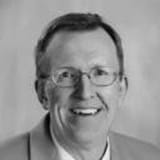
One of University of Northern Colorado’s 2020 Honored Alumni
William H. Benson
Local has provided scholarships for history students for 15 years
A Sterling resident is among five alumni selected to be recognized this year by the University of Northern Colorado. Bill Benson is one of college’s 2020 Honored Alumni.
Each year UNC honors alumni in recognition for their outstanding contributions to the college, their profession and their community. This year’s honorees were to be recognized at an awards ceremony on March 27, but due to the COVID-19 outbreak that event has been cancelled. Instead UNC will recognize the honorees in the fall during homecoming Oct. 10 and 11……
Newspaper Columns

The Duodecimal System
For centuries, the ancient Romans calculated sums with their clunky numerals: I, V, X, L, C, D, and M; or one, five, ten, 50, 100, 500, and 1,000. They knew nothing better.

The Thirteenth Amendment
On Jan. 1, 1863, President Abraham Lincoln signed the Emancipation Proclamation, and by it, he declared that “all persons held as slaves” within the rebellious states “are and henceforward shall be free.” Lincoln’s Proclamation freed some 3.1 million slaves within the Confederacy.

The Fourteenth Amendment
After Congress and enough states ratified the thirteenth amendment that terminated slavery, Congress passed the Civil Rights Act of 1866. This law declared that “all people born in the United States are entitled to be citizens, without regard to race, color, or previous condition of slavery or involuntary servitude.” The Act equated birth to citizenship.

The New-York Packet and the Constitution
Jill Lepore, the Harvard historian, published her newest book a month ago, These Truths: A History of the United States. In a short introduction, she describes in detail the Oct. 30, 1787 edition of a semi-weekly newspaper, The New-York Packet.
Mr. Benson’s writings on the U.S. Constitution are a great addition to the South Platte Sentinel. Its inspiring to see the history of the highest laws of this country passed on to others.
– Richard Hogan
Mr. Benson, I cannot thank you enough for this scholarship. As a first-generation college student, the prospect of finding a way to afford college is a very daunting one. Thanks to your generous donation, my dream of attending UNC and continuing my success here is far more achievable
– Cedric Sage Nixon
Donec bibendum tortor non vestibulum dapibus. Cras id tempor risus. Curabitur eu dui pellentesque, pharetra purus viverra.
– Extra Times
FUTURE BOOKS
- Thomas Paine vs. George Whitefield
- Ralph Waldo Emerson vs. Joseph Smith
- William James vs. Mary Baker Eddy
- Mark Twain vs. Billy Graham
- Henry Louis Mencken vs. Jim Bakker
