
By William H. Benson
The Parallel Lives
Of The NOBLE AMERICAN RELIGIOUS THINKERS AND BELIEVERS:
Roger Williams VS. Cotton Mathers

NEW ARTICLES

Thoughts on Thanksgiving
Thoughts on Thanksgiving
Elias Boudinot, a member of Congress in the new Federal Government, introduced a resolution in 1789, to form a joint committee that asked President George Washington to call for a day of prayer and thanksgiving. That joint resolution passed both Senate and House. Washington chose to respond.
On October 3, 1789, he called for a day of “Public Thanksgiving and Prayer,” that he set for Thursday, November 26, 1789. Washington celebrated that early Thanksgiving, by attending services at St. Paul’s Chapel, and giving beer and food to those in jail for failing to pay their bills.
Washington set another day of Thanksgiving late in his administration, in 1795, after armed forces defeated the Whiskey Rebellion.
Thomas Jefferson was elected President in 1800, but he refused to proclaim a day of prayer and Thanksgiving, based on that “wall of separation between Church and State,” spelled out in the First Amendment. He also believed it the duty of the states to determine special days of observance.
Yet, when governor of Virginia, Jefferson had declared a day of Thanksgiving and Prayer. The idea of a national day of Thanksgiving died though with Thomas Jefferson, and remained almost dead until the Civil War split the country apart, over slavery.
The one exception was James Madison who called for a single day of Thanksgiving.
Sarah Josepha Hale, editor at Godey’s Lady’s Book, a women’s magazine, had lobbied governors, Congressmen, judges, and presidents for four decades, pleading for a national day of Thanksgiving.
She asked the same thing of everyone, that “the last Thursday in November be set aside to ‘offer to God our tribute of joy and gratitude for the blessings of the year.’”
Lincoln was the first person with any authority to respond to Sarah Josepha Hale’s letter dated September 28, 1863, but then Lincoln faced a rebellion and a war and needed some good news, something positive to redirect the nation’s attention.
On January 1, 1863, Lincoln had issued the Emancipation Proclamation, freeing the slaves in the rebellious states. On July 3, 1863, at Gettysburg, Pennsylvania, Union forces had stopped the Confederates’ attack on Cemetery Ridge, south of the town, dooming Lee’s march into the North.
On July 4, 1863, the Confederate Army of the Mississippi, led by Lt. General John C. Pemberton, surrendered to Union Major General Ulysses S. Grant at Vicksburg, Mississippi, after a 47-day siege, dividing the Confederacy into two parts. The Union now controlled the Mississippi River.
Partly as a result of the welcome news on both fronts, President Lincoln read Sarah Joseph Hale’s letter, and chose to act.
On October 3, 1863, the same day as Washington’s proclamation, Lincoln issued his proclamation, “to set apart and observe the last Thursday of November next, as a day of Thanksgiving and Praise to our beneficent Father who dwelleth in the Heavens.”
William Seward, Lincoln’s Secretary of State, drafted the proclamation, and Lincoln signed it. “A year later federal officials chose to sell that document of the proclamation, in order to benefit Union troops,” an archivist’s worst outcome.
On November 19, 1863, Lincoln boarded a train in Washington D.C. that carried him to Gettysburg, Pennsylvania, where he spoke for a few minutes at the dedication ceremony for the new national cemetery, a fitting burial site for those Union soldiers who had perished over three hot days in July.
Lincoln finished his address, “that we here highly resolve that these dead shall not have died in vain—that this nation, under God, shall have a new birth of freedom—and that government of the people, by the people, for the people, shall not perish from the Earth.”
A week later, on November 26, 1863, when back in the White House, Abraham Lincoln, with Mary Todd, and their sons, celebrated that day of Thanksgiving and prayer, as did countless other Americans across the country. What a monumental year 1863 had become! Thanksgiving began to bind the nation.
William August Muhlenberg, an Episcopal clergyman in New York City, read the President’s proclamation for a day of Thanksgiving, and on that day, he jotted down the lyrics for what he called a President’s Hymn, that he entitled “Give Thanks All Ye People.”
“Give thanks, all ye people; give thanks to the Lord. Alleluias of freedom, with joyful accord. Let the east and the west, north and south roll along; Sea, mountain and prairie, one thanksgiving song.”
May all of you, my dear readers, enjoy this Thanksgiving, as it binds our families and our nation together once again, over a noon meal on a Thursday, the last week in November, the way that George Washington and Abraham Lincoln wanted it.
Bill Benson, of Sterling, is a dedicated historian.
BENJAMIN FRANKLIN IN THE COCKPIT
BENJAMIN FRANKLIN IN THE COCKPITBENJAMIN FRANKLIN IN THE COCKPIT by William H. Benson January 31, 2002 On January 29, 1774 an Englishman from the British colony of Pennsylvania stood in the Cockpit in London, England and received a two hour tongue-lashing from...
MUHAMMAD ALI
MUHAMMAD ALIMUHAMMAD ALI by William H. Benson January 17, 2002 The new movie Ali covers ten years of Muhammad Ali's life--from February of 1964, when he defeated Sonny Liston for the heavyweight boxing title, until 1974, when he recaptured the crown by defeating...
WAR AND PEACE
WAR AND PEACEWAR AND PEACE by William H. Benson December 20, 2001 Late in December of 1776 George Washington was desperate. He needed a winning battle. His army had dwindled to fewer than 8000 men, and most of them would finish their term of service after the...
PROHIBITION
PROHIBITIONPROHIBITION by William H. Benson December 6, 2001 On January 16, 1920 the United States embraced a peculiar drama--Prohibition, a grand social and legal experiment designed initially to better people's lives, and yet it was a dismal failure. Fourteen...
THANKSGIVING
THANKSGIVINGTHANKSGIVING by William H. Benson November 22, 2001 Of the 101 people on board the Mayflower, 35 were Pilgrims, those who had separated from the Church of England. Led by William Bradford and William Brewster, they wished to build a colony where they...
ARMISTICE DAY
ARMISTICE DAYARMISTICE DAY by William H. Benson November 8, 2001 By the time World War I arrived, Harry Truman was already 35-years-old, and despite his age and poor eyesight and succession of business failures, his superiors recognized something in him and...
Older Posts
FREIDRICH VON SPEE
FREIDRICH VON SPEEFREIDRICH VON SPEE by William H. Benson October 25, 2001 In 1631 Freidrich von Spee (pronounced Shpay) published his book Cautio Criminalis which means Precautions for Prosecutors. In it he exposed the Church/State's brand of terrorism against,...
ROGER WILLIAMS – SEPARATION OF CHURCH AND STATE
ROGER WILLIAMS SEPARATION OF CHURCH AND STATEROGER WILLIAMS - SEPARATION OF CHURCH AND STATE by William H. Benson October 11, 2001 Almost immediately upon his arrival in 1631 at Massachusetts Bay, Roger Williams argued with the colony's governing church...
“It Ain’t Necessarily So”
"It Ain't Necessarily So""It Ain't Necessarily So" by William H. Benson September 27, 2001 George Gershwin was born on September 26, 1898, and thirty-seven years later, almost to the day, his musical Porgy & Bess premiered in Boston. One of the big hits from...
MYSTERY WRITERS
MYSTERY WRITERSMYSTERY WRITERS by William H. Benson September 13, 2001 Last Saturday evening on television John Travolta played the starring character in the movie, "Get Shorty", adapted from a book written by the mystery writer, Elmore Leonard. To read any of...
LABOR DAY
LABOR DAYLABOR DAY by William H. Benson August 30, 2001 The Labor Day weekend approaches--a welcome relief. It means that summer is about over, and school has begun. Labor Day honors the nation's working people, sometimes called the laborforce or the...
CHANCE
CHANCECHANCE by William H. Benson August 16, 2001 There is a word that has inspired more hope and opened more new lands than any other, and that word is gold. On August 17, 1896 three guys (whom no one today remembers) -- George Carmack, Skookum Jim, and...
One of University of Northern Colorado’s 2020 Honored Alumni
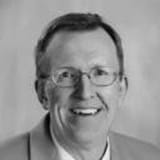
William H. Benson
Local has provided scholarships for history students for 15 years
A Sterling resident is among five alumni selected to be recognized this year by the University of Northern Colorado. Bill Benson is one of college’s 2020 Honored Alumni.
Each year UNC honors alumni in recognition for their outstanding contributions to the college, their profession and their community. This year’s honorees were to be recognized at an awards ceremony on March 27, but due to the COVID-19 outbreak that event has been cancelled. Instead UNC will recognize the honorees in the fall during homecoming Oct. 10 and 11……
Newspaper Columns

The Duodecimal System
For centuries, the ancient Romans calculated sums with their clunky numerals: I, V, X, L, C, D, and M; or one, five, ten, 50, 100, 500, and 1,000. They knew nothing better.

The Thirteenth Amendment
On Jan. 1, 1863, President Abraham Lincoln signed the Emancipation Proclamation, and by it, he declared that “all persons held as slaves” within the rebellious states “are and henceforward shall be free.” Lincoln’s Proclamation freed some 3.1 million slaves within the Confederacy.

The Fourteenth Amendment
After Congress and enough states ratified the thirteenth amendment that terminated slavery, Congress passed the Civil Rights Act of 1866. This law declared that “all people born in the United States are entitled to be citizens, without regard to race, color, or previous condition of slavery or involuntary servitude.” The Act equated birth to citizenship.

The New-York Packet and the Constitution
Jill Lepore, the Harvard historian, published her newest book a month ago, These Truths: A History of the United States. In a short introduction, she describes in detail the Oct. 30, 1787 edition of a semi-weekly newspaper, The New-York Packet.
Mr. Benson’s writings on the U.S. Constitution are a great addition to the South Platte Sentinel. Its inspiring to see the history of the highest laws of this country passed on to others.
– Richard Hogan
Mr. Benson, I cannot thank you enough for this scholarship. As a first-generation college student, the prospect of finding a way to afford college is a very daunting one. Thanks to your generous donation, my dream of attending UNC and continuing my success here is far more achievable
– Cedric Sage Nixon
Donec bibendum tortor non vestibulum dapibus. Cras id tempor risus. Curabitur eu dui pellentesque, pharetra purus viverra.
– Extra Times
FUTURE BOOKS
- Thomas Paine vs. George Whitefield
- Ralph Waldo Emerson vs. Joseph Smith
- William James vs. Mary Baker Eddy
- Mark Twain vs. Billy Graham
- Henry Louis Mencken vs. Jim Bakker
