
By William H. Benson
The Parallel Lives
Of The NOBLE AMERICAN RELIGIOUS THINKERS AND BELIEVERS:
Roger Williams VS. Cotton Mathers

NEW ARTICLES

Battle at Rzhev
Battle at Rzhev
In the early days of World War II, 1939 to 1940, the Nazi German war machine advanced across eastern Europe, until its soldiers stood on the outskirts of Moscow, deep into the Soviet Union, poised and ready to attack the Russian capital city.
However, the Battle of Moscow stalled when the Soviet’s Red Army found sufficient strength to initiate a counter offensive, at Joseph Stalin’s insistence, that pushed Germany’s 9th Army west, some distance from Moscow. The counter-offensive worked for a time, until the German army stopped.
The Russian town of Rzhev, located 140 miles west of Moscow, boasted a population of 56,000 on October 11, 1941, the day that its citizens watched in horror as the dreaded Nazi soldiers marched into their town, and seized control.
In the first months of the occupation, the Nazi’s exported some 9,000 of the town’s citizens back to Germany to work as forced laborers, and another 9,000 they shot, tortured, or starved in a concentration camp that they built in the town’s center.
There in Rzhev, the Germans dug in. They built concrete bunkers, constructed a series of short anti-tank mounds, and fortified their perimeters with trenches and bulwarks. The Russians may not have known how well positioned the Germans were, and how capable they were to withstand an attack.
The war came home in earnest for Rzhev’s citizens when the first of a series of battles erupted in the fields outside their town on January 8, 1942, that pitted Nazi Germany’s 9th Army against the Soviet Union’s Red Army.
The Soviets looked upon the Nazi Germany army ensconced in Rzhev as “a dagger pointing at Moscow.” Stalin, his generals, and his officers wanted to obliterate the 9th Army, and free Rzhev.
A question arises though, “what happens when an irresistible force encounters an immovable object?” The answer, Rzhev happens, a “little known but astonishingly bloody battle.”
The worst of this series of battles began on July 30, 1942, and ended on August 23, 1942, eighty years ago this month. It was noted then and since, that “it inflicted great loss of civilian and military lives,” and that “the Russian army’s soldiers suffered massive casualties for little gain.”
One military historian described the battle’s first days.
“The frontal attacks of the 31 July set the pattern for coming days. Soviet commanders did not have the latitude or imagination to develop flexible tactics, and often rigidly executed orders from above, even if it meant attacking head-on, across the same ground for days or even weeks at a time.”
Behind their barricades, the Germans mowed down wave after wave of Soviet soldiers, who were ordered to attack entrenched German positions. “Soviet infantry tactics remained crude with dense masses of men rushing forward, shouting ‘Hurrah!’” Hence, the term the “Rzhev Meat Grinder.”
For the Soviets, total casualties in the three week battle numbered 291,172; for the Germans, 53,000.
The Germans held Rzhev for another seven months, and then without fanfare they packed up and left. Not a win for the Soviets, nor a loss for the Germans. Rzhev was liberated on March 3, 1943.
The brutality of the Nazi Germans though almost wiped out Rzhev’s entire population. Only 150 people remained alive after the battle, plus another 200 who had fled to nearby towns and villages.
On June 30, 2020, two years ago, Vladimir Putin attended the unveiling of a statue in the town of Rzhev, a commemoration of the fierce battle that claimed the lives of almost 300,000 Russian soldiers. He laid roses before the statue that stands 25 meters tall, and rests upon a mound 10 meters high.
It is of a single Red Army soldier, whose right hand holds a gun near his right side. For a shirt he wears a uniform with double pockets, and across his back there is a cape with strings tied at his neck.
In the minds of most older Russians, there remains stuck a memory of the horrible things that the Germans did, once they stood on Russian soil, in mid-twentieth century.
They see it in their statues, read of it in their histories and accounts of the Great Patriotic War, hear of it in the memoirs of those who survived the German occupation. Security from Western Europe’s aggression is crucial to a typical Russian.
None of what happened in World War II though can be construed to excuse Putin and the Russian army’s aggressive and brutal tactics in Ukraine this year. The world should hold accountable those responsible for the destruction they have inflicted upon the Ukrainian people the past five months.
ELECTIONS
ELECTIONSELECTIONS by William H. Benson March 30, 2000 Vladimir Putin is Russia's newest President, officially elected last Sunday. He has been the acting President since last December 31st when Boris Yeltsin had had enough of the job and resigned and appointed...
INTELLIGENCE AND SOCIAL CLASS
INTELLIGENCE AND SOCIAL CLASSINTELLIGENCE AND SOCIAL CLASS by William H. Benson March 16, 2000 Recently, I came across The Bell Curve, a 1994 book by Richard Herrnstein and Charles Murray, in which they argued most forcefully that intelligence is the...
LINDBERGH & CHILDREN
LINDBERGH & CHILDRENLINDBERGH & CHILDREN by William H. Benson March 2, 2000 The newborn are helpless, innocent, without the physical, emotional, or psychological arsenal needed to play the adult games; so, humankind concluded ages ago that protecting the...
THE PRESIDENT
THE PRESIDENTTHE PRESIDENT by William H. Benson February 24, 2000 George Washington's successful revolution against King George in 1776 eradicated the British crown and the trappings of royalty from the colonies, but in their place the Founding Fathers...
THE BEATLES
THE BEATLESTHE BEATLES by William H. Benson February 10, 2000 In early February of 1964 I was in the fourth grade. One evening I was sitting in the chair at Don's Barbershop getting my hair cut and watching television when I heard Walter Cronkite announce that...
SYSTEMS
SYSTEMSSYSTEMS by William H. Benson January 27, 2000 All parts of a system must work for the life form/organization/machine to function, to thrive, to win. Building a tried-and-true winning system is not easy. It is the part of the system ignored or forgotten...
Older Posts
STEPHEN FOSTER & JEFFERSON DAVIS
STEPHEN FOSTER & JEFFERSON DAVISSTEPHEN FOSTER & JEFFERSON DAVIS by William H. Benson January 13, 2000 Thursday of this week, the thirteenth, is noted as Stephen Foster Memorial Day. Composer and lyricist, he died on that day in 1864 at...
THE GHOST DANCE
THE GHOST DANCETHE GHOST DANCE by William H. Benson December 30, 1999 Fifty years ago anthropologists believed that the number of Native Americans living in North America, north of the Rio Grande, in 1492 was somewhere between one and three million. In recent...
EBENEZER SCROOGE
EBENEZER SCROOGEEBENEZER SCROOGE by William H. Benson December 16, 1999 "You fear the world too much," a woman tells Ebenezer Scrooge. "All your other hopes have merged into the hope of being beyond the chance of its sordid reproach." And so he had poured...
THE CHRISTMAS PARTY
THE CHRISTMAS PARTYTHE CHRISTMAS PARTY by William H. Benson December 2, 1999 The annual Christmas party season has arrived, a ritual as interwoven into the Christmas fabric as is singing "Silent Night". The "party" predominates in some people's lives. ...
TOM SUTHERLAND
TOM SUTHERLANDTOM SUTHERLAND by William H. Benson November 18, 1999 "'The eyes. The eyes. Cover the eyes!'" And immediately one of them produced a regular blindfold and tied it around my head. Another young man then produced what turned out to be, when...
TY COBB
TY COBBTY COBB by William H. Benson November 4, 1999 Thirty men were named to the All Century Team. Lou Gehrig was named Player of the Century beating out both Babe Ruth and Ted Williams, but it was Pete Rose who received the longest ovation on Sunday...
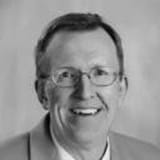
One of University of Northern Colorado’s 2020 Honored Alumni
William H. Benson
Local has provided scholarships for history students for 15 years
A Sterling resident is among five alumni selected to be recognized this year by the University of Northern Colorado. Bill Benson is one of college’s 2020 Honored Alumni.
Each year UNC honors alumni in recognition for their outstanding contributions to the college, their profession and their community. This year’s honorees were to be recognized at an awards ceremony on March 27, but due to the COVID-19 outbreak that event has been cancelled. Instead UNC will recognize the honorees in the fall during homecoming Oct. 10 and 11……
Newspaper Columns

The Duodecimal System
For centuries, the ancient Romans calculated sums with their clunky numerals: I, V, X, L, C, D, and M; or one, five, ten, 50, 100, 500, and 1,000. They knew nothing better.

The Thirteenth Amendment
On Jan. 1, 1863, President Abraham Lincoln signed the Emancipation Proclamation, and by it, he declared that “all persons held as slaves” within the rebellious states “are and henceforward shall be free.” Lincoln’s Proclamation freed some 3.1 million slaves within the Confederacy.

The Fourteenth Amendment
After Congress and enough states ratified the thirteenth amendment that terminated slavery, Congress passed the Civil Rights Act of 1866. This law declared that “all people born in the United States are entitled to be citizens, without regard to race, color, or previous condition of slavery or involuntary servitude.” The Act equated birth to citizenship.

The New-York Packet and the Constitution
Jill Lepore, the Harvard historian, published her newest book a month ago, These Truths: A History of the United States. In a short introduction, she describes in detail the Oct. 30, 1787 edition of a semi-weekly newspaper, The New-York Packet.
Mr. Benson’s writings on the U.S. Constitution are a great addition to the South Platte Sentinel. Its inspiring to see the history of the highest laws of this country passed on to others.
– Richard Hogan
Mr. Benson, I cannot thank you enough for this scholarship. As a first-generation college student, the prospect of finding a way to afford college is a very daunting one. Thanks to your generous donation, my dream of attending UNC and continuing my success here is far more achievable
– Cedric Sage Nixon
Donec bibendum tortor non vestibulum dapibus. Cras id tempor risus. Curabitur eu dui pellentesque, pharetra purus viverra.
– Extra Times
FUTURE BOOKS
- Thomas Paine vs. George Whitefield
- Ralph Waldo Emerson vs. Joseph Smith
- William James vs. Mary Baker Eddy
- Mark Twain vs. Billy Graham
- Henry Louis Mencken vs. Jim Bakker
