
By William H. Benson
The Parallel Lives
Of The NOBLE AMERICAN RELIGIOUS THINKERS AND BELIEVERS:
Roger Williams VS. Cotton Mathers

NEW ARTICLES
Gettysburg and Memorial Day
On June 28, 1863, Robert E. Lee, Confederate General, dared to cross the border and invade Pennsylvania, a Union state. Lee hoped to force Lincoln into negotiations to end the war.
Lincoln felt dismayed. He understood that Union troops must repel Lee’s advance.
On the 1st, 2nd, and 3rd of July, a horrific battle unfolded, involving tens of thousands of troops that fought, clawed, and struggled at Gettysburg, Pennsylvania. Neither side defeated the other, but Union troops withstood Pickett’s charge up to Cemetery Ridge on the last day.
Lee was forced to withdraw, to head south. For a week after, Lincoln urged the Union General, George Meade, to attack Lee a fourth day, who was trapped because of a flooded Potomac River, but because Meade refused, the war drug on for almost two more years.
What to do with the dead? The historian Garry Wills wrote in his account, “Lincoln at Gettysburg: The Words That Remade America,” “Gettysburg, a town of only 2,500 inhabitants, was one make-shift burial ground, fetid and steaming.”
At least 5000 dead and rotting horses and mules lay in and around the town, plus 7058 dead human beings: 3155 Union soldiers and 3903 Confederate soldiers.
Fire consumed the horses, but the dead soldiers were covered with a thin blanket of earth. Upright boards standing beside each mound identified the names of each Union body.
A prominent Gettysburg resident named David Wills formed an interstate commission to collect funds to purchase seventeen acres of land near Gettysburg for a cemetery, to find and hire an architect to design a cemetery there, and to hire a team to rebury the dead into that cemetery.
Wills hired an architect named William Saunders, who designed a cemetery composed of a series of semicircles that ascended an incline, so that each plot was neither greater or lesser in value to any other plot. The work of reburying the dead into that new cemetery began.
By the fall of 1863, officials of the interstate commission began to form plans for a dedication ceremony. Wills extended offers to others, but it was the renowned orator Edward Everett who agreed to speak. President Abraham Lincoln agreed to say a few Dedicatory Remarks.
On Thursday, November 19, 1863, Edward Everett spoke for two hours, Lincoln for two minutes. Lincoln said only 272 words, divided into ten sentences and three paragraphs.
The seventh sentence resonates still today. “The world will little note nor long remember what we say here, but it can never forget what they did here.”
Consider how Lincoln contrasted two words, “say” and “did.” He and his fellow officials can “say” a massive number of words at a dedication ceremony, but it is what the Northern soldiers “did” that is of greater importance. They “gave their lives that that nation might live.”
Consider also in that sentence how Lincoln introduces memory into his text, when he contrasts the word “remember” to “forget.”
The word “note” refers to jotting words onto paper, so as to not forget, but to remember.
Lincoln concluded his Remarks. “[W]e here highly resolve that the dead shall, under God, have a new birth of freedom, and that the government of the people, by the people, and for the people shall not perish from the earth.”
Memorial Day approaches. We cannot forget. We remember. We have our notes. We reflect upon our hard-fought-for freedoms that Lincoln insisted “shall not perish from the earth.”
Liberia and Universal Basic Income
Liberia and Universal Basic IncomeLiberia and Universal Basic Income by William H. Benson July 26, 2018 According to the World Bank, of the world's 872.3 million people who lived below the poverty line in 2014, 179.6 million, or 20% of the total, lived in India,...
J. K. Rowling
J. K. RowlingJ. K. Rowling by William H. Benson July 13, 2018 Recently, I discovered that I can watch on YouTube certain commencement addresses at Harvard. In May this year, Mark Zuckerberg spoke, and last year it was Steven Spielberg's turn. In 2013, Oprah...
The Point of Decision
The Point of DecisionThe Point of Decision by William H. Benson July 12, 2018 In the harsh winter of 1836-1837, the New York City editor Horace Greeley wondered about how the city might rescue the homeless, and the destitute. In his newspaper, Greeley encouraged...
John Wayles, Thomas Jefferson, and Sally Hemings
John Wayles, Thomas Jefferson, and Sally HemingsJohn Wayles, Thomas Jefferson, and Sally Hemings by William H. Benson June 28, 2018 John Wayles was born in Lancaster, England, in 1715. When a teenager, he sailed to Virginia, and there he acquired vast landholdings,...
The Stasi and the Overcoat
The Stasi and the OvercoatThe Stasi and the Overcoat by William H. Benson June 14, 2018 The East German communist government collapsed in late 1989, and soon thereafter, its people were amazed to learn that the Stasi secret police had a bulging manila-colored file on...
Summer-time Reading
Summer-time ReadingSummer-time Reading by William H. Benson May 31, 2018, The invention that makes men and women most human is recorded language, embodied in the alphabet. In the far distant past, a wise soul decided to attach a written character to a human sound....
Older Posts
Patterns vs. Randomness
Patterns vs. RandomnessPatterns vs. Randomness by William H. Benson May 17, 2018 Frederick Douglass was born in Maryland in 1818. Although born into slavery, Douglass was fortunate enough to escape to the north as a young man, and there he became an ardent...
James Comey and the F.B.I.
James Comey and the F.B.I.James Comey and the F.B.I. By William H. Benson May 3, 2018 Two weeks ago, I finished reading Killers of the Flower Moon: The Osage Murders and the Birth of the F.B.I., first published a year ago, in April 2017. David Grann, the author, tells...
Mark Twain in Syria
Mark Twain in SyriaMark Twain in Syria by William H. Benson April 19, 2018 In the year 1867, the thirty-one year old Mark Twain joined several dozen other Americans on a pleasure cruise across the Atlantic to see the sights around the Mediterranean Sea. When in Syria,...
Assassinations in the 1960’s
Assassinations in the 1960'sAssassinations in the 1960's by William H. Benson April 5, 2018 In January 1963, Lee Harvey Oswald—a former U.S. Marine, twenty-four years old, and living in Dallas, Texas—purchased through the mail a .38 Smith & Wesson Model 10...
Stephen Hawking and Billy Graham
Stephen Hawking and Billy GrahamStephen Hawking and Billy Graham by William H. Benson March 22, 2018 A preacher and a scientist passed away weeks ago: Billy Graham on February 21, and Stephen Hawking on March 14. One lived in the USA, and the other in the UK. One...
Tara Westover’s Educated
Tara Westover's EducatedTara Westover's Educated by William H. Benson March 8, 2018 I just finished listening to Tara Westover's riveting memoir, Educated, an account of her years growing up as the youngest of seven children, in a fundamentalist Mormon family in...
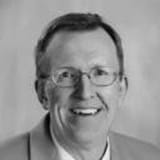
One of University of Northern Colorado’s 2020 Honored Alumni
William H. Benson
Local has provided scholarships for history students for 15 years
A Sterling resident is among five alumni selected to be recognized this year by the University of Northern Colorado. Bill Benson is one of college’s 2020 Honored Alumni.
Each year UNC honors alumni in recognition for their outstanding contributions to the college, their profession and their community. This year’s honorees were to be recognized at an awards ceremony on March 27, but due to the COVID-19 outbreak that event has been cancelled. Instead UNC will recognize the honorees in the fall during homecoming Oct. 10 and 11……
Newspaper Columns

The Duodecimal System
For centuries, the ancient Romans calculated sums with their clunky numerals: I, V, X, L, C, D, and M; or one, five, ten, 50, 100, 500, and 1,000. They knew nothing better.

The Thirteenth Amendment
On Jan. 1, 1863, President Abraham Lincoln signed the Emancipation Proclamation, and by it, he declared that “all persons held as slaves” within the rebellious states “are and henceforward shall be free.” Lincoln’s Proclamation freed some 3.1 million slaves within the Confederacy.

The Fourteenth Amendment
After Congress and enough states ratified the thirteenth amendment that terminated slavery, Congress passed the Civil Rights Act of 1866. This law declared that “all people born in the United States are entitled to be citizens, without regard to race, color, or previous condition of slavery or involuntary servitude.” The Act equated birth to citizenship.

The New-York Packet and the Constitution
Jill Lepore, the Harvard historian, published her newest book a month ago, These Truths: A History of the United States. In a short introduction, she describes in detail the Oct. 30, 1787 edition of a semi-weekly newspaper, The New-York Packet.
Mr. Benson’s writings on the U.S. Constitution are a great addition to the South Platte Sentinel. Its inspiring to see the history of the highest laws of this country passed on to others.
– Richard Hogan
Mr. Benson, I cannot thank you enough for this scholarship. As a first-generation college student, the prospect of finding a way to afford college is a very daunting one. Thanks to your generous donation, my dream of attending UNC and continuing my success here is far more achievable
– Cedric Sage Nixon
Donec bibendum tortor non vestibulum dapibus. Cras id tempor risus. Curabitur eu dui pellentesque, pharetra purus viverra.
– Extra Times
FUTURE BOOKS
- Thomas Paine vs. George Whitefield
- Ralph Waldo Emerson vs. Joseph Smith
- William James vs. Mary Baker Eddy
- Mark Twain vs. Billy Graham
- Henry Louis Mencken vs. Jim Bakker
