
By William H. Benson
The Parallel Lives
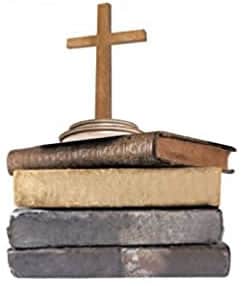
Of The NOBLE AMERICAN RELIGIOUS THINKERS AND BELIEVERS:
Roger Williams VS. Cotton Mathers

NEW ARTICLES

Desegregation at Little Rock’s Central High School in 1957
Last time in these pages I discussed the Supreme Court’s decision in the 1954 Brown v. Board of Education case, out of Topeka, Kansas. It attempted to rollback the premise that, if schools were “equal” in quality, then they may remain “separated” between blacks and whites.
Chief Justice Earl Warren disagreed. On May 31, 1955, Earl Warren insisted that Southern states must initiate desegregation plans in their schools “with all deliberate speed.”
“Massive resistance” across the Southern states erupted. School boards closed their schools, abolished compulsory attendance laws, and redirected public funds to schools now made private.
The primary test for desegregation occurred in Little Rock, Arkansas, in September 1957, at Central High School, when its doors opened on September 4, the first day of school.
Daisy Gaston Bates—president of Arkansas’s NAACP and co-publisher of the Arkansas State Press—recruited 9 African-American students, 3 boys and 6 girls, who agreed to try to walk in and attend the all-white school that day.
Their names were Minnijean Brown, Elizabeth Eckford, Thelma Mothershed, Gloria Ray, Melba Pattilo, Carlotta Watts, Ernest Green, Terrance Roberts, and Jefferson Thomas.
On Tuesday, September 3, a federal judge named Ronald Davies ruled that desegregation would continue as planned the next day.
That evening Daisy Gaston Bates called eight of the nine, except for Elizabeth Eckford, and offered to drive them to the school together. Elizabeth did not get the message as to where to meet because her family had no telephone.
On Wednesday morning, September 4, a mob of over 1000 angry white adults and students gathered at the school’s front door and chanted, “Two, four, six, eight, we ain’t gonna integrate!”
Arkansas’s Governor, Orval Faubus, ordered the state’s National Guard to the school “to prevent violence.” The soldiers stood ramrod straight, each holding a firearm with a bayonet.
The crowd went wild once they heard the news, “They’re inside,” because the eight had slipped into the school through a side door.
It was then that fifteen-year-old Elizabeth Eckford stepped toward the front door alone.
Students, adult men, and women, all white, gathered around her, jeered at her, ridiculed her, called her names, and hurled a stream of “racial slurs, vicious insults, and threats” of violence. A photographer’s pictures of the girl’s brave attempt made world wide news.
She later described the day, “When I was able to steady my knees, I walked up to the guard who had let the white students in. He didn’t move. When I tried to squeeze past him, he raised his bayonet, and then the other guards moved in, and they raised their bayonets.
“They glared at me with a mean look, and I was frightened and didn’t know what to do. The crowd came toward me.”
None of the nine attended school that day. Each were rounded up and driven off.
A team of NAACP lawyers, including Thurgood Marshall, objected in court to Governor Faber’s resistance, and the courts favored the students, but each of the nine refused to return.
On Monday, September 23, President Dwight D. Eisenhower dispatched 100 paratroopers from the Army’s 101st Airborne Division, to enforce desegregation, and on September 25, the nine attended classes for the first time, but not without continual name-calling and violence.
Governor Fabus declared, “This is military occupation,” dredging up bitter memories of the Reconstruction years, 1865-1877, when the North’s Union army oversaw local and state politics. Many across the Southern states cried out, “This is a violation of our State’s Rights!”
Of the nine, one graduated from Little Rock’s high school, Ernest Green, on May 25, 1958, the first African American to graduate from Central High.
Those nine broke the racial barrier. America’s destiny now incorporated desegregation.
Lincoln
LincolnLincoln by William H. Benson January 31, 2013 Two weeks ago I saw Steven Spielberg's recent movie, Lincoln, and came away impressed. Sally Fields did an admirable job playing Mary Todd Lincoln, and Tommy Lee Jones played Thaddeus Stevens, but it was Daniel...
DOGS
DOGSDOGS by William H. Benson January 17, 2013 January is “National Train Your Dog Month,” an activity that can lead to a surprising outcome. In 2011 a writer named Susan Orleans published a book on Rin-Tin-Tin. In the book she tells of an American soldier...
GEORGE ORWELL AND THE ENGLISH LANGUAGE
GEORGE ORWELL AND THE ENGLISH LANGUAGEGEORGE ORWELL AND THE ENGLISH LANGUAGE by William H. Benson January 3, 2013 Every year since 1976, a college in Michigan, Lake Superior State University, publishes late in the year its List of Words Banished from the Queen's...
AMERICAN CRISIS NO. ONE
AMERICAN CRISIS NO. ONEAMERICAN CRISIS NO. ONE by William H. Benson December 20, 2012 By mid-December of 1776, George Washington was despondent. The American War for Independence was not going well. His troops were undisciplined, often bootless, lacked firearms...
EARTHQUAKES
EARTHQUAKESEARTHQUAKES by William H. Benson December 6, 2012 John Bradbury, a Scottish naturalist, came to the United States to float down the Mississippi River and collect botanical specimens. On December 15, 1811 he tied up his boat at Chicksaw Bluffs—the site...
OBAMA VS. ROMNEY
OBAMA VS. ROMNEYOBAMA VS. ROMNEY by William H. Benson November 22, 2012 Although President Obama won 332 electoral votes to Romney's 206, the popular vote was closer: 62.6 million to 59.1 million. Obama won the northeast: all the states between Minnesota and Iowa...
Older Posts
RICHARD NIXON AND BILLY GRAHAM
RICHARD NIXON AND BILLY GRAHAMRICHARD NIXON AND BILLY GRAHAM by William H. Benson November 8, 2012 Since I am writing this on the Sunday before the Tuesday election, I do not know that election's outcome. As to who will sit in the Oval Office for the next four...
DETECTIVE NOVELS
DETECTIVE NOVELSDETECTIVE NOVELS by William H. Benson October 25, 2012 It is a winning formula. Create an appealing character, place him or her in a complex, hard-to-crack situation, and watch the plot boil. For decades, authors have written mysteries by that...
CHRISTOPHER COLUMBUS AND HIS SHIPS
CHRISTOPHER COLUMBUS AND HIS SHIPSCHRISTOPHER COLUMBUS AND HIS SHIPS by William H. Benson October 11, 2012 Christopher Columbus achieved preeminence during the Age of Exploration, that most adventurous chapter in Europe's long and troubled history. The Age had...
EXTRAORDINARY VS. THE GREAT
EXTRAORDINARY VS. THE GREATEXTRAORDINARY VS. THE GREAT by William H. Benson September 27, 2012 On September 28, 1941, a Sunday,Ted Williams played in the 1941 season's last game for the Boston Red Sox, and at eight times at bat that day, he hit six times, good...
PHYLISS DILLER AND NEIL ARMSTRONG
PHYLISS DILLER AND NEIL ARMSTRONGPHYLISS DILLER AND NEIL ARMSTRONG by William H. Benson September 20, 2012 When a King is in his court and requires a miracle, he calls for his wizard. When he needs someone to protect his kingdom and vanquish the enemy, he calls...
GEORGE ARMSTRONG CUSTER AT WEST POINT
GEORGE ARMSTRONG CUSTER AT WEST POINTGEORGE ARMSTRONG CUSTER AT WEST POINT by William H. Benson September 6, 2012 Teachers and students are back in school, and it is time for students to think about what they will achieve between now and next May. During a...

One of University of Northern Colorado’s 2020 Honored Alumni
William H. Benson
Local has provided scholarships for history students for 15 years
A Sterling resident is among five alumni selected to be recognized this year by the University of Northern Colorado. Bill Benson is one of college’s 2020 Honored Alumni.
Each year UNC honors alumni in recognition for their outstanding contributions to the college, their profession and their community. This year’s honorees were to be recognized at an awards ceremony on March 27, but due to the COVID-19 outbreak that event has been cancelled. Instead UNC will recognize the honorees in the fall during homecoming Oct. 10 and 11……
Newspaper Columns

The Duodecimal System
For centuries, the ancient Romans calculated sums with their clunky numerals: I, V, X, L, C, D, and M; or one, five, ten, 50, 100, 500, and 1,000. They knew nothing better.

The Thirteenth Amendment
On Jan. 1, 1863, President Abraham Lincoln signed the Emancipation Proclamation, and by it, he declared that “all persons held as slaves” within the rebellious states “are and henceforward shall be free.” Lincoln’s Proclamation freed some 3.1 million slaves within the Confederacy.

The Fourteenth Amendment
After Congress and enough states ratified the thirteenth amendment that terminated slavery, Congress passed the Civil Rights Act of 1866. This law declared that “all people born in the United States are entitled to be citizens, without regard to race, color, or previous condition of slavery or involuntary servitude.” The Act equated birth to citizenship.

The New-York Packet and the Constitution
Jill Lepore, the Harvard historian, published her newest book a month ago, These Truths: A History of the United States. In a short introduction, she describes in detail the Oct. 30, 1787 edition of a semi-weekly newspaper, The New-York Packet.
Mr. Benson’s writings on the U.S. Constitution are a great addition to the South Platte Sentinel. Its inspiring to see the history of the highest laws of this country passed on to others.
– Richard Hogan
Mr. Benson, I cannot thank you enough for this scholarship. As a first-generation college student, the prospect of finding a way to afford college is a very daunting one. Thanks to your generous donation, my dream of attending UNC and continuing my success here is far more achievable
– Cedric Sage Nixon
Donec bibendum tortor non vestibulum dapibus. Cras id tempor risus. Curabitur eu dui pellentesque, pharetra purus viverra.
– Extra Times
FUTURE BOOKS
- Thomas Paine vs. George Whitefield
- Ralph Waldo Emerson vs. Joseph Smith
- William James vs. Mary Baker Eddy
- Mark Twain vs. Billy Graham
- Henry Louis Mencken vs. Jim Bakker
